Drone Pressure Washing for Solar Panels
Solar panels are continuously exposed to dust, dirt, bird droppings and other contaminants. Regular cleaning can help maintain the condition of photovoltaic installations, particularly in areas with frequent dust accumulation.
For large solar farms, conventional cleaning can require considerable labor, equipment and site access.
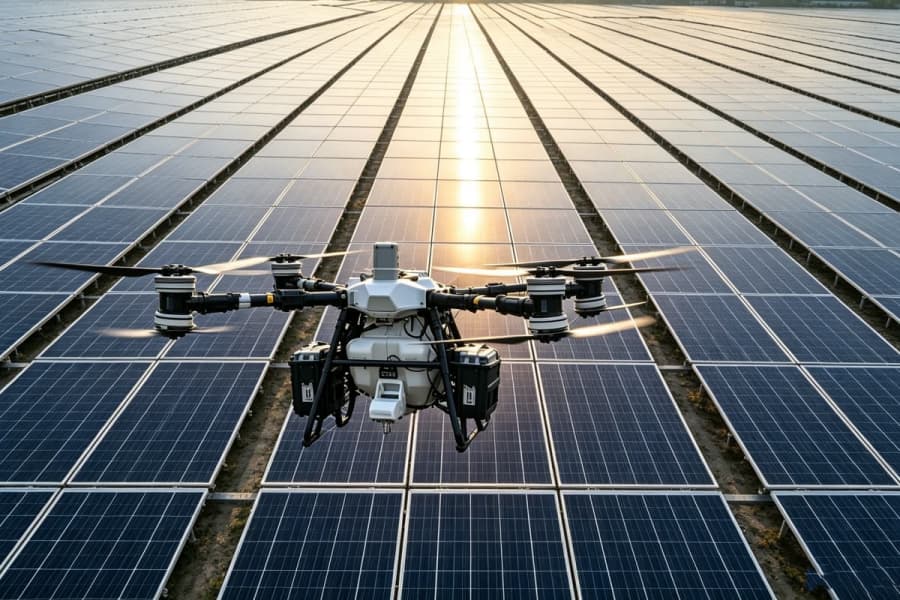
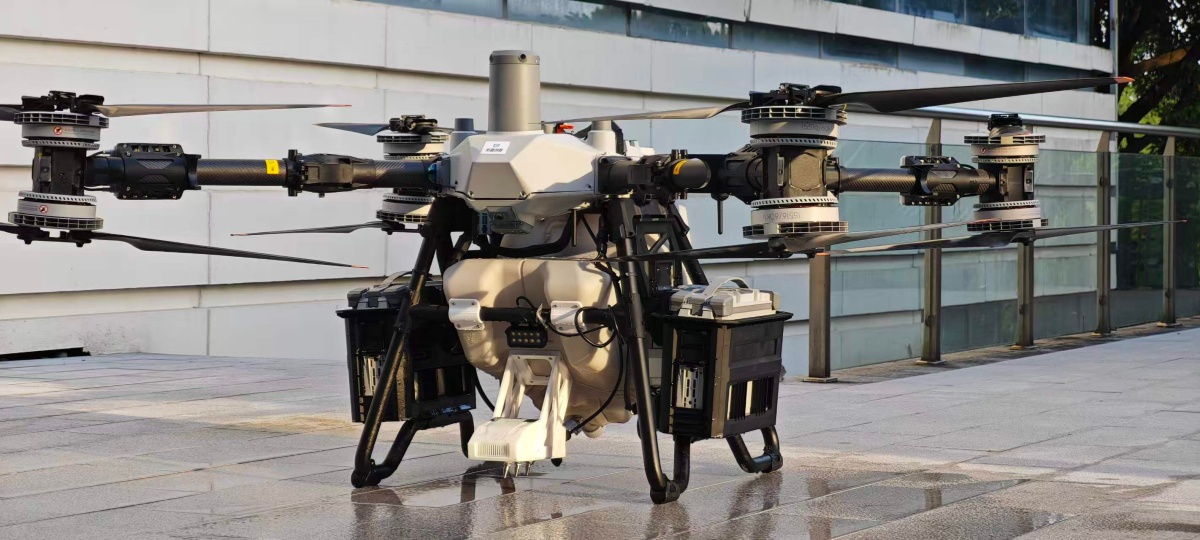
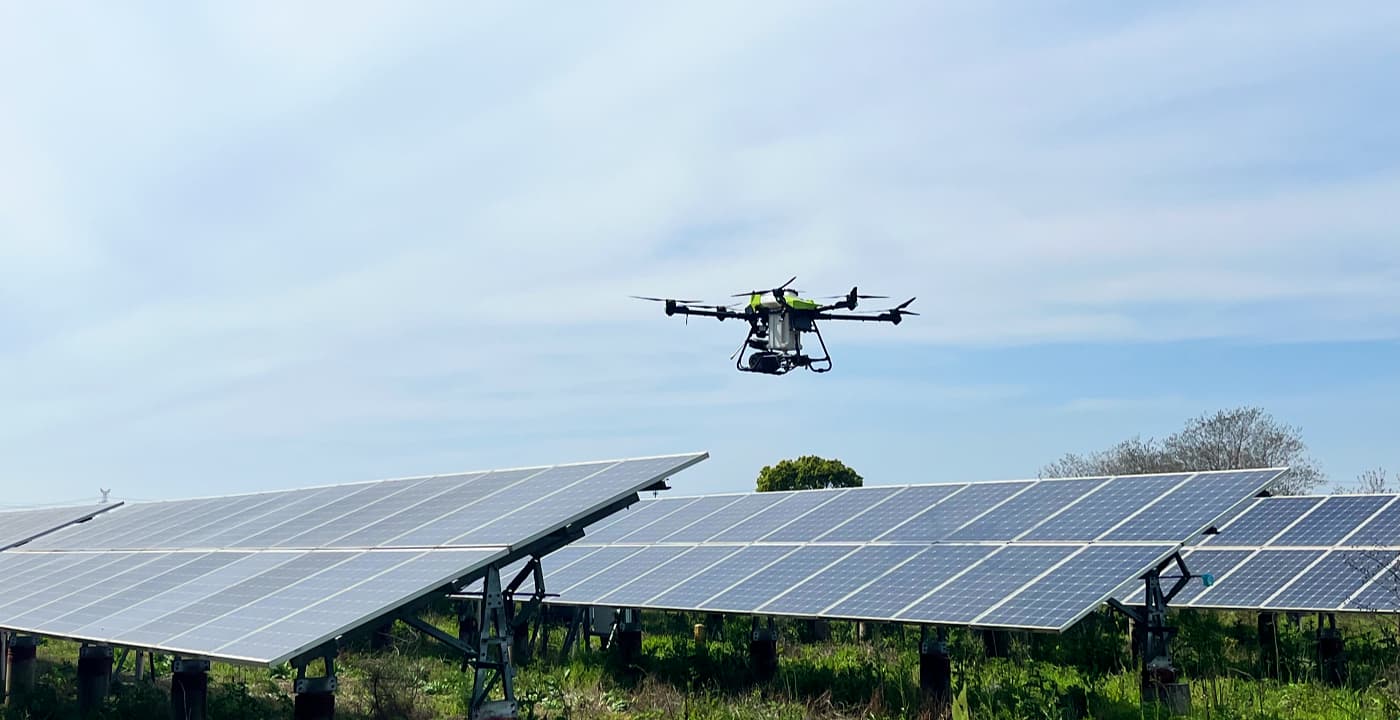
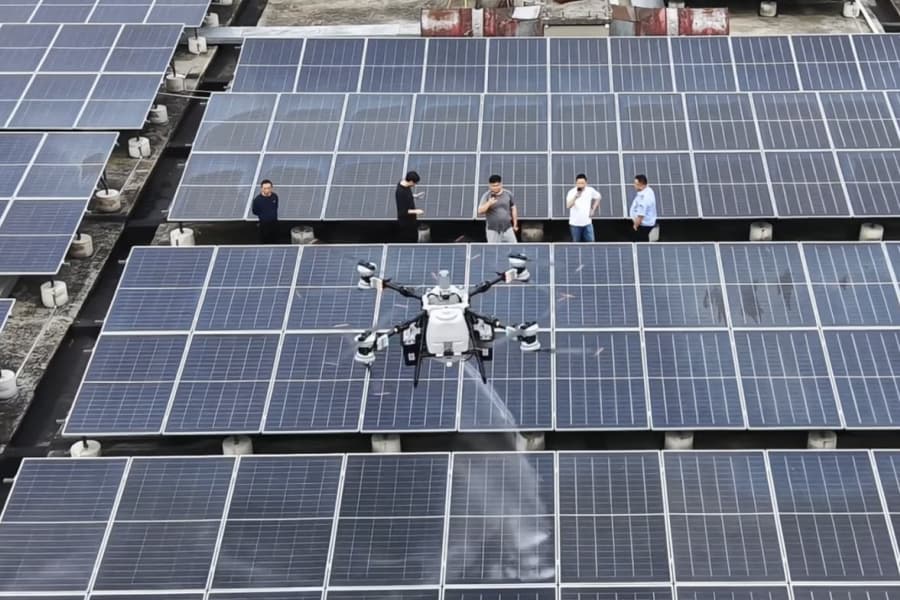
Drone-based pressure washing provides another approach by combining an industrial drone with a specialized cleaning payload and a ground-based water supply.
The goal is not simply to increase water pressure, but to create a more controlled and efficient cleaning process.
How Does Drone Pressure Washing Work?
A typical drone pressure washing system consists of several components:
Industrial drone
Cleaning payload
High-pressure pump
Water supply
Hose system
Payload control system
The drone carries the cleaning payload over the solar panel surface while water is supplied from the ground.
The cleaning payload controls how water is delivered to the target surface.
Depending on the system, operators may be able to configure parameters such as flight speed, spray movement and water flow.
Why Use Pressure Washing for Solar Panel Cleaning?
Pressure washing can provide a controlled way to remove certain types of surface contamination.
The effectiveness of the cleaning process depends on the combination of:
Water pressure
Water flow
Nozzle design
Spray distance
Drone speed
Type of contamination
Higher pressure is not automatically better. The system should be configured according to the panel surface, contamination and cleaning requirements.
Factors That Affect Cleaning Efficiency
1. Water Pressure
Water pressure determines the force available at the spray nozzle.
The required pressure depends on the type of contamination and the cleaning system.
A suitable pressure should provide effective cleaning without unnecessarily increasing water consumption or equipment requirements.
2. Water Flow
Water flow affects both cleaning coverage and water consumption.
The pump, hose and nozzle system should work together to provide stable flow during operation.
For larger projects, water supply planning can become an important part of overall operating efficiency.
3. Nozzle Configuration
The nozzle determines how water is distributed across the panel surface.
Factors such as spray angle, number of nozzles and spray pattern can affect cleaning coverage.
A properly configured spray system can help reduce unnecessary overlap and improve consistency.
4. Drone Flight Speed
Flight speed directly affects the cleaning time for each section of the panel.
If the drone moves too quickly, the cleaning spray may have less time to act on the surface.
If it moves too slowly, overall productivity may decrease.
The appropriate speed should therefore be determined according to the cleaning system and project conditions.
5. Cleaning Distance
The distance between the nozzle and panel surface can affect spray pressure and coverage.
Maintaining a suitable operating distance helps the spray reach the target surface as intended.
The optimal distance depends on the nozzle, pressure and payload configuration.
How Can Drone Pressure Washing Improve Operating Efficiency?
Drone-based pressure washing may provide several operational advantages for certain solar cleaning projects.
Reduced Manual Access
Operators can perform cleaning from the ground instead of requiring workers to directly access elevated or difficult-to-reach areas.
This can simplify certain cleaning operations and reduce the need for manual access equipment.
Flexible Access to Solar Installations
A drone can move between different sections of a solar installation while carrying the cleaning payload.
This can be useful for projects where conventional cleaning equipment is difficult to position.
Configurable Cleaning Parameters
A professional cleaning payload can allow operators to adjust operating parameters according to different cleaning requirements.
This can help adapt the system to different panel layouts, contamination levels and operating conditions.
Integration with Existing Drone Platforms
A payload-based system can allow companies already operating compatible industrial drones to add cleaning capabilities without necessarily purchasing a completely separate cleaning drone.
Equipment Requirements
A drone pressure washing system requires more than the drone itself.
Before selecting equipment, operators should evaluate:
Drone payload capacity
Payload weight
Pump pressure
Water flow
Hose length
Water supply
Power requirements
The drone and cleaning payload should be treated as one integrated system.
Limitations and Operating Considerations
Drone pressure washing is not suitable for every solar installation.
Important factors include:
Wind conditions
Panel layout
Site access
Water availability
Hose management
Operators should also consider the type of contamination and the requirements of the panel manufacturer or site operator.
A site assessment can help determine whether drone pressure washing is appropriate for a specific project.
WillFly Drone Solar Panel Cleaning Payload
WillFly Drone develops DJI-compatible cleaning payloads for solar panel and industrial exterior cleaning applications.
Our Solar Panel Cleaning Payload for DJI FC100 & T100 is designed for high-pressure solar panel cleaning and can be integrated with compatible DJI drone platforms.
The payload-based approach allows customers to combine specialized cleaning equipment with an appropriate industrial drone platform.
WillFly Drone also supports OEM and customized payload development for companies with specific drone cleaning requirements.
Conclusion
Drone pressure washing can provide a flexible approach to solar panel cleaning, particularly for large installations and areas where conventional manual access is difficult.
However, operating efficiency depends on the complete system rather than water pressure alone.
Water flow, nozzle configuration, flight speed, cleaning distance, drone capacity and site conditions all influence the cleaning process.
For professional solar panel cleaning applications, selecting a compatible drone and properly configured cleaning payload is an important step toward building an efficient operating system.
Related Product
Solar Panel Cleaning Payload for DJI FC100 & T100