How Drone Firefighting Water Buckets Work
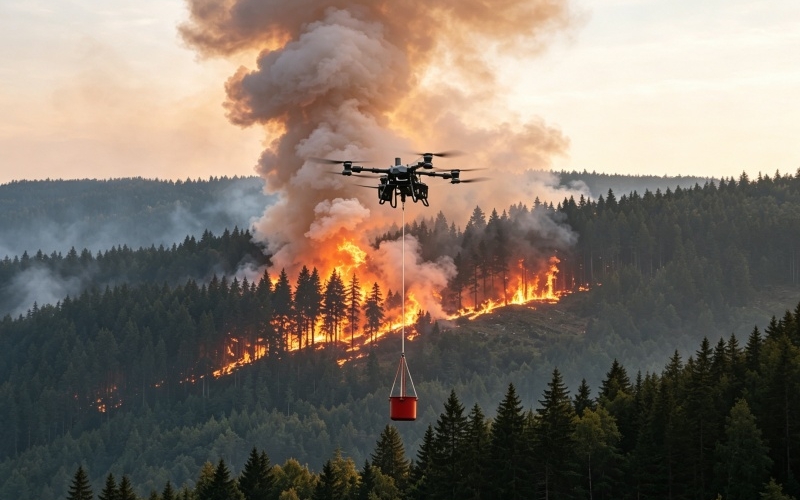
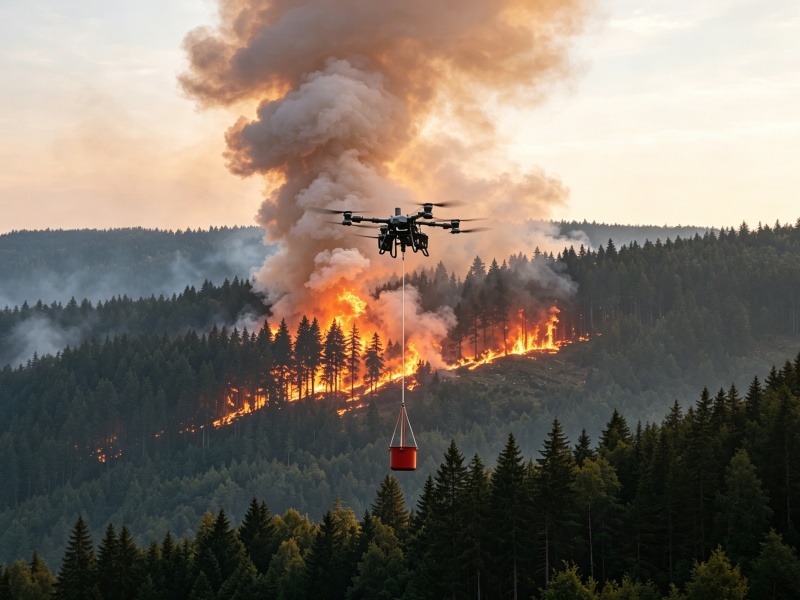
When fire breaks out where fire trucks cannot go, on steep forest slopes, in mountain villages or on the top floors of a high-rise, the slowest part of fire fighting is usually just getting water to the seat of the fire. A drone firefighting water bucket cuts that distance down to minutes. It fills up from the nearest river or lake, carries the water to the fire line and releases it where the operator wants it, in the amount the operator chooses.
The bucket hangs beneath a compatible drone platform. Compared with most aerial firefighting equipment it is almost crude: no pump, no tank truck, just a bucket, a valve and a wireless link. That simplicity is exactly why fire and rescue teams keep ordering them. Below we explain how the system works in the field, and which specifications we suggest checking before you compare suppliers.
1. How the Bucket Fills
Forget hydrants. The bucket refills from any navigable water source near the incident: a river, a pond, a reservoir, even a wide irrigation channel. Two collection methods are available. With top collection, the bucket dips into the water and fills from above, which suits open water surfaces. With bottom collection, water enters through the valve in the floor, which is faster in deeper water and stirs up less surface disturbance.
In practice this means you can run a shuttle loop between the water source and the fire line. The bucket goes back and forth on its own schedule instead of waiting for ground tankers to fight their way in.
2. Valve Control, the Part That Decides Everything
Anyone can drop water. What makes aerial fire fighting useful is dropping the right amount in the right place, once, without hovering longer than you have to. The valve on our bucket opens from 0 to 100% linearly, so the operator can dial in a light wetting pass or a concentrated drop.
Three numbers to note: valve response time is ≤0.6 s, maximum water flow is 50 L/s, and control is wireless with independent remote-control support as backup.
The response time matters more than it looks. On a slope fire with wind, your hover window over the target can be a few seconds, and a valve that answers slowly puts your drop somewhere you did not plan.
3. Choosing Between 40L and 200L
The bucket comes in capacities from 40L to 200L, and bigger is not automatically better. The right size depends on what your platform can lift.
As a rough guide: 40-60L suits lighter platforms doing frequent shuttle drops on small fires. 80-120L is the common choice for patrol and general suppression work. 150-200L goes on heavy-lift platforms working established fire lines, where you want the maximum drop per sortie.
One thing buyers sometimes overlook: water weighs about 1 kg per litre. A 200L bucket means roughly 200 kg hanging under your drone, plus the weight of the bucket itself. Check your platform's rated payload and its flight performance at that load before you pick a size, not after.
4. Foam and Other Agents
The bucket is not limited to plain water. It works with fluoroprotein foam and water-based fire extinguishing agents as well. Foam improves knockdown on certain fuel types and lowers the risk of reignition, which matters on vegetation fires and anywhere the water supply is tight.
5. Multi-Bucket Rotation for Long Operations
A single drop rarely ends a fire, and a single bucket can become the bottleneck of the whole operation. Our system supports automatic identification and connection of up to five buckets. While one bucket is being refilled on the ground, the next one is already in the air. One drone can cycle through the set continuously, or several platforms can share multiple buckets during a larger operation.
6. Questions to Settle Before You Buy
Which drone will carry it, and what is that platform's rated payload?
Which capacity fits your mission profile, from 40L to 200L?
Control integration: the system is compatible with DJI PSDK and other communication interfaces.
Will you drop water only, or foam and extinguishing agents as well?
Will you run a single bucket, or multi-bucket rotation for continuous operations?
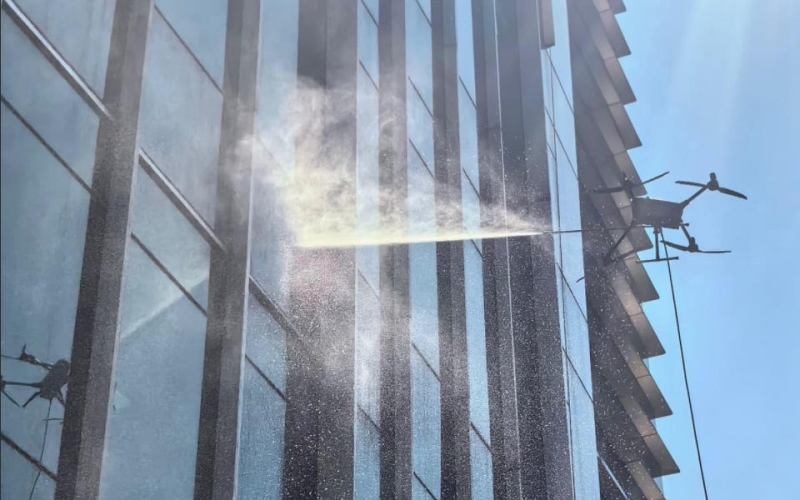
The full specifications are on our DJI-compatible aerial firefighting water bucket product page. If you are still weighing options, our guide on choosing a firefighting drone payload covers the buying side, and this article on high-rise maintenance shows what else a payload can do once the fire season is over.
Fire departments, forestry teams and UAV distributors: send us your platform model and mission profile through the contact page. We will confirm compatibility and get a quote back to you within one working day.