Fire Fighting Drone Price Guide
Buyers who search for a fire fighting drone price usually want one number. The honest answer is that no single number exists. What you are actually pricing is a system: a lifting platform, a water bucket payload, and a delivery package around both. Once you break the cost into those blocks, the quotation stops being a mystery — and you can see exactly where your money goes and where you can save.
This guide walks through each cost block, the variables that move a quotation up or down, and the configurations we most often quote. If you are new to the hardware itself, start with our explainer on how an aerial firefighting water bucket actually works, then come back for the money side.
What "Price" Actually Covers
A working aerial firefighting capability has three cost blocks:
1. The drone platform — the airframe that lifts the load.
2. The water bucket payload — the bucket, its rigging and release system.
3. Ground support — training, spare parts, shipping and documentation.
Quotations that look "expensive" usually bundle all three. Quotations that look "cheap" usually assume you already own the platform and skip the training. Neither is wrong — but you should know which one you are reading.
Cost Block 1 — The Drone Platform
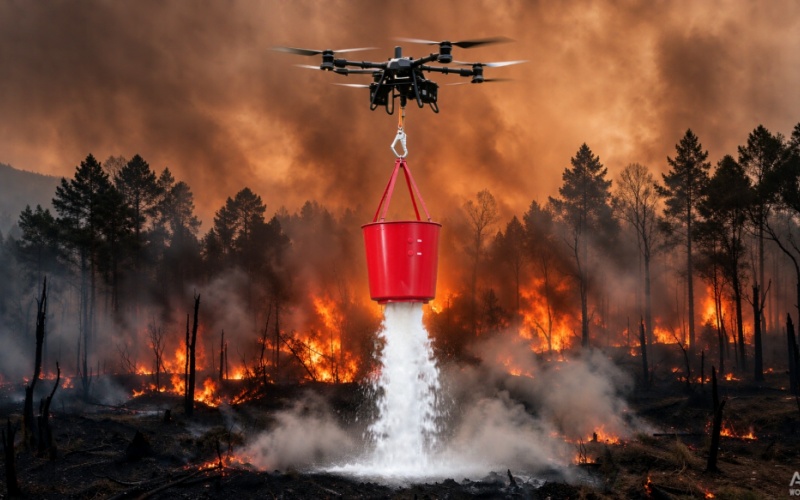
The platform is typically the largest line item in a first purchase. The good news for many operators: our firefighting bucket is built for DJI-compatible heavy-lift platforms — the same class of airframe many teams already fly for agricultural spraying or lifting work. If your fleet already has suitable airframes, the incremental cost of adding aerial firefighting is mostly the payload and training, not a new aircraft.
If you are buying the platform too, the price driver is lift capacity: the airframe has to carry the filled bucket with a safe margin, hover reliably in wind, and fly the refill-drop loop all day. That is why we always quote the platform and the bucket together rather than guessing at compatibility after purchase.
Cost Block 2 — The Water Bucket Payload
The bucket itself is where most of the engineering value sits. Its price is driven by four design choices:
• Shell type — hard-shell buckets cost more than soft collapsible ones, but survive daily scoop cycles, rough landings and transport in a truck bed.
• Capacity — matched to the platform's lift margin. Oversizing a bucket onto an undersized airframe is the most common (and most expensive) specification mistake.
• Rigging and release — the quick-release hook, load lines and centering hardware determine how fast and how safely the bucket can be attached, dumped and recovered.
• Refill design — a bucket that scoops on the move keeps the loop short; the time saved per cycle compounds across an afternoon of drops.
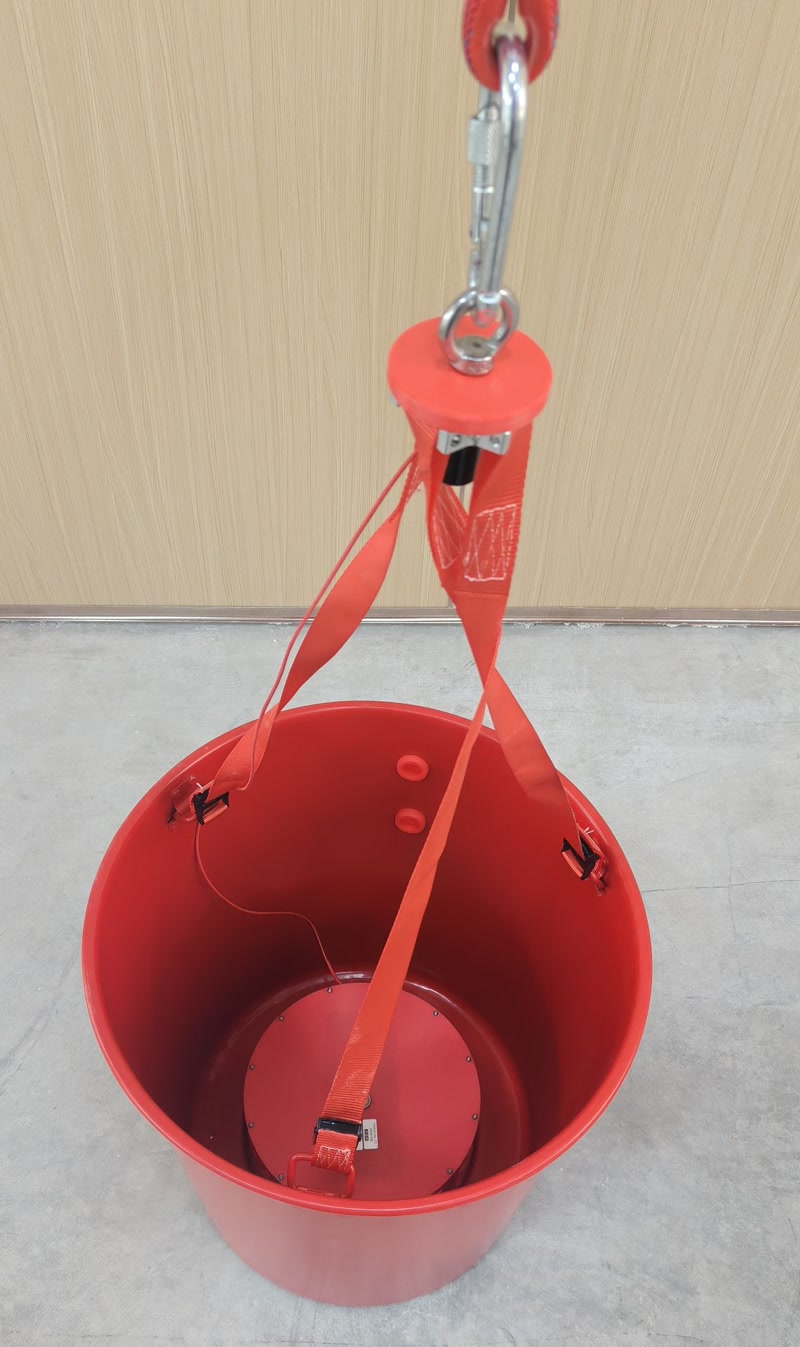
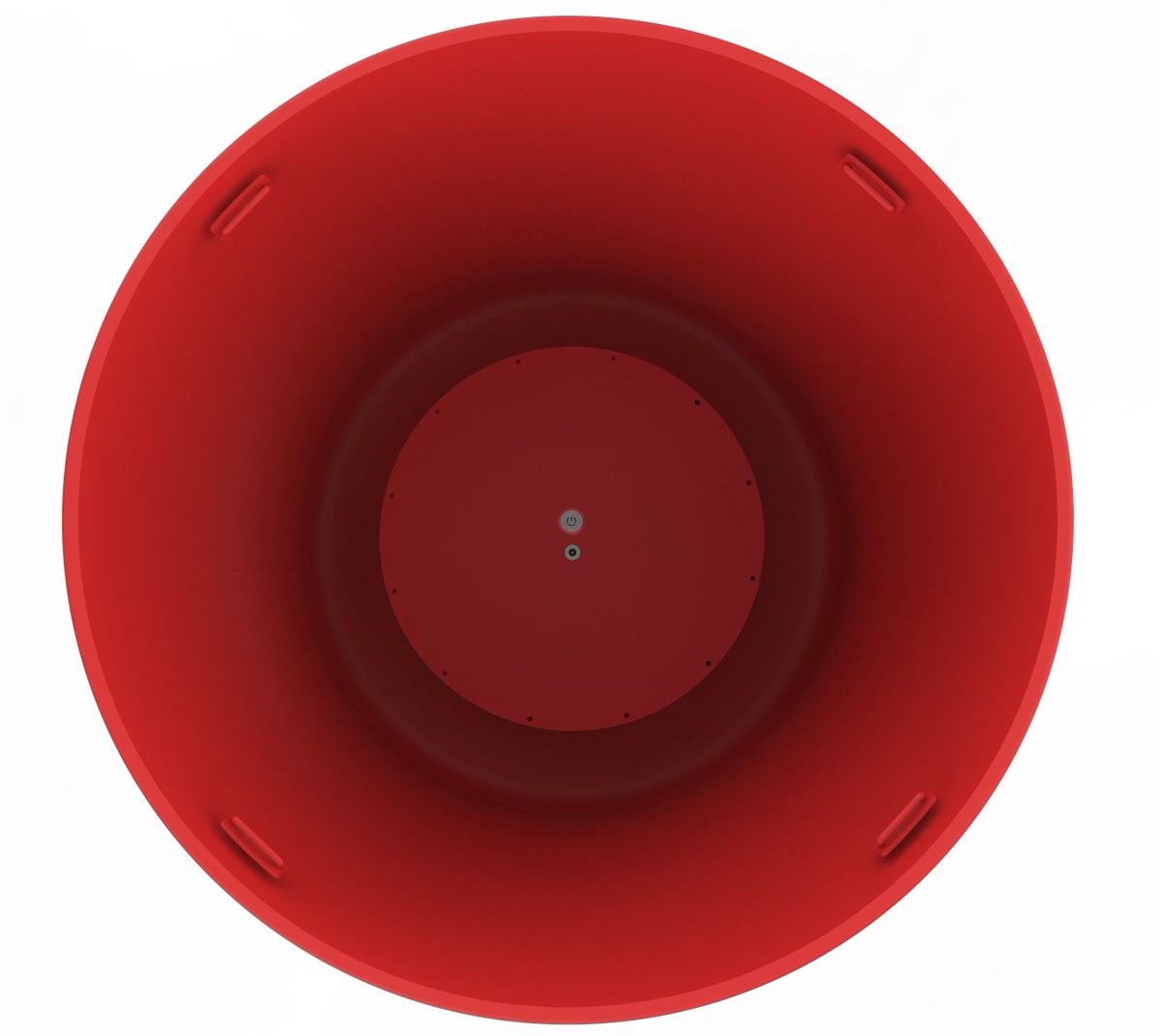
Our own hardware is a hard-shell bucket with quick-release rigging, engineered to mount on DJI-compatible heavy-lift platforms — the DJI-compatible firefighting water bucket page lists the configuration we ship most often.
Cost Block 3 — Ground Support, Training and Delivery
This block is the most commonly underestimated. A realistic budget includes:
• Pilot training — scoop, transit and drop are simple on paper; doing them at low altitude over water, then over a fire line, takes supervised practice.
• Spare rigging — load lines and release hooks are wear items; a spare set costs little and prevents downtime.
• Shipping and import — destination country, duties and inland transport belong in the budget from day one.
A team that budgets for training and spares on day one flies more hours in its first season than a team that buys hardware only.
What Moves Your Quotation Up or Down
When we price a system, five variables decide most of the spread between quotations:
1. Platform model — which airframe the bucket must match, and whether you bring your own.
2. Bucket capacity and shell type — bigger and hard-shell costs more up front and pays back in cycles.
3. Quantity — single units for evaluation vs. multi-unit sets for rotating operations.
4. Delivery scope — hardware only, or hardware plus training plus spares.
5. Destination logistics — shipping route and import handling.
If you are still deciding which payload class fits your mission profile, our guide on choosing a firefighting drone payload walks through that step before any money is spent.
Three Typical Budget Setups
Most quotations we issue fall into one of three shapes:
| Setup | What it includes | Best for |
|---|---|---|
| Entry — single unit | One platform + one bucket + basic training | Plant fire brigades and small departments building a first-response capability |
| Rotation — two buckets | One or two platforms + two buckets + spare rigging | Continuous drop loops: one bucket refills while the other flies |
| Team-level | Multiple platforms + buckets + spares + full training package | Municipal services and forestry contractors running full operations |
Exact figures are confirmed at quotation — they depend on the five variables above, and we would rather quote a configuration that fits your mission than publish a number that does not.
When a Firefighting Bucket Is Not Worth It
Honest section, as always:
• No water within flight range. The whole system lives on short refill cycles; a site with no river, pond, pool or tank within reach changes the math completely.
• Very low call volume. If you expect a handful of uses per year, a rental or shared arrangement may beat ownership.
• No licensed pilots or clearances. Hardware without legal operating conditions is a paperweight.
• Expecting it to replace engine companies. The bucket is a first-response and suppression-support tool that buys time — it does not substitute for a full ground attack.
How to Get a Real Number
Send us three things and we will quote precisely:
1. Your platform situation — own airframe (which model) or buying new.
2. Your mission profile — wildfire, industrial site, urban perimeter, and expected annual usage.
3. Destination country — for shipping and import planning.
Contact us with those three answers and you will have a line-item quotation — platform, bucket, training, spares, delivery — not a guess.