Drone Facade Cleaning vs Rope Access
Why Building Owners Are Rethinking Rope Access
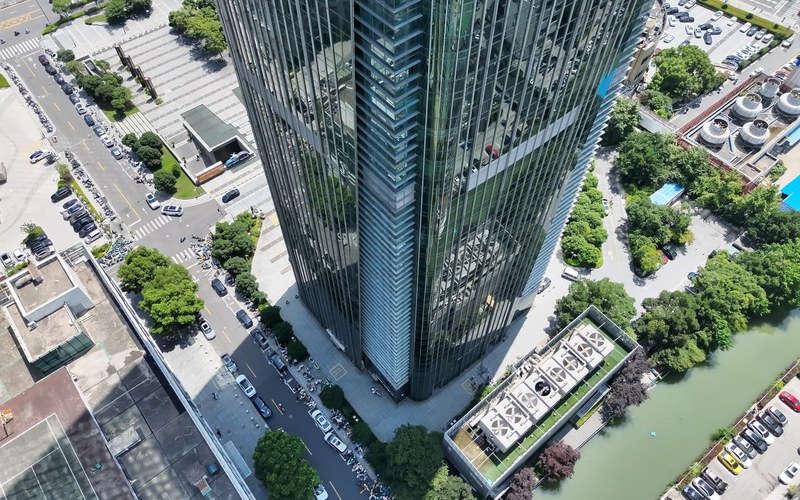
For thirty years, the default answer to a dirty high-rise facade was simple: send up rope crews. That answer is getting harder to justify. Licensed rope technicians are aging out in most countries, and fewer young workers are replacing them. Insurance premiums for suspended work keep climbing. And every rope operation means scaffolding exclusions, safety zones at street level, and tenants watching workers dangle past their windows.
The labor problem comes before the technology problem. Rope access is not unsafe when done properly — but it is slow, staffing-dependent, and priced by the hour of every technician on the wall. A single rope technician covers a working swath of roughly 1.8 to 2 meters per pass. A 30-story tower can take a full crew several weeks.
How Drone Facade Cleaning Works
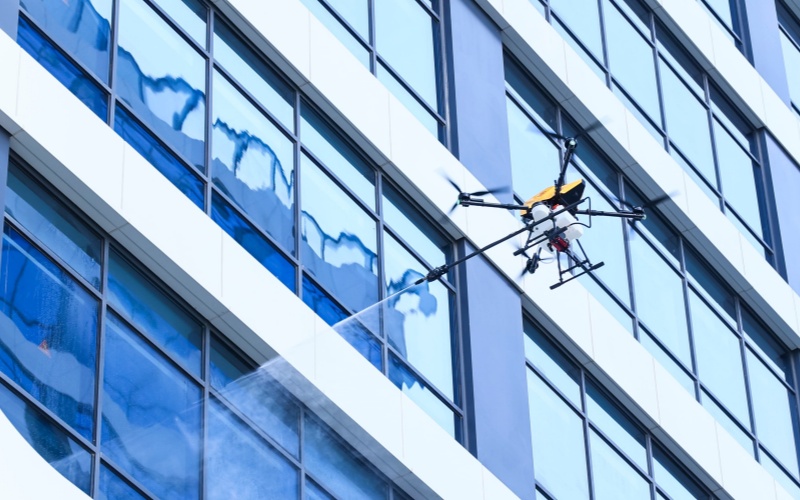
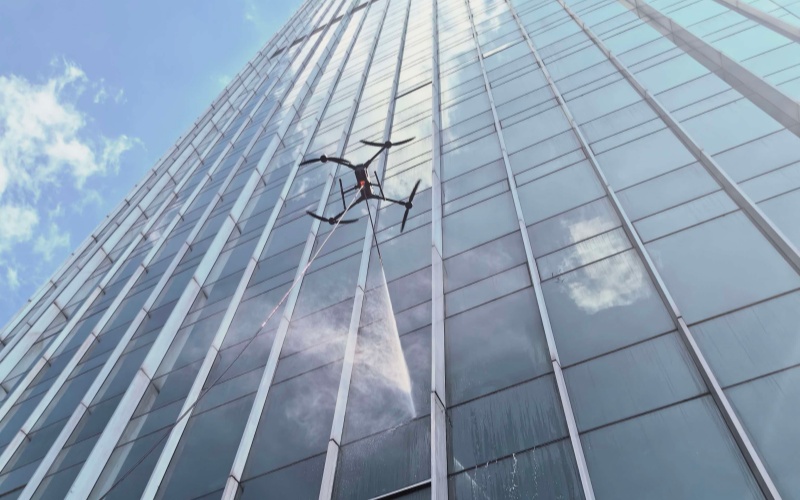
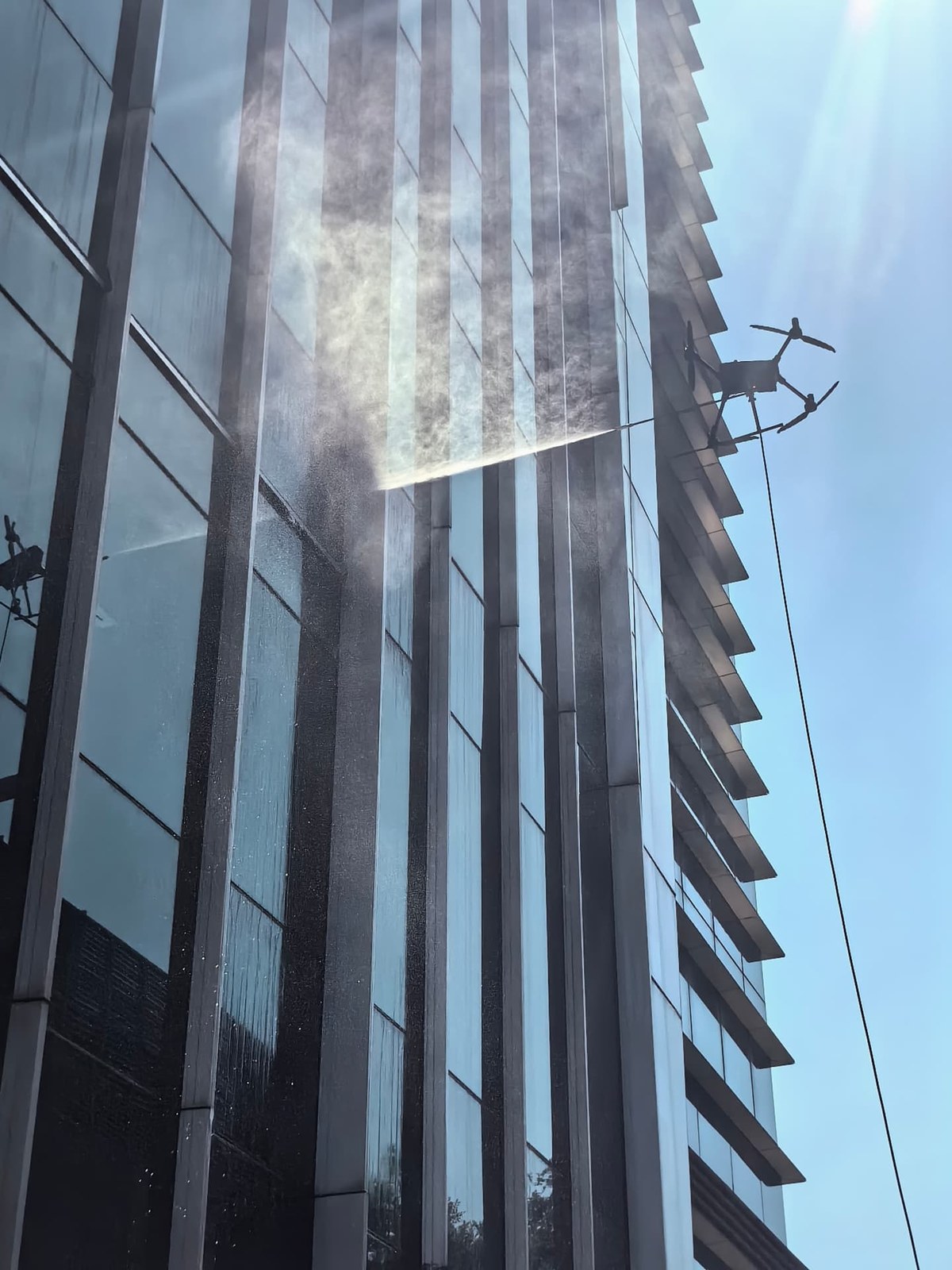
A drone cleaning setup splits the job in two: the aircraft carries only the spray gun, while water, pressure, and the operator all stay on the ground. Our cleaning module for the DJI M400 platform mounts on a quick-release bracket with no airframe modification. The spray gun weighs 350 grams. A high-pressure hose — 80 meters as standard — feeds it from a ground pump unit at up to 160 bar and 20 liters per minute.
One pilot controls both flight and spray from a single remote. A second person manages the ground unit. That is the whole crew: two people, both with their feet on the pavement.
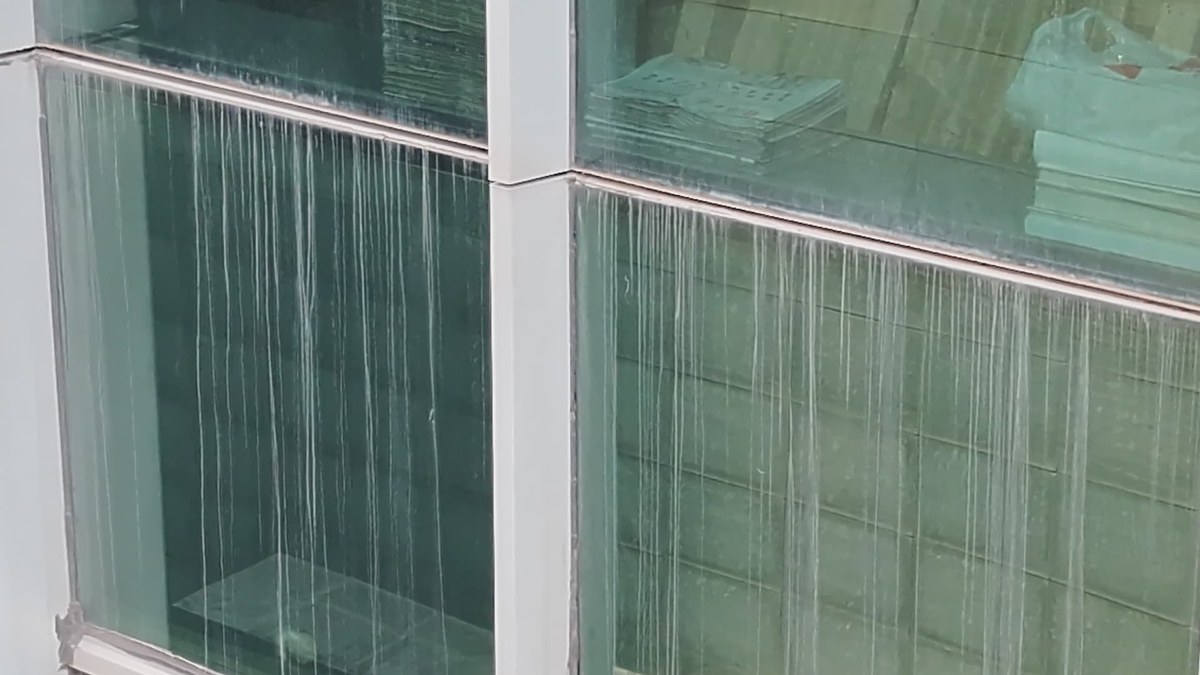
On glass curtain walls, the module runs at a working pressure of 3.0–4.5 bar against the glass, flying at 1.5–2.5 meters per second with the nozzle 0.5–1.2 meters off the surface. A final rinse with pure water leaves no mineral streaks. Work stops when sustained wind exceeds force 5 (10.7 m/s) — the same threshold that grounds most aerial work.
Head-to-Head Comparison
| Factor | Rope Access (Spider Men) | Drone Facade Cleaning |
|---|---|---|
| Crew on site | 4–6 technicians on the wall plus ground support | 2 people, all on the ground |
| Coverage speed | ~2 m working swath per technician per pass; weeks for a full tower | 3–5× faster than manual; 5,000–6,000 m² per day |
| Long-term cost | Hourly labor × multiple technicians + climbing insurance premiums | 20–40% lower total cost for recurring programs |
| Safety exposure | Suspension at height; fall risk, dropped-tool risk, heavy insurance load | No one leaves the ground; weather hold at wind force 5+ |
| Tenant disruption | Street closures, safety zones, workers passing every window | Quiet ground unit; no ropes past windows; no street closure in most setups |
| Best suited for | Complex geometry, soffits, internal courtyards | Flat and regular curtain walls, glass, metal panels, repetitive floors |
Where Rope Access Still Makes Sense
An honest comparison has to say this plainly: drones do not replace rope crews everywhere. Deep soffits, heavily recessed windows, tight light wells, and facades crowded with obstructions still need hands on the wall. Locations under strict flight restrictions need a permit path before any drone flies. And a building whose geometry changes at every floor — setbacks, canopies, curved corners — may clean faster with a combined program: drones for the repeatable 80%, rope crews for the difficult 20%.
That is how we quote real projects. The question is not "drones or ropes" but which mix finishes the facade safely at the lowest total cost.
Case Snapshot: A Government High-Rise in China
A multi-storey government building in China had not washed its glass curtain wall in two years. Rope access quotes came back high, and the property manager wanted zero disruption to the offices inside.
The drone program changed the math. The ground unit — pump, water tank, and hose reel — sat on the pavement beside the building. No scaffolding went up, no safety zone swallowed the plaza, and no rope ever passed a working window. The full facade was completed ahead of schedule, and the same crew moved on to a second tower the following week.
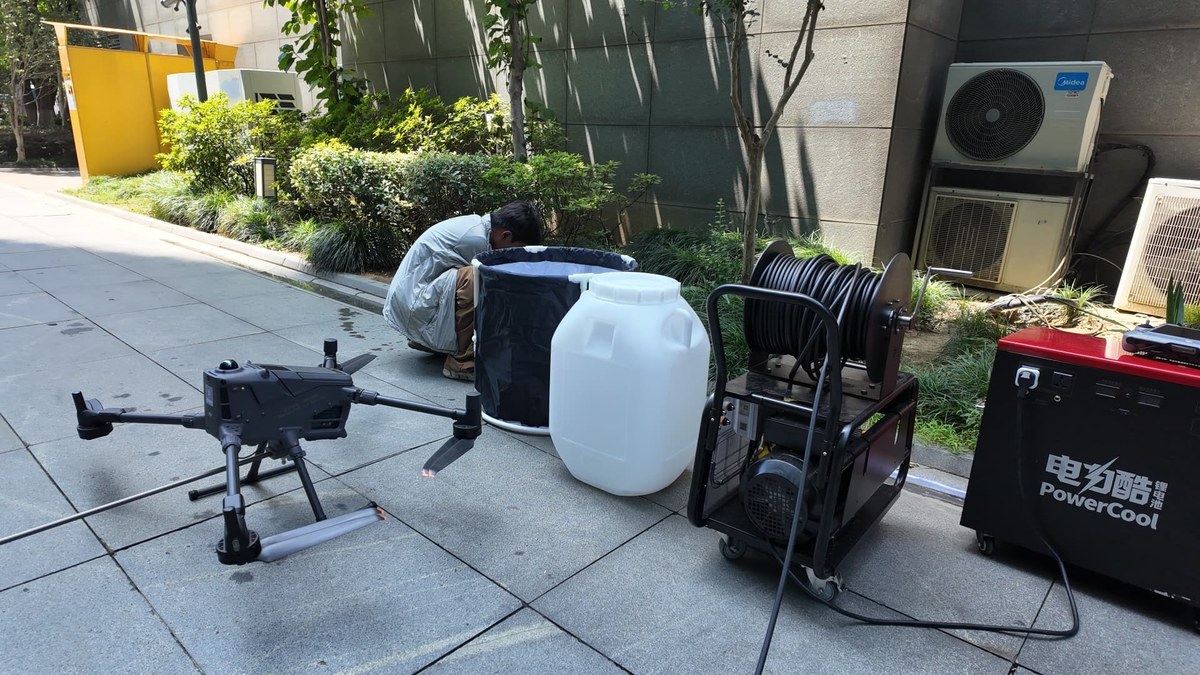
The full story, with photos and video from the project, is in our government building facade cleaning case study.
The Bottom Line
Rope access built the facade cleaning industry, and it is not disappearing. But for standard glass and metal curtain walls — the majority of modern towers — a two-person drone crew now cleans faster, cheaper, and with nobody leaving the ground. If your building has been putting off a wash because of rope access pricing or tenant complaints, the calculation has changed.
WillFly Drone has built cleaning payloads since 2016, with more than 1,000 units delivered to customers in over 30 countries, all backed by a 12-month warranty. Send us your building's photos and height through our contact page, and we will come back with a program quote — drone, rope mix, or whatever actually finishes the job cheapest. You can also reach us directly on WhatsApp at +86 138 128 56149.
Learn more on the M400 cleaning module product page or our building facade cleaning solutions page.