Drone vs Manual Solar Panel Cleaning
Two Quotes, Two Different Units
Ask a manual cleaning crew what it costs to wash a 1 MW plant and they will quote you per worker-day. Ask a drone cleaning operator and they will quote you per megawatt per cycle. The numbers are not comparable on sight — one counts people and days, the other counts area and passes. That is exactly why the "drone vs manual" question stays unanswered on most buyer desks.
This article puts both sides of the quote on one table: what each cost block actually covers, how to convert them into the same unit, and where the honest breaking points are for each method. If you want the broader cost picture first, our solar panel cleaning price guide breaks down what a full cleaning system includes.
What a Manual Cleaning Crew Actually Costs
A manual quote looks small per day and grows fast per megawatt. Four cost items sit inside it:
• Labor days. Washing 1 MW by hand takes a crew several worker-days, and the count scales linearly: 5 MW means five times the days.
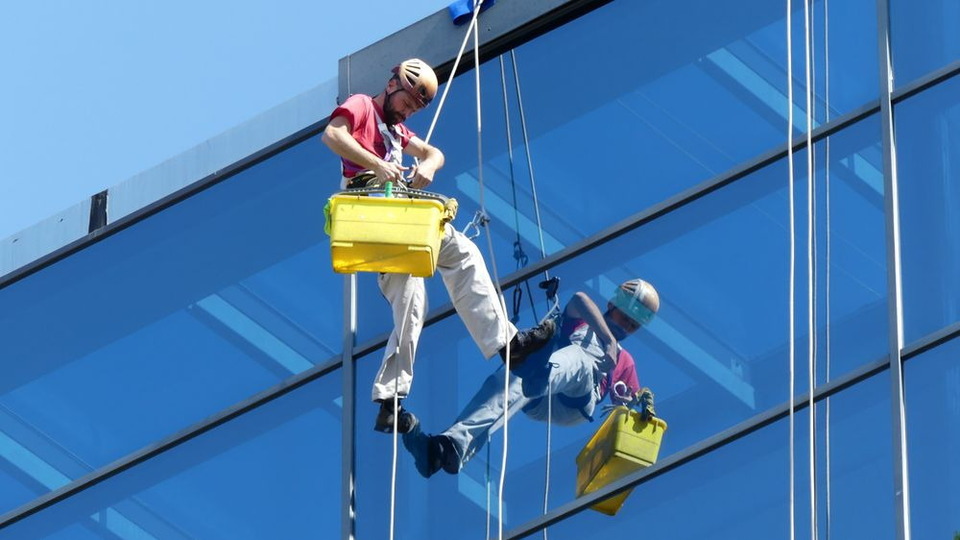
• Height work and insurance. Rooftop arrays mean rope access or lift platforms, trained personnel and insurance coverage that prices the fall risk, not the washing.
• Water logistics. Water has to be trucked in or lifted to the array level, which adds equipment and time on every roof job.
• Downtime. Sections of the array stay cordoned off or underfoot while crews move panel by panel, so generation drops during the wash window.
What a Drone Cleaning Setup Costs
A drone setup quotes differently because the cost sits in equipment, not in bodies on panels. Three blocks cover it.
Cost Block 1: The Cleaning Payload
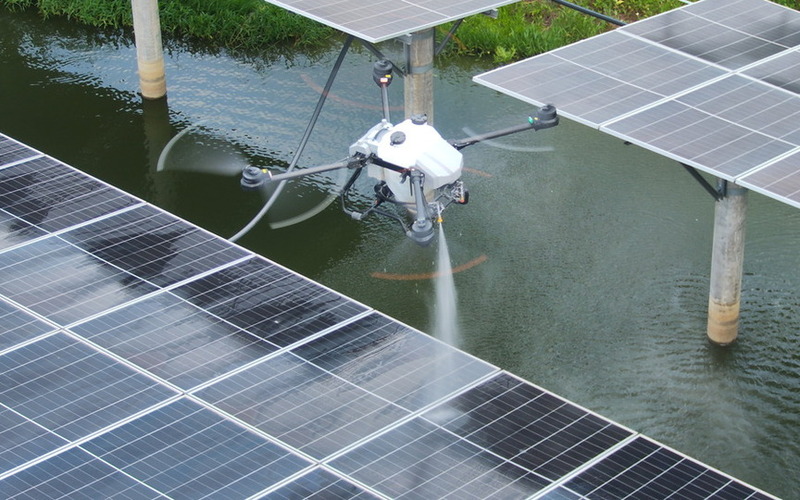
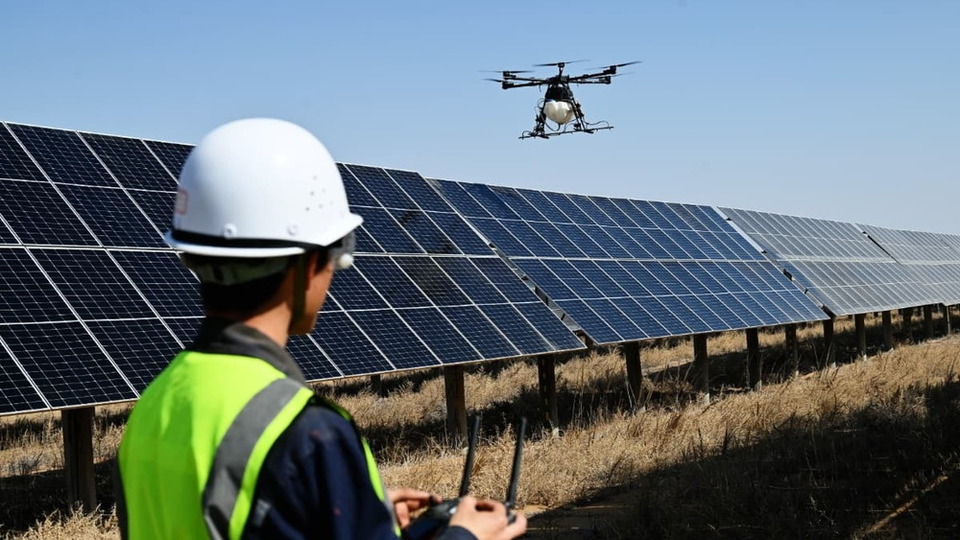
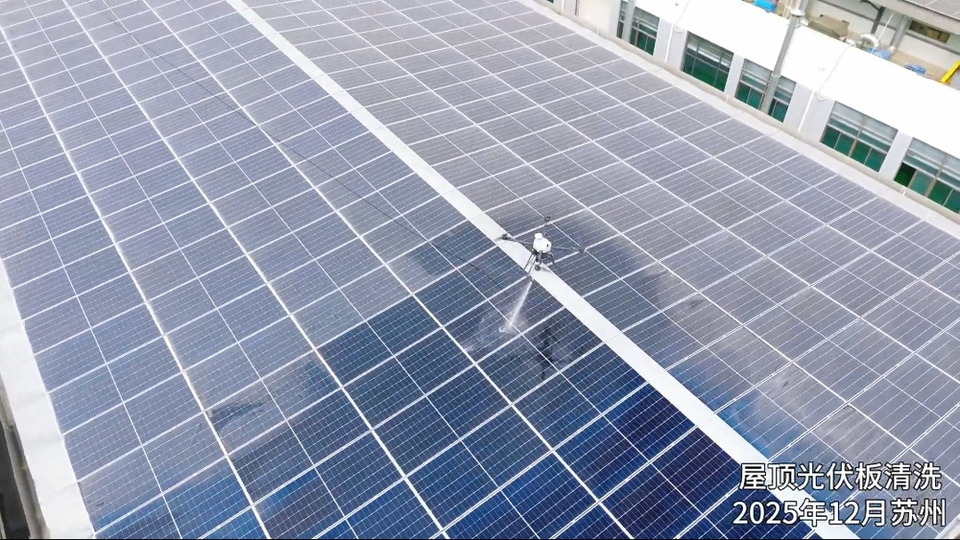
The core is the cleaning payload itself — spray module, water tank, pump and hose system carried under the aircraft. Our FC100 solar panel cleaning payload is built around low-pressure spray: it wets and rinses the glass without boots on the panels and without the micro-crack risk of contact cleaning.
Cost Block 2: The Flight Platform
If you already operate a suitable industrial airframe, the incremental cost is mainly the payload. If you do not, the platform is the second line of the budget. We build for DJI platforms as compatible platforms — we supply the cleaning system, the airframe stays yours.
Cost Block 3: Ground Support
Pump and hose rig, a water source at the site, operator training and consumable spares. One-time or low-frequency items, reused across every cleaning cycle.
The Same Unit: Cost per MW per Cycle
Converted into one unit, the two quotes read like this:
| Cost item | Manual crew | Drone setup |
|---|---|---|
| Pricing unit | per worker-day | per MW per cycle |
| Labor on site | Whole crew, every wash | One operator per shift |
| Access equipment | Ropes, lifts or platforms | None — the drone carries the spray |
| Water | Trucked or lifted to array level | Pumped from an on-site source |
| Downtime | Sections offline while crews work | Row-by-row; plant largely stays live |
| Scaling to more MW | Labor days scale linearly | More flight time per cycle |
The pattern in the table is the whole argument: manual cost rides on labor, drone cost rides on equipment. Labor repeats with every wash; equipment is paid for once and then amortized across cycles. A fuller walkthrough of the workflow itself is on our solar panel cleaning solution page.
The Annual Math for a 1 MW Plant
Owners do not buy single washes; they run a cleaning schedule. The framework is simple:
Annual cleaning cost = cleaning cycles per year × cost per MW per cycle × plant size in MW
The cycles side matters more than most buyers expect. In hot, dry regions soiling runs hard: five-year measurements in Qatar put average losses near 0.5% per day, and NREL figures for the Middle East show annual losses above 20% where panels go unwashed. At those loss rates, the cleaning schedule pays for itself — the question is only which method keeps the cost per cycle down as the plant grows.
This is where the unit difference from the first paragraph comes back. A per-worker-day quote makes the annual number hard to see; a per-MW-per-cycle quote plugs straight into the formula above.
When Manual Cleaning Still Wins
Honest section, because drone cleaning is not the answer everywhere:
• Small rooftops. A few kilowatts of panels on one low building is a ladder-and-squeegee job; no equipment budget justifies itself.
• Regular heavy rain. Where rain does most of the rinsing and soiling stays light, long cleaning intervals shrink the drone's cost advantage.
• An idle in-house crew. If you already pay a maintenance team that can wash panels between other work, their marginal cost is near zero.
From Comparison to Quote
Comparisons in articles can only go so far; your plant has its own layout, water situation and washing schedule. Send us three things — approximate plant size in MW, site type (rooftop, ground-mount or floating), and how water is sourced on site — and we will return a line-item quote covering payload, platform compatibility and ground support, with final figures confirmed at quotation.
Ready to Run the Numbers on Your Plant?
Send the three details above through our contact page and we will put your manual quote and our per-cycle quote on the same table.