Wildfire Drone Bucket Applications
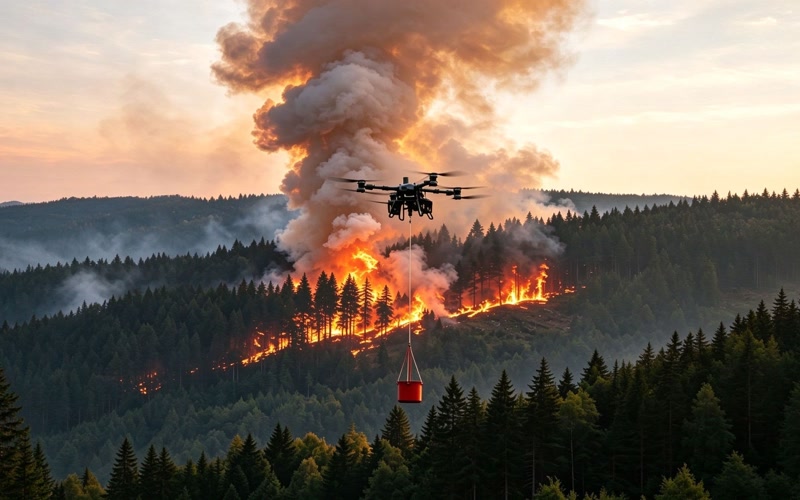
When a wildfire starts moving across a ridge, the first water on the fire matters more than the biggest water later. Fire trucks need roads. Helicopters are effective but expensive, and in many regions there simply are not enough of them stationed close by. A heavy-lift drone carrying a water bucket fills the gap in between: it launches from near the fire, flies a direct line over terrain that stops vehicles, and repeats runs all day from the closest safe water source.
This article walks through how a drone water bucket is actually used in wildfire response — the working cycle, water source selection, drop tactics, and the honest limits you should know before adding one to your equipment list.
Why a Bucket, Not a One-Shot Drop
Some drone firefighting setups release a single payload of water or extinguishant, then fly home to reload. A bucket works differently: it stays attached to the drone and refills at a water source, so the aircraft keeps looping between water and fire for as long as the batteries hold.
Because the bucket is reusable, the value compounds over a shift. Instead of one dramatic drop, you get a repeatable cycle: fill, fly, drop, return. For first response — holding a fire edge until ground crews arrive, or protecting one specific structure — that repetition is the whole point.
The Working Cycle: Scout, Fill, Fly, Drop, Repeat
Step 1: Scout the fireline
Before the first drop, the operator reads smoke direction, wind, and the active edge of the fire, and marks where water will do the most good. Ten minutes of scouting saves far more time in the air than it costs.
Step 2: Set the refill point
The closest safe water — a river bend, a farm pond, a portable tank staged by the ground crew — becomes the loop's anchor. Shorter refill distance means more drops per battery.
Step 3: Fill the bucket
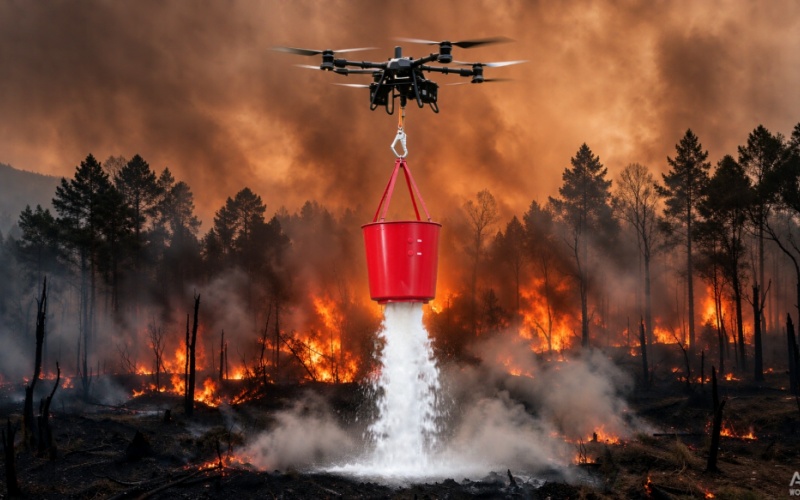
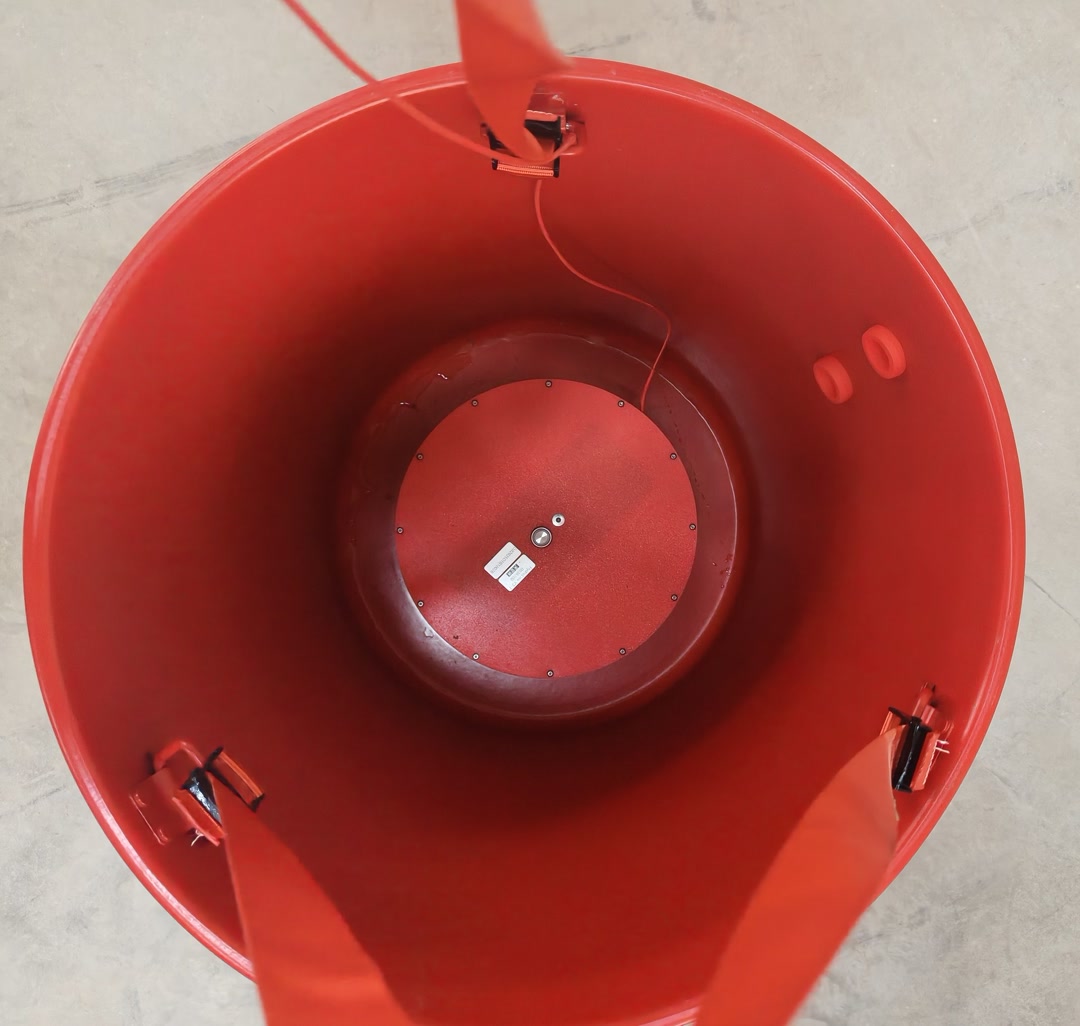
The drone hovers low over the water and the bucket fills. A remote-controlled quick-release valve lets the operator start and stop filling from the controller, without anyone standing in the water.
Step 4: Fly to the drop zone and release
The pilot flies the loaded bucket along a cleared approach and releases water along the fire edge or onto the target with the same remote trigger.
Step 5: Return and repeat
Back to the refill point, battery swaps on a rotation, and the loop continues. This rhythm — not any single drop — is what a bucket buys you.
| Cycle phase | What happens | What affects the time |
|---|---|---|
| Scout | Read wind, smoke, and the fire edge; pick drop zones | Visibility, terrain, radio traffic |
| Refill | Hover over water and fill the bucket | Water depth, debris, refill distance |
| Transit | Carry the load to the drop zone | Distance, wind, bucket weight |
| Drop | Aim along the edge or target and release | Wind, convection, pilot skill |
| Return | Head back for the next load | Battery swap rotation |
Choosing a Water Source
Rivers, lakes, farm ponds, and portable tanks all work. The practical checks are depth (shallow water scoops mud and debris), floating obstacles near the fill point, and a safe approach angle for the pilot. Where natural water is far away, ground crews can stage portable tanks or folding pools, and the drone loop runs entirely between that tank and the fireline.
Drop Tactics on the Fireline
In practice, small repeated drops beat one big dump. A steady rhythm of drops along an active edge keeps it cool and slow; spot drops can pinch off a flank that is trying to run uphill; and a focused series can buy time for a threatened structure. Coordination matters as much as aim: the ground crew and the pilot stay on the same radio channel so nobody works under the flight path, and drops are made into the wind side of the edge so drift is predictable.
Pairing the Bucket with the Right Platform
The bucket hangs from a heavy-lift drone on a quick-release hook. There is a trade-off to size: a larger bucket moves more water per run but drains batteries faster; a smaller bucket turns shorter, faster cycles. We supply a hard-shell firefighting water bucket compatible with DJI heavy-lift platforms such as the Matrice 400, with a remote-controlled release valve. Capacity and configuration details are confirmed at quotation.
Honest Limits: What a Drone Bucket Cannot Do
A bucket under a drone is a first-response and point-protection tool, not a replacement for a suppression fleet. Keep these limits in view:
- Water per run is modest compared with a manned helicopter.
- High wind, night conditions, and dense smoke cut into usable flight time.
- Wildfire zones usually carry temporary flight restrictions — you need authority coordination before flying.
- The drone works with ground crews, not instead of them.
Who This Fits
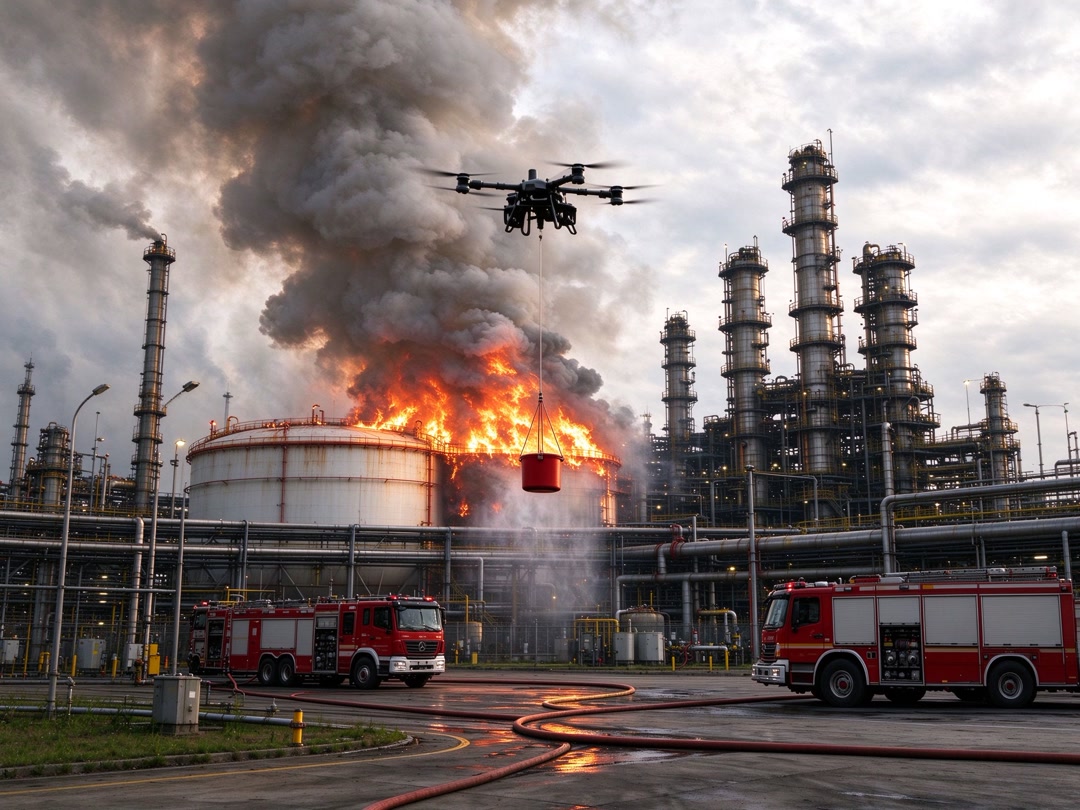
Rural fire departments and forestry teams that cannot justify a helicopter budget; emergency service contractors adding aerial capability; and industrial sites — refineries, tank farms, storage terminals — where the first minutes of a tank fire decide everything and a drone on standby is far cheaper than the alternative.
Plan Your Wildfire Response Setup
Tell us your drone platform and your typical fire scenario, and we will return a line-item quotation covering the bucket, the release system, and delivery scope — details confirmed at quotation. For background, start with how a drone water bucket works and the fire fighting drone price guide.