Drone Rice Seeding: Three Methods Compared
Every rice season starts with the same decision: how do you get seed into the field? The three mainstream answers — broadcasting, nursery and transplanting, and row seeding — differ widely in seed usage, labor and how the rest of the season goes. Pick the wrong one for your conditions and you pay for it all season: in wasted seed, in hired crews, or in a stand that never evens out.
This article compares the three methods side by side, then explains how drone row seeding works in practice and which situations it fits best. All module numbers below follow the official specification sheet — nothing here is estimated.
Three Ways to Seed a Rice Field
Broadcasting is the oldest and simplest method: scatter seed across the field by hand or spinner, either dry onto prepared soil or pre-germinated into water. Transplanting grows seedlings in a nursery first, then moves them to the field by hand or transplanting machine. Row seeding sits between the two: seed goes directly into the field like broadcasting, but placed in evenly spaced lines at a controlled rate.
None of the three is universally "best". The right choice depends on labor costs, field conditions, and what equipment you already own. The comparison below is about making that trade-off visible.
Broadcasting: Cheap at Sowing, Wasteful Downstream
Broadcasting wins on simplicity. One pass, no nursery, no machines beyond a spreader — which is why it remains the default across much of Asia. The costs show up after sowing: seed scattered on the surface or into standing water is exposed to birds and uneven moisture, so farmers compensate by raising the seeding rate. Stands come up patchy — thick clumps next to bare patches — and without rows, water management, fertilization and weeding all lose their reference lines.
Lodging is another recurring complaint with dense broadcast stands: plants crowded together grow taller and weaker, and a heavy head of grain or a storm lays the crop flat right before harvest.
Transplanting: Uniform Stands, Heavy Labor
Transplanting produces what broadcasting cannot: an even, early stand with clean spacing, which is why it has dominated high-yield rice regions for decades. But that uniformity is bought in the nursery. Seedbed preparation, sowing, seedling care, pulling, and transport all happen before a single plant reaches the main field — and the transplanting step itself, whether by hand crews or riding machines, is one of the most labor-intensive operations in the whole season.
As rural labor becomes scarce and expensive, this hidden calendar — three to four weeks of nursery time plus the transplanting crew — is exactly what pushes many growers to look at direct-seeding alternatives.
How Drone Row Seeding Works
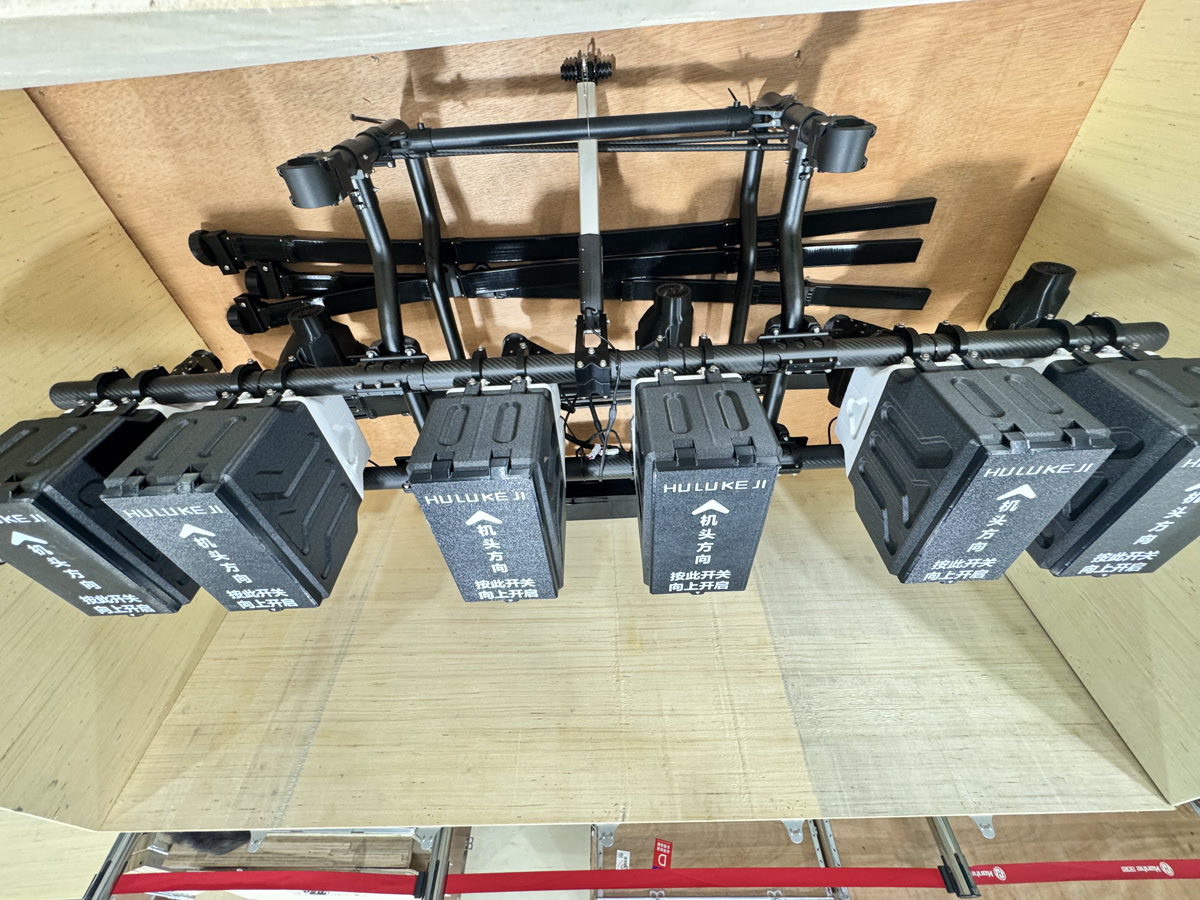
Row seeding removes the nursery but keeps the discipline of lines. A dedicated seeding module replaces the spray tank on a heavy-lift agricultural drone: the aircraft flies low over the prepared field, and the module deposits seed at ground level in straight rows — no scattering into the wind, no seed left floating on the water surface.
The row-seeding module carries 4–6 tanks of 10 L each, for up to 50 kg of seed per flight. Row width is adjustable from 90 to 150 cm, and the seeding rate is set from 15 to 195 kg per hectare to match the variety and local practice. It mounts on the DJI Agras T55 / T60 / T70P / T70S / T100S and XAG P150 / P200 platforms — the same drones most spray-service teams already fly.
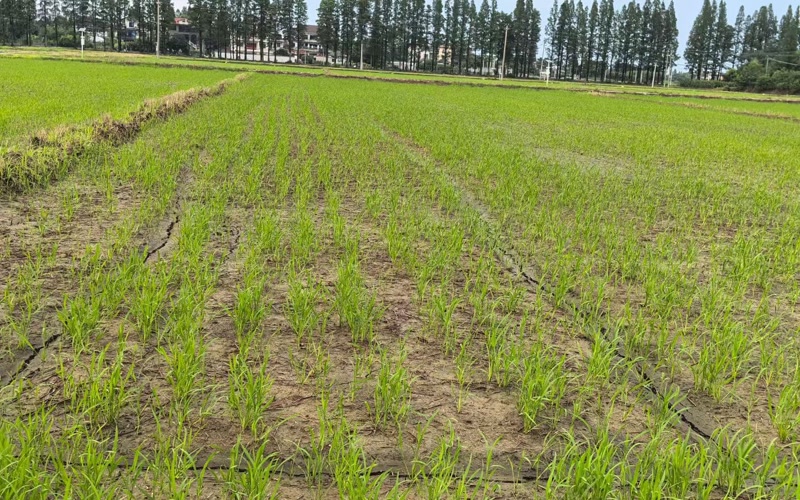
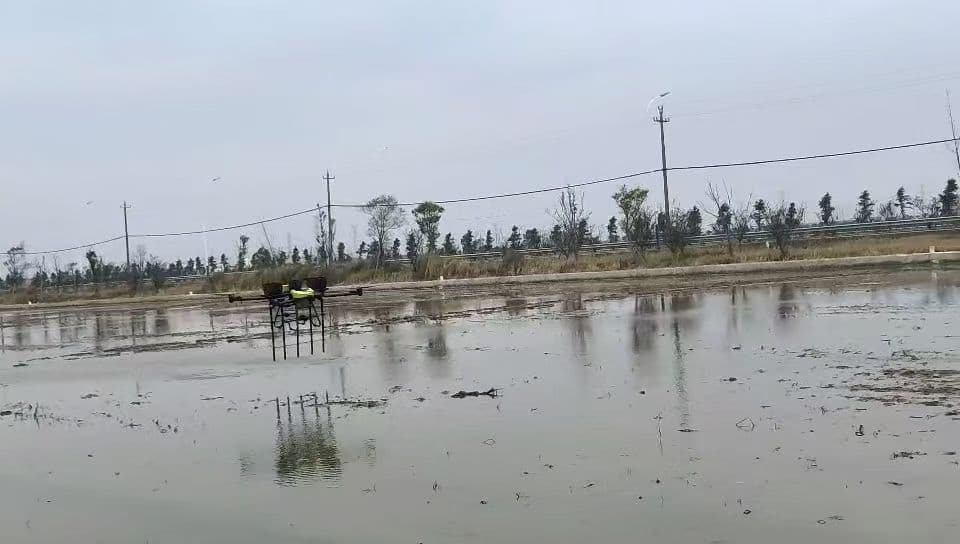
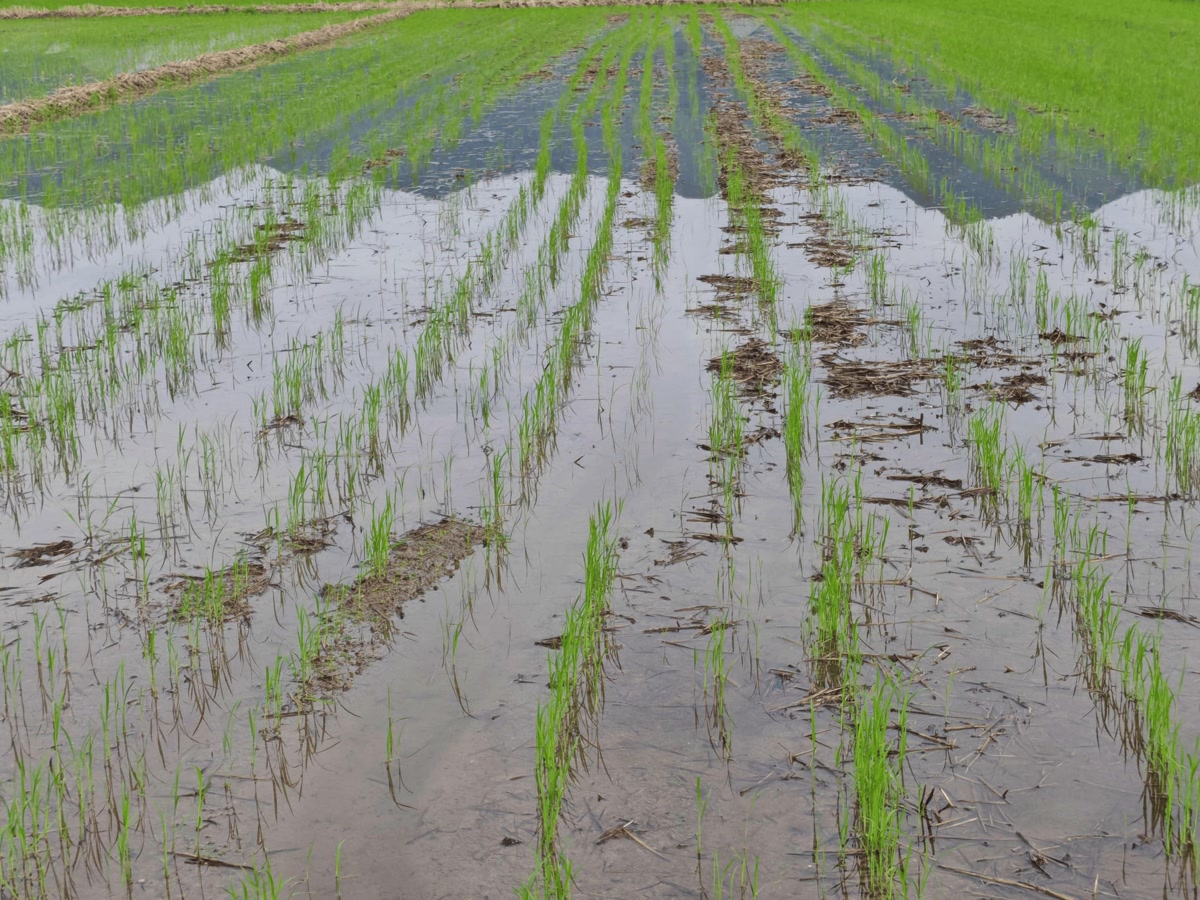
Because seed lands at ground level in rows, the first week already tells you how the season will go: lines of seedlings you can count from the air. Everything downstream follows those lines — water inlets and outlets match the rows, fertilizer goes where the plants are, and weeding equipment or spot treatments have a clear path instead of a random stand.
Row Seeding vs Broadcasting vs Transplanting: Side by Side
The table below compares the three methods on the factors that actually decide a season. "Yield potential" is deliberately phrased as potential — the final number always depends on variety, climate and management, not on the seeding method alone.
| Factor | Broadcasting | Transplanting | Drone Row Seeding |
|---|---|---|---|
| Seed usage | Highest — extra seed compensates for surface loss and uneven spread | Lowest per hectare, but nursery land and nursery seed add overhead | Controlled rate, adjustable 15–195 kg/ha per variety and practice |
| Labor at sowing | Minimal | Heaviest — nursery care, pulling, transport, transplanting crews | Minimal — one operator, one drone, seed loaded in tanks |
| Calendar | Direct to field | 3–4 weeks of nursery time before the main field | Direct to field |
| Field management | No lines — water, fertilizer and weed control lose their reference | Uniform spacing, easy to manage | Straight rows 90–150 cm — irrigation, fertilization and weeding follow the same line |
| Stand quality | Patchy; dense clumps prone to lodging | Even, early stand | Even rows visible in the first week |
| Yield potential | Limited by uneven stand | High, depends on transplant quality and recovery | Even stand supports potential, depends on field prep and seed quality |
| Equipment | Spreader at most | Nursery setup, transplanting machine or crews | Module on the DJI Agras or XAG drone you already fly |
When Row Seeding Makes Sense
The clearest fit is the spray-service team — the crew that already flies Agras or XAG drones for crop protection. For them, row seeding is not a new business line to build; it is another season on the same aircraft. Spray in the growing season, seed before it, and the drone earns across more of the calendar instead of sitting idle between contracts. Cooperatives and farms with medium-to-large contiguous fields get the second-biggest benefit: sowing speed scales with area, and the row structure simplifies management across every hectare.
Row seeding also fits regions that are already moving from transplanting to direct seeding — the module keeps the labor savings of direct seeding but adds back the line discipline that plain broadcasting gives up. You can see the full workflow in our rice seeding solution.
What Row Seeding Demands From You
An honest section, because no method is free. Row seeding places seed at ground level — which means it rewards a well-leveled field and punishes a rough one: deep spots drown seed, high spots sit dry. Early water management matters more than with transplanting, since young seedlings in the main field have no nursery head start. And the module is only as precise as its calibration: seeding rate should be verified per seed lot, because seed size and treatment change how the metering system feeds.
If your fields are small, irregular, or poorly leveled, broadcasting with its known costs may still be the pragmatic choice — or a staged transition, starting with your best-prepared blocks.
Compare the Methods on Your Own Fields
WillFly Drone has delivered 1,000+ units across 30+ countries since 2016, with a 12-month warranty on the row-seeding module. Tell us your field size, current seeding method and drone platform, and we will help you run the numbers for your own conditions — including what a switch from broadcasting or transplanting would change in seed, labor and schedule.
Contact us for a row-seeding consultation — specifications, platform compatibility and a configuration matched to your fields.