Window Cleaning Business ROI & Payback Math
Parts one and two of this series covered what a drone window cleaning business costs to start, and the equipment line items that most first-time budgets miss. This final part turns to the other side of the ledger: what the business actually earns, and how long the equipment takes to pay for itself. If you have not read them yet, start with the startup costs of a drone window cleaning business (Part 1) and the equipment cost breakdown (Part 2) — the numbers below build directly on both.
The Revenue Side: What a Drone Crew Can Bill
Facade cleaning is sold three ways: per square meter for one-off jobs, per visit under annual programs, or as a fixed day rate. Whichever model your market uses, your revenue ceiling comes from one number — how much glass a crew can finish in a working day.
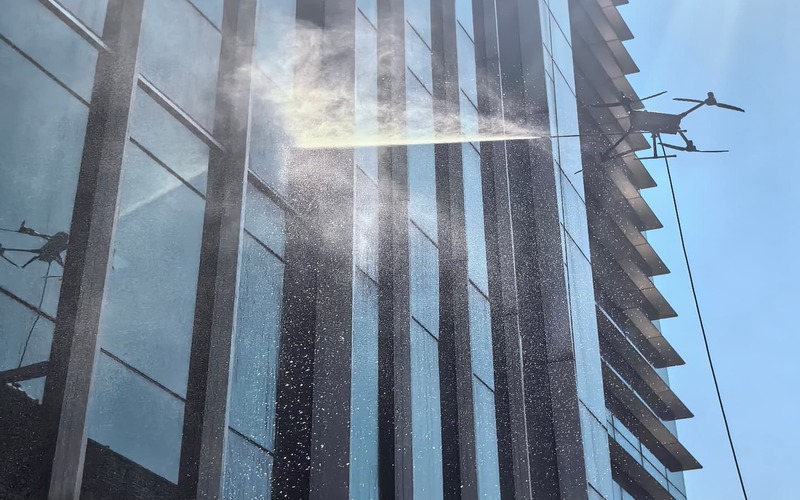
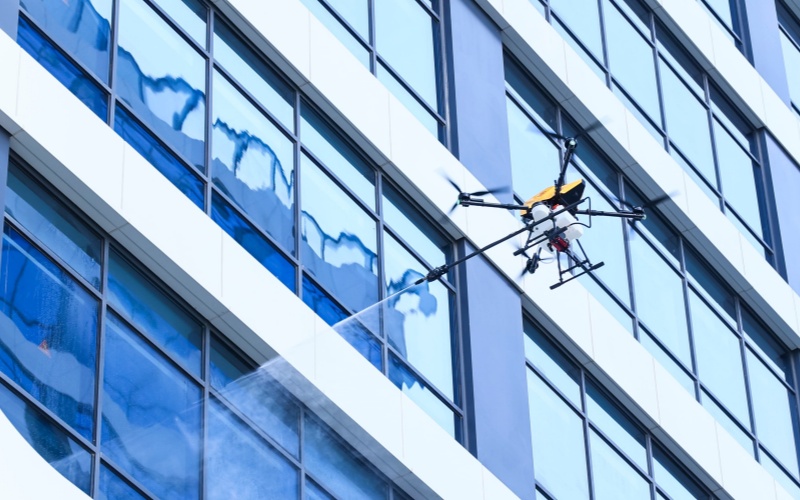
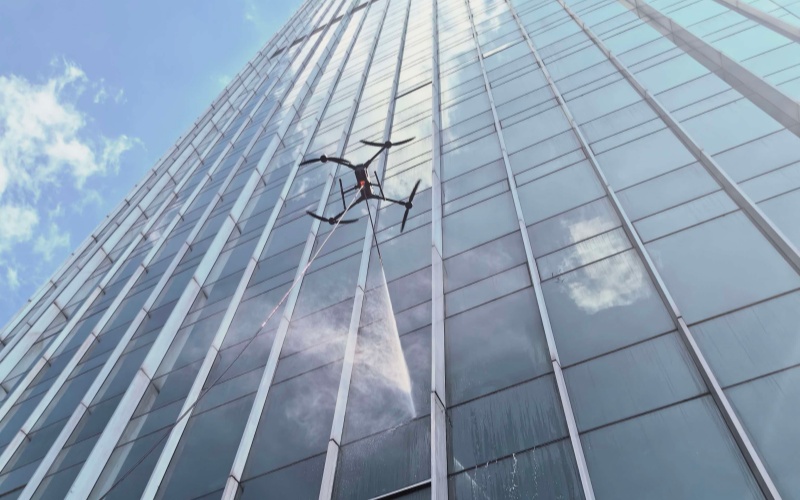
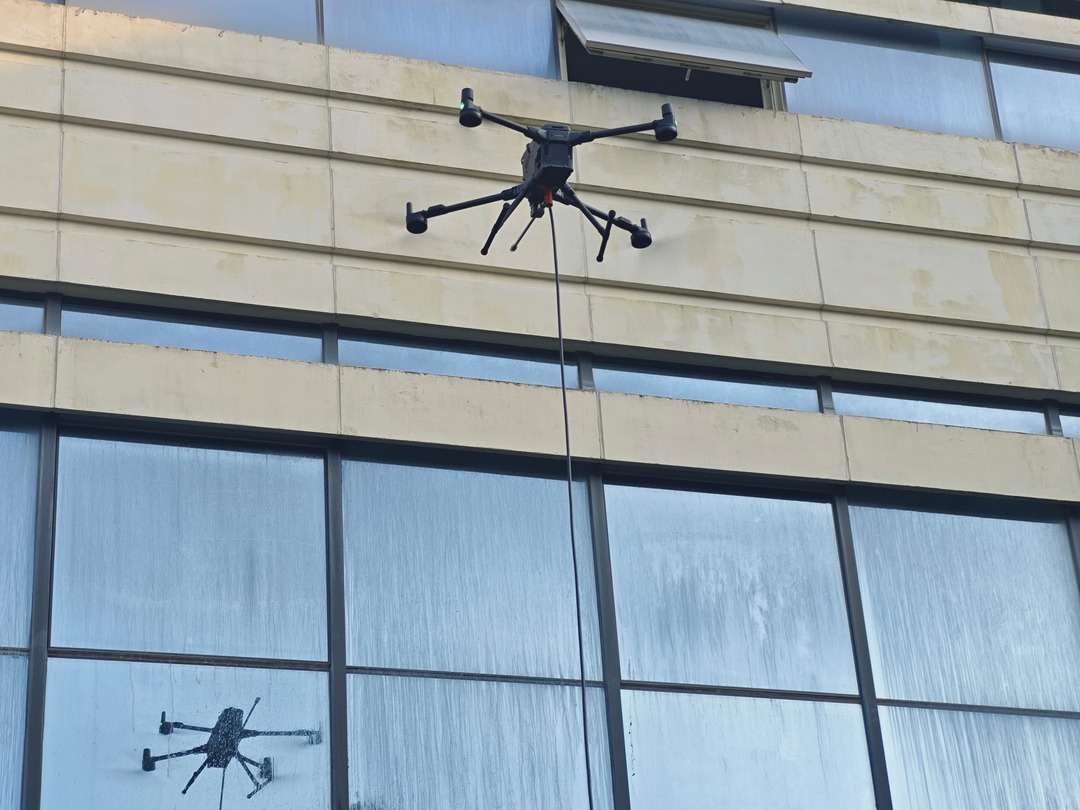
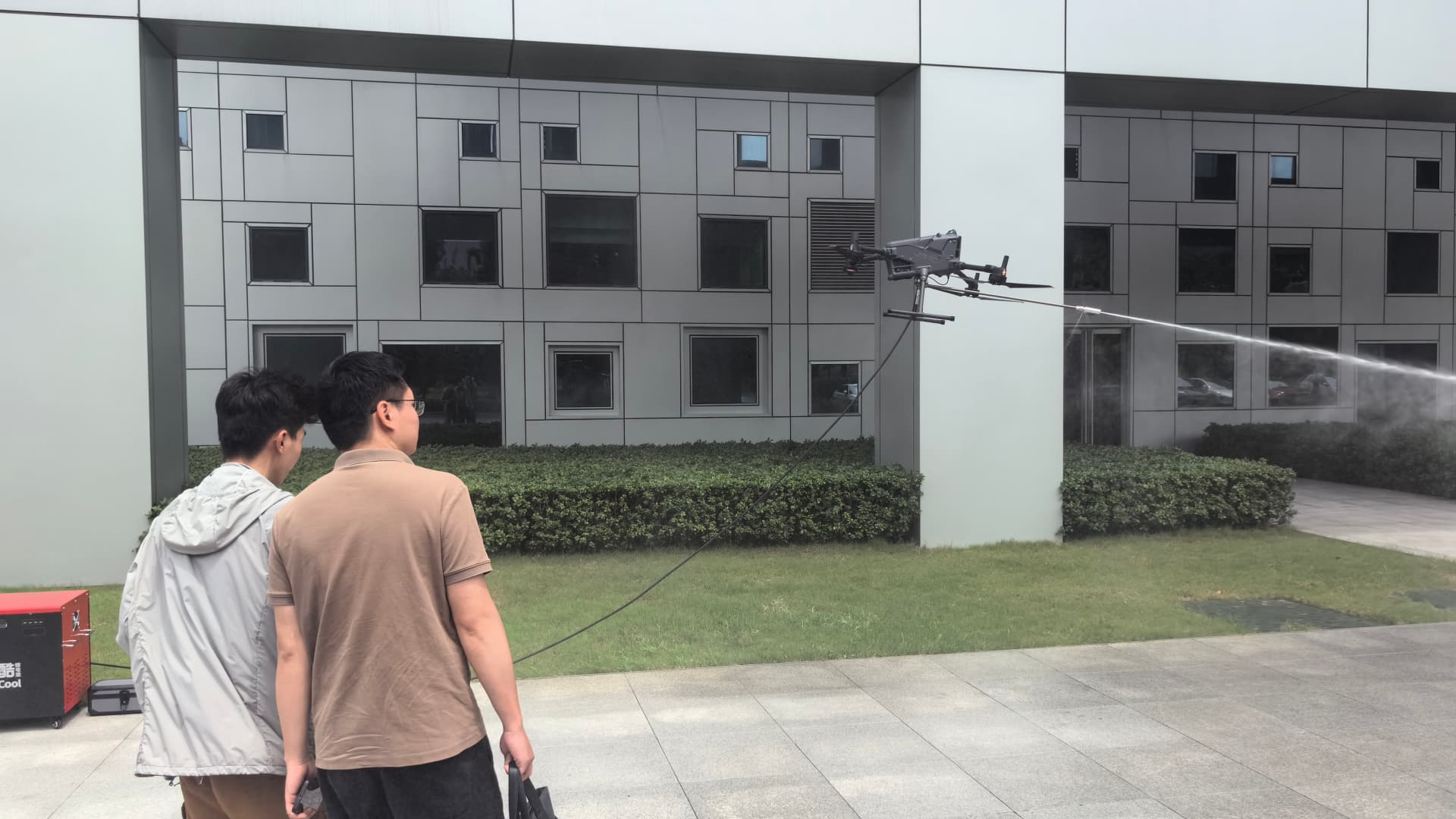
This is where the equipment choice matters most. A rope access technician covers a working swath of roughly 1.8 to 2 meters per pass, which is why a full tower keeps a rope crew busy for weeks. A two-person drone crew, by contrast, cleans 5,000 to 6,000 square meters of glass curtain wall per day — nobody on the wall, nobody waiting on weather windows for suspended work beyond the usual wind holds.
Multiply daily coverage by your local rate and you get your daily billing capacity. That single multiplication is the foundation of the whole ROI calculation.
The ROI Formula
Payback math for a cleaning rig comes down to one division:
Payback period = total equipment investment ÷ monthly gross profit
Monthly gross profit is monthly revenue minus everything it costs to keep flying: operator salaries, batteries and consumables, insurance, transport, and maintenance. Part 1 of this series put the battery replacement reserve at $5,000–$10,000 per drone per year — that is roughly $400–$800 a month you must set aside before counting profit. Total entry investment, for a complete professional system, landed in the $15k–$50k+ range per unit in Part 1.
Worked Example: One Unit, Two Operators
Here is the formula in action with placeholder numbers — swap in your own local rates before making any decision:
Revenue: assume a conservative 12 effective working days a month once weather, travel between sites and maintenance are deducted, at 3,000 square meters finished per day. At an illustrative market rate of $0.50 per square meter, that is $18,000 a month.
Costs: two operators at $2,000 each, plus $1,500 for water, power and consumables, $700 for the battery reserve, and $800 for insurance and transport. Total: $7,000 a month.
Result: $11,000 monthly gross profit. Against a mid-range entry investment of around $40,000, the equipment pays for itself in under four months of billable work — after which the same rig keeps producing.
These are placeholder figures for the math, not a quote. Your local labor rates, your pricing, and how many days you actually bill decide the real result — but the formula does not change.
Rope Crew vs Drone: The Monthly Picture
| Monthly line item | Rope access program | Drone cleaning module (2-person crew) |
|---|---|---|
| Crew cost | 4–6 technicians on the wall plus ground support, priced by the hour | 2 operators, both on the ground, fixed salaries |
| Daily coverage | ~2 m swath per technician per pass; a tower takes weeks | 5,000–6,000 m² per day on glass curtain walls |
| Recurring program cost | Baseline | 20–40% lower total cost on recurring programs |
| Billable structure | Labor hours dominate the quote | Equipment day rate — margin grows with utilization |
| Insurance trend | Climbing premiums for suspended work | No suspension, no fall exposure |
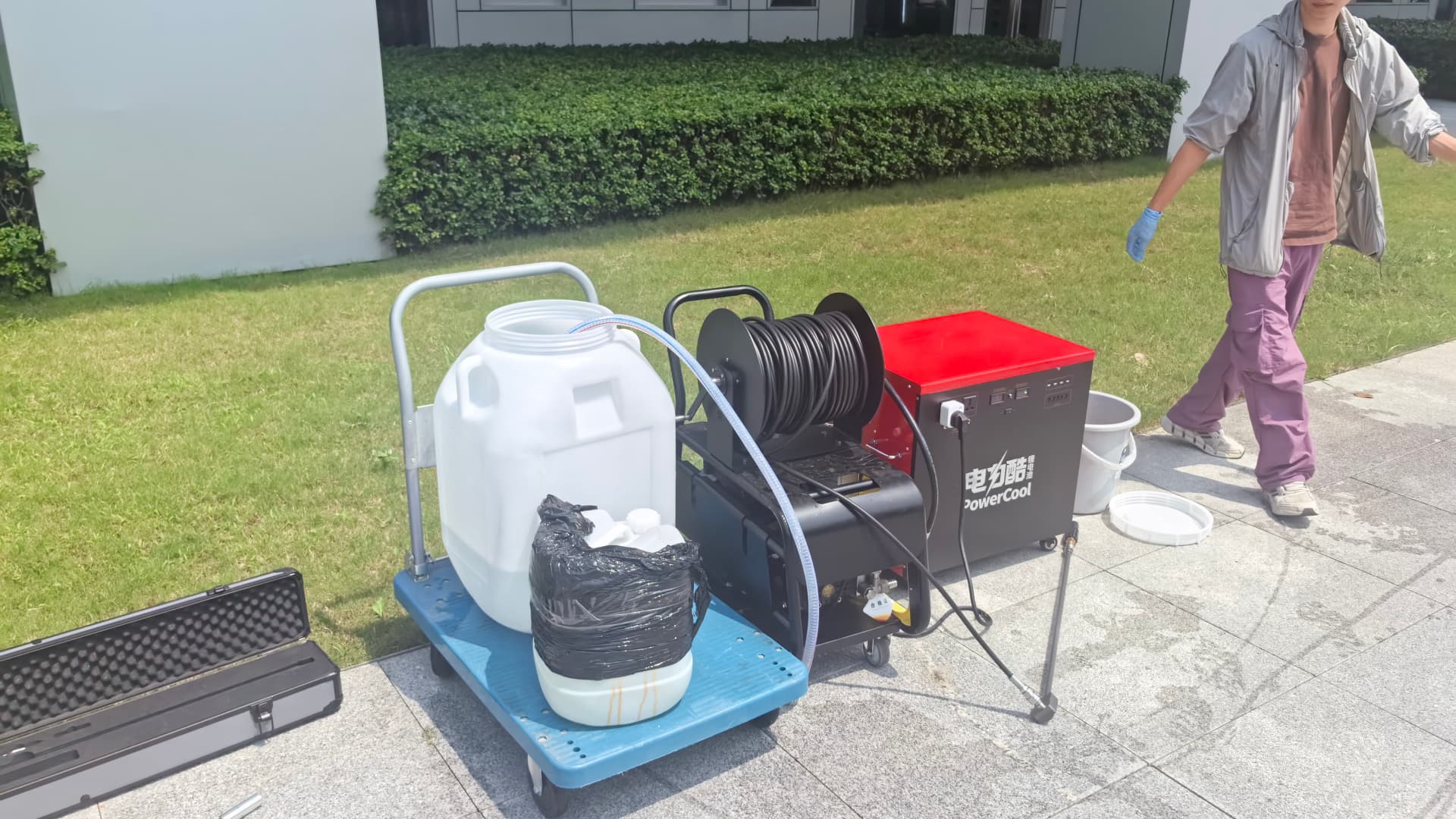
The structural difference is the last row's neighbor: with a rope crew, most of what the client pays becomes labor cost. With a drone rig, the biggest cost is the equipment you already own — so every extra billed day flows much closer to gross profit.
Payback Period at Three Starting Scales
Single unit, owner-operator. The leanest entry: one platform, one cleaning module, one ground unit. Payback depends almost entirely on utilization — an owner who personally pilots and sells keeps overhead near zero, so even modest monthly billing covers the investment quickly.
Two to three units. This is where the redundancy advice from Part 1 pays off. A spare rig means a down drone never cancels a contract, and multiple crews can split a large program instead of finishing it alone. Unit economics stay similar; the risk drops.
Established cleaning company adding drones. Fastest payback of the three. The clients, contracts, vehicles and back office already exist — the drone division reuses all of it, so customer acquisition cost is close to zero and the new equipment slots into demand that is already signed.
What Moves Your ROI Most
Four variables swing the payback period more than any spec sheet:
Local labor rates. In high-wage markets, the 4–6 rope technicians a tower requires are expensive to replace — and harder to hire as the trade ages out. The drone's labor savings are worth most exactly there.
Climate and season. Rainy seasons and freezing months cut effective working days. Budget the year, not the best month.
Building mix. Flat, repetitive glass curtain walls are where the 5,000–6,000 m²/day figure is earned. Ornate facades with deep soffits clean slower and shrink daily coverage.
Contract type. Recurring annual programs are what make the math work — they keep utilization high month after month. One-off jobs pay, but leave the rig idle between them.
When the ROI Math Does Not Work
An honest guide has to draw the line. The payback math struggles in three situations. First, one-off low-rise jobs: if the work is a three-story shopfront twice a year, rope or even a water-fed pole is cheaper than owning a drone rig. Second, restricted airspace with a slow permit process — if every job needs months of approvals, your effective working days collapse. Third, facades that are mostly geometry a drone cannot reach: deep soffits, tight light wells, heavily recessed glazing. There, the winning model is the mixed program from our previous comparison — drones for the repeatable 80%, rope crews for the difficult 20%.
One more failure mode comes before any of these: buying the full fleet before signing the first contract. The math only starts when there is work to fly.
The Bottom Line
A drone window cleaning business is a utilization business. The equipment pays for itself when a two-person crew keeps converting 5,000–6,000 square meters a day into billed work — faster than rope access, at a 20–40% lower program cost, with nobody leaving the ground. Run the formula with your own market's numbers before you buy; the ranges in this series give you every input you need.
WillFly Drone has built cleaning payloads since 2016, with more than 1,000 units delivered to customers in over 30 countries, all backed by a 12-month warranty. Send us your target buildings' photos and heights through our contact page, and we will help you pressure-test the payback math with real program figures. You can also reach us directly on WhatsApp at +86 138 128 56149.
See the full hardware specification on the M400 cleaning module product page.