Fire Fighting Drone Use Cases Explained
Fire services and industrial site operators do not buy drones because drones are interesting. They add them because four specific job types keep proving where an airborne thermal camera and a water bucket beat what ground teams can do alone. This article walks through those four use cases, then covers what a complete firefighting drone setup actually includes.
Use Case 1: Wildfire Support in Difficult Terrain
Wildfires rarely start where a truck can park. Ridge lines, gullies and scrubland slow ground crews to a walk precisely when speed matters most.
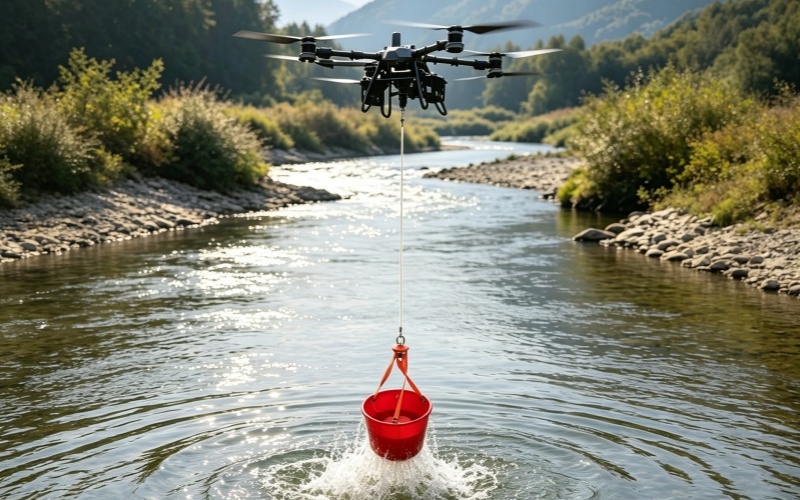
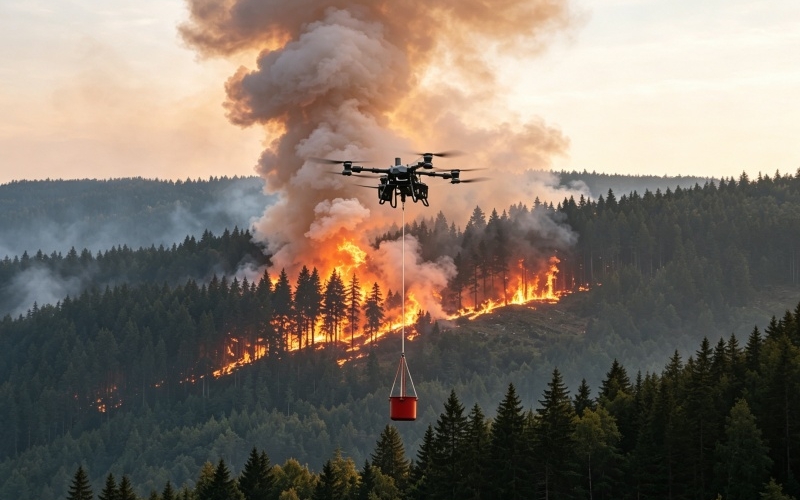
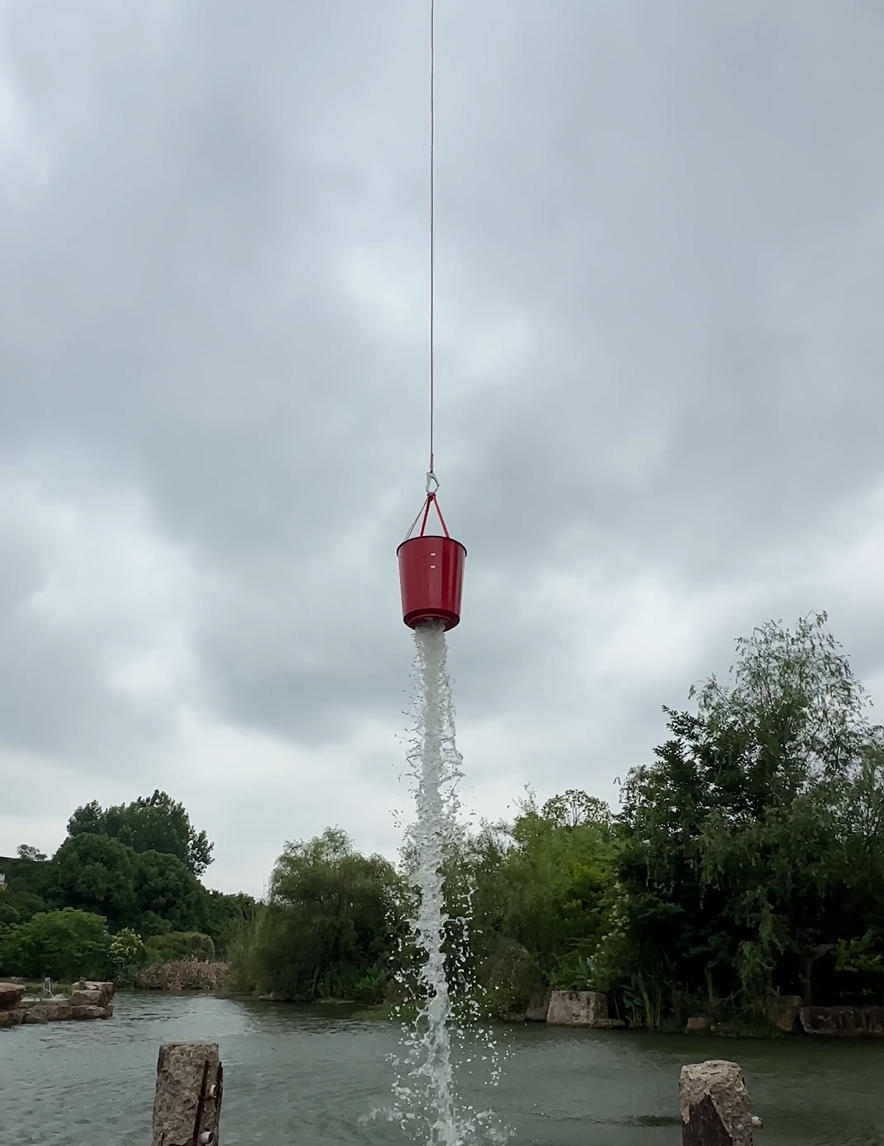
A drone covers that same terrain in minutes. The thermal camera sweeps the slope and marks the fire line and any smoldering pockets behind it. The firefighting water bucket hanging below then shuttle-drops water straight onto spot fires - dipping from a river or lake on each pass, releasing through the valve on target, and rotating through spare buckets so the rhythm never stops for a refill.
The value shows up at the edges of the incident: the spot fire 400 meters ahead of the main line, on a slope no engine could climb, caught while it is still a bucket-sized problem.
Use Case 2: High-Rise and Rooftop Fires
When fire reaches a roof or an upper floor, the first questions are always the same: where exactly is the heat, and how far has it spread inside the structure?
A thermal drone answers both from the air in a single flight. It locates the hottest point on the roof or facade, tracks spread into adjacent sections, and feeds the incident commander a live picture while ladders and aerial platforms are still being positioned. Where access allows, the bucket adds a targeted drop on the hottest zone - a support role that buys time for crews, not a replacement for them.
For building owners and facility managers, the same thermal routine doubles as a prevention tool: periodic roof and electrical-room scans catch overheating equipment before it becomes a fire call.
Use Case 3: Industrial and Storage Site Fire Watch
Coal stockpiles, tank farms, landfills, recycling yards and construction sites all share one trait: spontaneous heating that smolders for days before it flames.
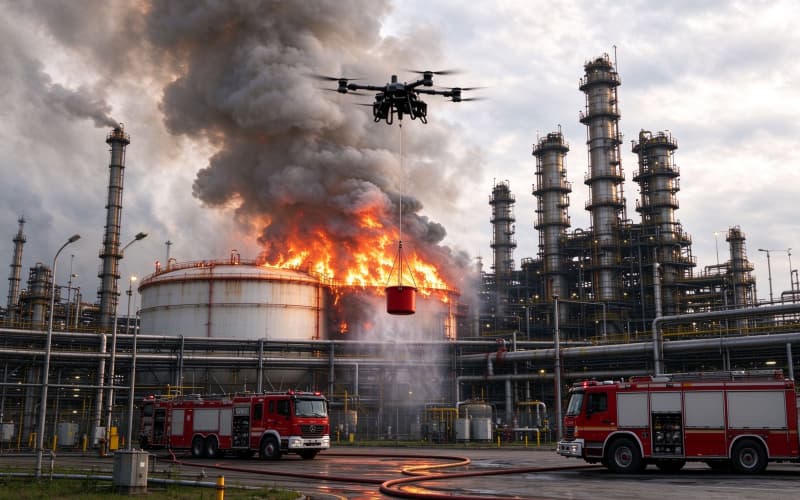
A scheduled thermal patrol - a few minutes of flight a day - flags those hotspots while they are still a hose-and-shovel problem. And because the drone can carry a suppression bucket on the same flight, an incipient fire at a hard-to-reach corner of the site can be doused on the spot instead of waiting for the fire brigade to negotiate plant roads and gates.
For these operations, the bucket's agent compatibility matters: it runs water, fluoroprotein foam, or water-based extinguishing agents, so the drop matches the fuel type on site.
Use Case 4: Search and Rescue After Dark
Not every emergency involving fire happens at noon. Missing person searches at night, evacuation checks across a burned area, and rescue calls in open country all share the same bottleneck: ground teams searching square meters by flashlight.
A thermal drone sweeps the same area in a grid pattern and flags human heat signatures in real time, directing ground crews straight to the point instead of sweeping blindly. It is the same sensor that finds fire hotspots - pointed at people instead.
What a Complete Setup Includes
Across all four use cases, the pieces of a working system stay the same:
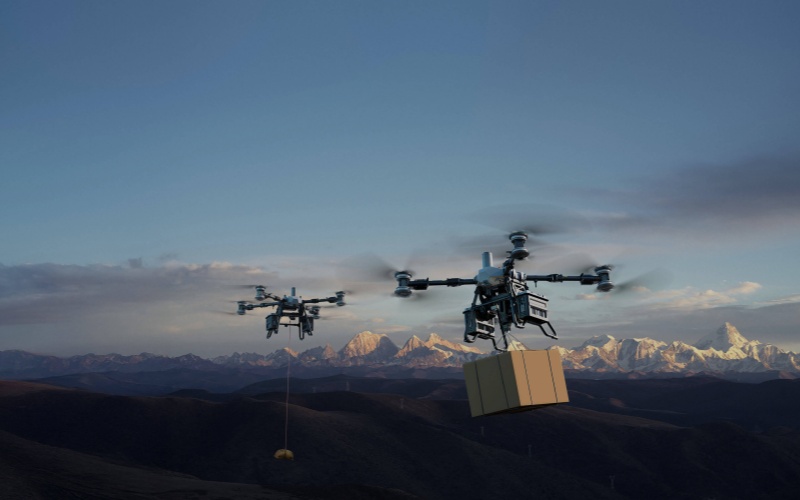
A platform with enough payload capacity. The drone's lift rating decides which bucket size it can carry, from 40L up to 200L.
A thermal camera payload. This is what turns the flight from a visual tour into detection, tracking and verification.
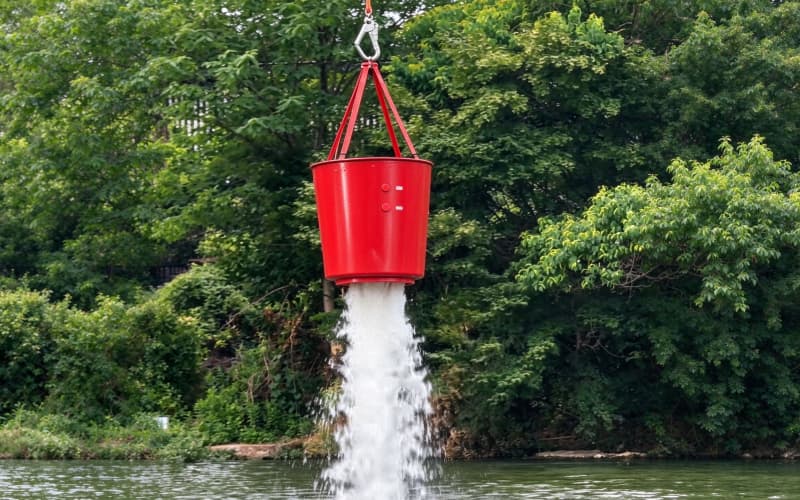
The water bucket with valve control. Wireless control, 0-100% linear valve opening, ≤0.6 s response and a maximum flow of 50 L/s, with top and bottom water collection.
Spare buckets for rotation. The system automatically identifies up to five buckets for continuous operations.
Trained operators. The hardware is half the system; the crew that reads the thermal feed and times the drops is the other half.
If you want the broader picture of how thermal detection and aerial suppression work together, start with Thermal Drone Firefighting: Uses and Benefits. For the full mechanics of fill, release and valve behavior, see How Drone Firefighting Water Buckets Work. And for a structured way to compare payloads before you buy, see our firefighting payload selection guide.
Frequently Asked Questions
Can a firefighting drone replace fire trucks?
No - and it is not designed to. It covers the gaps trucks cannot fill: steep terrain, the first minutes before arrival, night detection and repeat spot drops. The strongest setups use both together.
What bucket capacity should we choose?
Start from your platform's payload capacity, not from the bucket. Light platforms pair with 40-60L buckets; heavy-lift platforms carry up to 200L. We confirm the exact pairing for your aircraft at quotation.
How fast can the system respond to a fire call?
The drone itself is airborne in minutes. What it changes is the time to eyes-on-scene and first water on target in places that ground vehicles reach slowly or not at all.
Does night operation need special approval?
The thermal camera and valve control work natively at night, but night flight authorization follows your local aviation authority's rules - check them before planning night missions.
Request a Site-Specific Proposal
WillFly Drone is a drone payload manufacturer and DJI partner since 2016, with deliveries to 30+ countries and more than 1,000 units in the field. Describe your mission profile - terrain, fire risk, platform - and we will spec the thermal and bucket configuration to match. Reach us through the contact page.