Thermal Drone Firefighting: Uses & Benefits
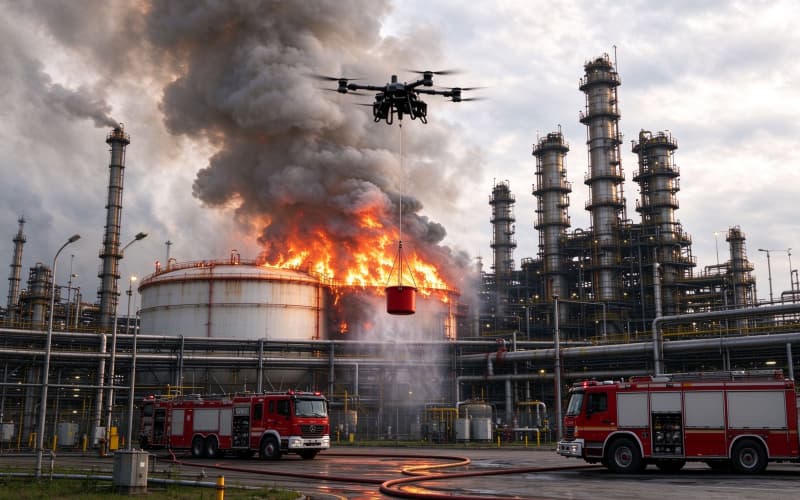
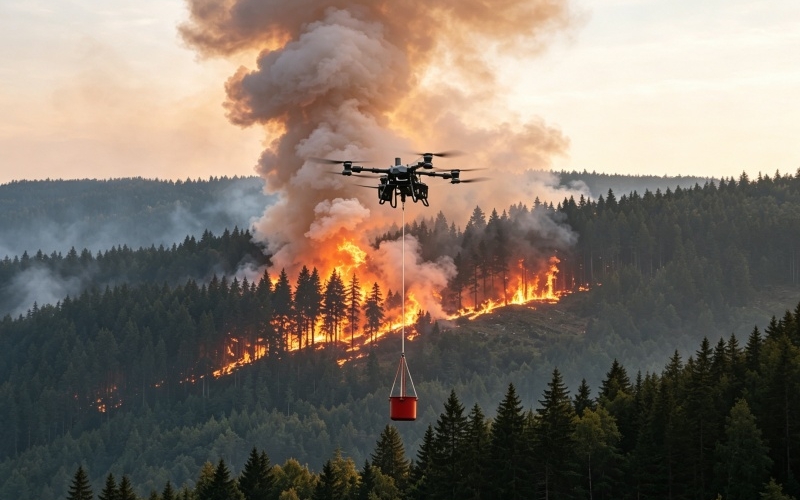
When a wildfire starts on a steep slope or a fire breaks out after dark, the first problem is rarely a lack of water. The first problem is seeing where the fire actually is. Thermal imaging drones exist to answer that question, and when you pair them with an aerial water bucket, they turn detection into action within the same flight.
This guide walks through what a thermal firefighting drone does in practice, where it earns its place in a fire operation, and how thermal detection works together with aerial suppression to cover fires that trucks and ground crews cannot reach quickly.
What a Thermal Firefighting Drone Actually Does
A thermal camera does not photograph light the way your eyes do. It reads infrared radiation - heat - and renders it as an image. On a firefighting mission, that single difference changes three jobs at once:
Find. A smoldering hotspot under forest litter or inside a coal pile is invisible to the naked eye but stands out clearly on a thermal feed.
Track. Once a fire front is moving, the thermal camera follows its spread in real time, even when smoke hides it from a normal camera.
Verify. After suppression, thermal imaging confirms whether the fire is genuinely out or whether heat is still buried under the surface.
Because the sensor reads heat rather than light, darkness stops being an obstacle. Nighttime - when fires often spread fastest and ground patrols are slowest - is precisely when a thermal drone works best.
Where Thermal Imaging Earns Its Place
In day-to-day operations, we see four applications come up again and again:
Fire detection and patrol. Routine thermal sweeps over forest boundaries, power corridors, landfill sites and crop residue fields catch smoldering spots before they flare into open fire.
Night response. When a call comes in after dark, a thermal drone can be airborne in minutes and give the incident commander a live heat map while crews are still loading equipment.
Smoke-obscured scenes. When smoke blocks normal vision, infrared still reads the heat signature of the fire front, keeping situational awareness alive for decision-makers.
Post-fire mopup checks. Before crews leave a burned area, a thermal pass finds the remaining hotspots so nobody has to return a second time.
Detection Is Only Half the Job
Knowing where the fire is has value only if you can act on it. That is where an aerial suppression payload completes the system.
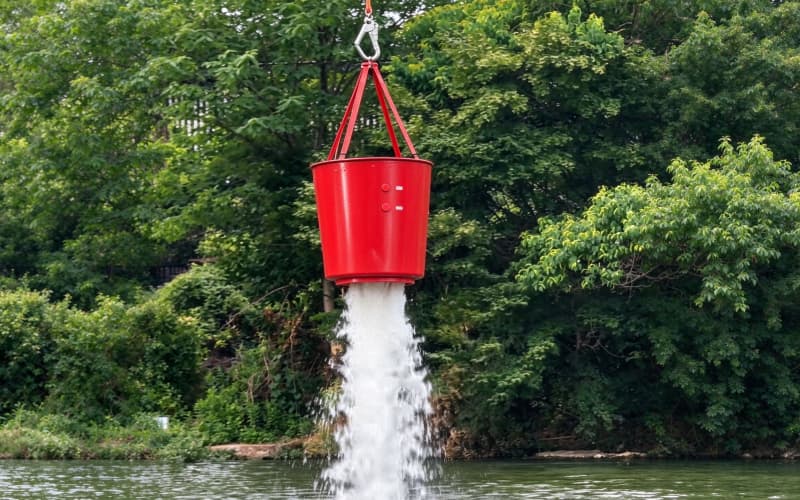
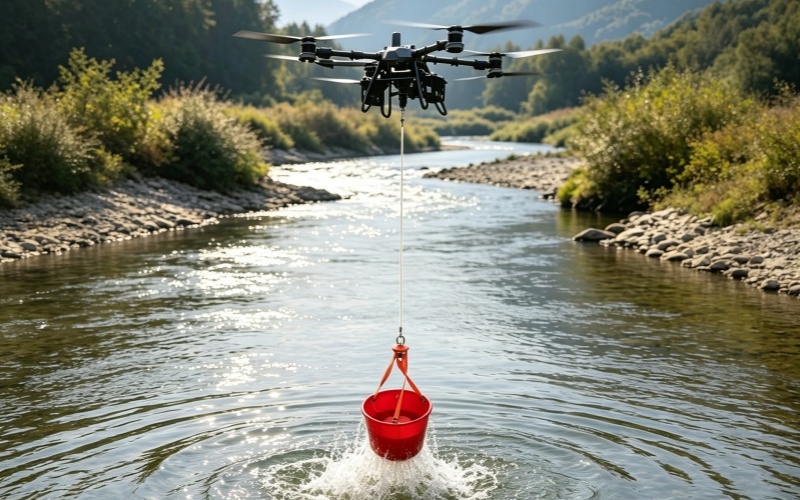
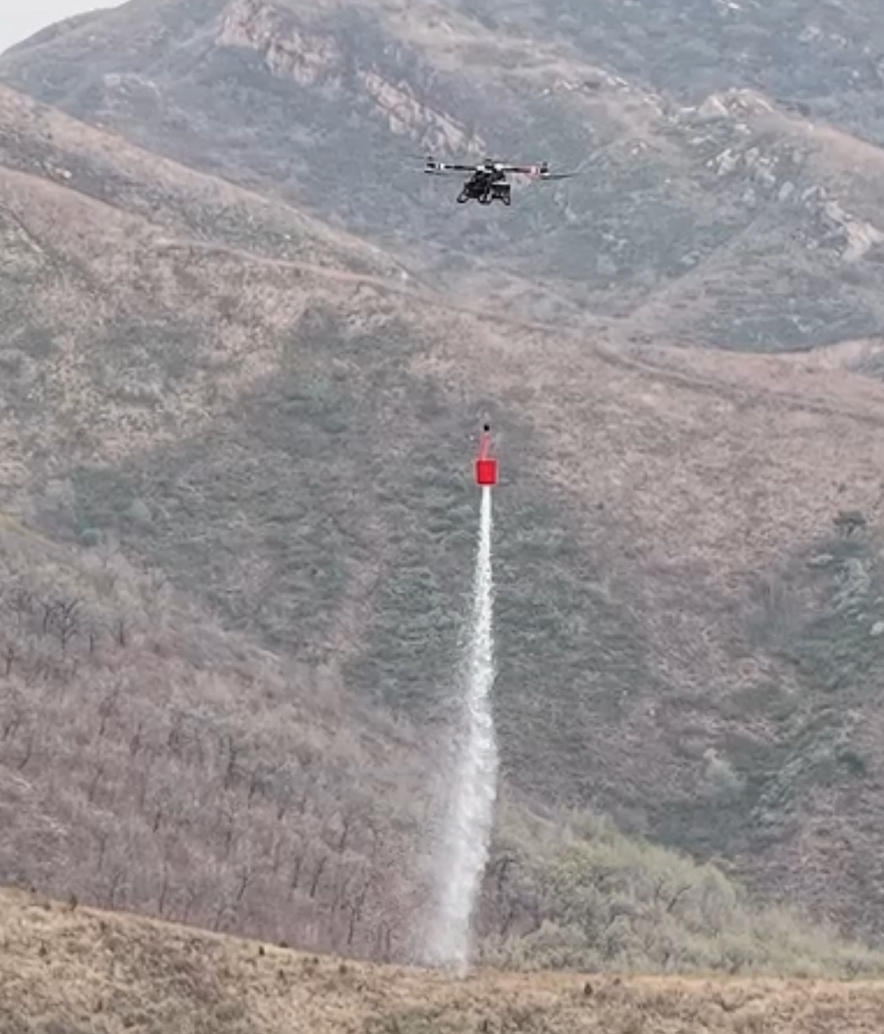
The core tool is a drone firefighting water bucket suspended beneath a compatible platform. It collects water directly from rivers, lakes or other nearby sources, flies it to the target, and releases it through a remotely controlled valve - with capacities, valve response and agent options listed in full on the product page.
The numbers that matter in real operations:
Capacity options from 40L to 200L (40 / 60 / 100 / 160 / 180 / 200L), matched to the payload capability of the drone platform.
0-100% linear valve opening with a response time of ≤0.6 seconds and a maximum flow of 50 L/s - so the operator can lay a thin line of water or dump the full load on command.
Top and bottom water collection, letting the bucket refill from shallow or debris-covered sources where one method alone would fail.
Multiple extinguishing agents: water, fluoroprotein foam, and water-based extinguishing agents.
Multi-bucket rotation with automatic identification of up to five buckets, so a continuous operation never waits on a single refill.
How a Suppression Run Works, Start to Finish
A typical mission chains the two halves of the system together:
Thermal scout. The drone rises and sweeps the area, marking the hottest points and the direction of spread.
Source selection. The operator picks the nearest viable water source visible from the air.
Fill. The bucket dips and refills from the top or bottom intake - no crew, no hose, no truck.
Transit and release. The bucket flies to the marked hotspot and the valve opens to the required percentage for the required duration.
Thermal verification. After the drop, the thermal camera rechecks the zone. If heat remains, the cycle repeats with the next bucket in rotation.
We have broken down the fill and release mechanics in more detail in a separate guide: How Drone Firefighting Water Buckets Work. And if you are still comparing payload options, our firefighting drone payload selection guide covers capacity, flow rate and agent compatibility side by side.
What the Combination Delivers
Pulled together, the thermal-plus-bucket combination offers four practical benefits:
Eyes on the fire in minutes. A drone covers in one flight what a foot patrol needs hours to walk.
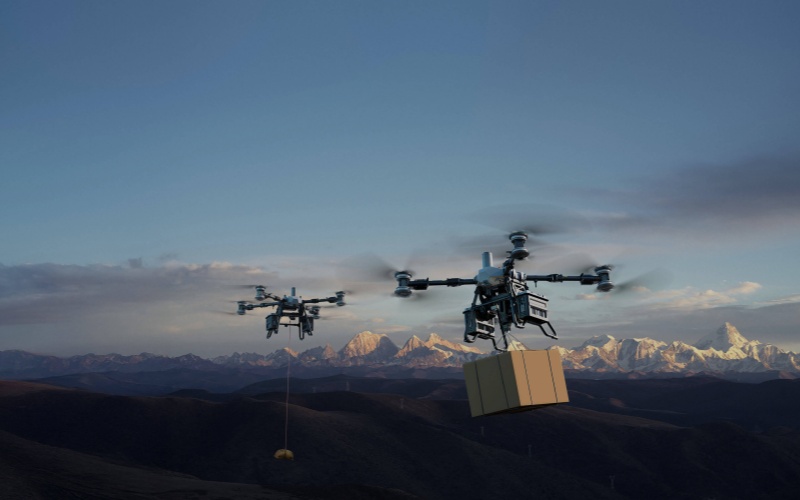
Water where trucks cannot go. Steep slopes, soft ground, river banks and island sites stop being out of reach.
An operational window that includes the night. Thermal sensing keeps working after dark, which is when many fires do their worst damage.
Continuous drops. With multi-bucket rotation, suppression keeps a rhythm instead of stopping at every refill.
An honest boundary is worth stating: a drone bucket is a tool for early-stage fires, spot fires and support roles. It complements - it does not replace - fire engines and manned aerial assets on large incidents. Teams that understand this boundary get the most value from the system.
Frequently Asked Questions
Can a thermal drone see through smoke?
Thermal cameras detect heat signatures that normal cameras cannot, which keeps the fire front visible when smoke blocks optical view. Very dense smoke or heavy canopy still attenuates the signal, so results depend on conditions - but in typical field scenarios the thermal feed remains usable when the optical feed is not.
How much water can a firefighting drone drop?
The bucket family covers 40L to 200L. The right size depends on the payload capacity of the drone platform carrying it, which is exactly what we confirm at quotation.
Which drone platforms can carry the bucket?
The system is compatible with DJI PSDK and other communication interfaces, and it supports independent remote control. We match the bucket capacity to your platform during configuration.
Does the whole workflow work at night?
Thermal detection works natively at night, and the bucket's wireless valve control does not depend on daylight. Night flight authorization depends on your local aviation authority, so check the rules that apply to your operation.
Get a Configuration Proposal
WillFly Drone has been building drone payloads as a DJI partner since 2016, with systems delivered to customers in 30+ countries and more than 1,000 units in the field. Tell us your terrain, fire risk and preferred platform, and we will recommend a thermal-plus-bucket configuration that fits. Start through our contact page and we will come back with a site-specific proposal.