DJI FlyCart 100: Industrial Cargo Drone
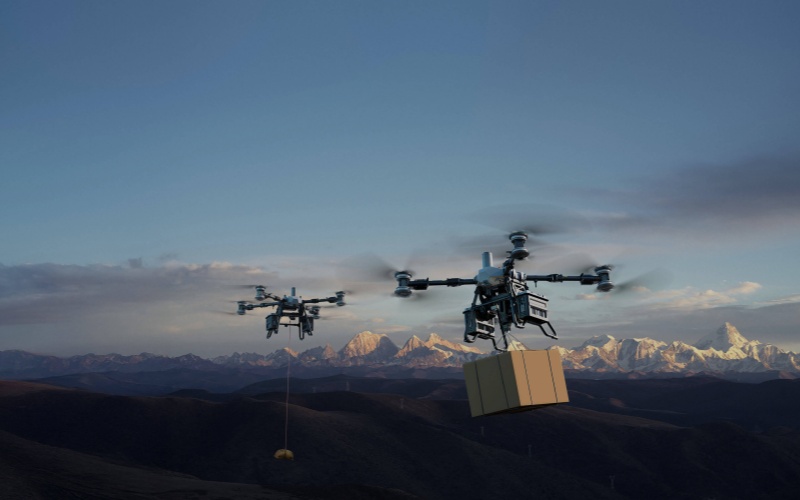
Moving 80 kilograms of cargo across a mountain ridge, out to an island, or along a power line corridor is a slow business when the only alternatives are a pack animal, a boat schedule, or a road that does not exist. The DJI FlyCart 100 (also listed as the DJI FC100) was built for exactly this gap: a heavy-lift cargo drone that carries loads where vehicles cannot go and delivers them with a winch, a hook, or a controlled drop.
This guide covers what the FlyCart 100 actually delivers in the field, which numbers matter when you plan an operation, and - because an aircraft is only half of an industrial drone program - where the payload side fits in.
What Is the DJI FlyCart 100?
The FlyCart 100 is DJI's flagship heavy-lift cargo platform. It is built around a coaxial dual-rotor design - two rotors stacked on each axis - which keeps the footprint compact while providing large payload capacity and motor redundancy.
The headline figures from DJI's official specification:
80 kg maximum payload in single-battery mode; 65 kg in dual-battery mode.
Maximum takeoff weight of 149.9 kg and an empty-ship range of up to 26 km.
IP55 protection rating and an operating temperature range of -20°C to 40°C, for work in dust, light rain and seasonal cold.
Wind resistance up to 12 m/s.
A standard-equipped parachute as part of the safety system.
1080p live feed to the ground station throughout the mission.
Two Load Modes, One Trade-Off
The platform supports single-battery and dual-battery flight, and the choice between them is a straight trade of weight for distance:
Single-battery mode: 80 kg maximum payload, up to 6 km flight distance at maximum takeoff weight.
Dual-battery mode: 65 kg maximum payload, up to 12 km flight distance at maximum takeoff weight.
Both figures are measured at sea level, 25°C, no wind. In practice the mode you choose depends on whether your route is short and heavy or long and lighter - a 400-meter cliff haul to a construction terrace favors single-battery; a 10 km hop across a bay favors dual.
The Aerial Hoisting System: Where the Job Gets Done
Cargo does not always land on a flat pad. The FlyCart 100's flagship aerial hoisting system handles the awkward deliveries:
Electric open-close hook with remote release, so ground staff do not have to approach under the load.
30 m rope length with heavy-load winch speeds up to 1.2 m/s.
Automatic anti-sway - a three-direction force sensor with intelligent algorithms suppresses load swing for stable positioning.
Real-time weight reading to prevent overloading and simplify load accounting.
One-touch rope release to free the aircraft if the cable snags.
For sites without a landing zone - rooftop resupply, mid-slope material drops, work barges - hoisting is the difference between a usable delivery system and an expensive toy.
Where Cargo Drones Deliver Real ROI
Across industrial operations, four scenarios keep justifying the investment:
Mountain construction. Rebar, cable drums and tools moved to terraces that roads never reached - flight time replaces hours of hauling on foot or by mule.
Island and cross-water resupply. Predictable daily runs that do not depend on tide, weather windows or ferry schedules.
Power and telecom line work. Hardware and conductor materials delivered directly to tower positions along the corridor.
Emergency supply delivery. Medicine, food and equipment into cut-off areas after floods or landslides, when every road assessment takes longer than the flight itself.
In each case the economics rest on the same equation: the cargo moved per hour against the cost of the alternatives - and in difficult terrain, the alternatives are usually slow, expensive, or unavailable.
Operating It Day After Day
Specifications on a webpage are one thing; running a fleet is another. Two practical points matter most to operators:
Weather tolerance. IP55 and 12 m/s wind resistance keep schedules alive in conditions that ground finer aircraft.
Safety systems. The standard parachute, obstacle sensing and the 1080p live feed give both the operator and the site owner confidence around personnel.
The aircraft itself is sourced through DJI's enterprise sales channel and authorized dealers. What a third-party partner like us adds to the program sits on the other side of the airframe - the payloads, configuration know-how and mission-specific support that turn a cargo (or multi-role) platform into a working tool. That distinction is worth a closer look.
Beyond Cargo: The Payload Side of the Same Ecosystem
Here is the honest positioning: we do not sell the FlyCart 100 airframe. WillFly Drone is a drone payload manufacturer and DJI partner since 2016 - we build the working payloads that mount on DJI industrial platforms, which means the same fleet logic applies whether your aircraft hauls materials or performs a mission.
Three payload lines show how that works in practice:
Cleaning. A high-pressure cleaning module turns the DJI M400 into a facade and exterior washing tool for high-rise buildings - and the FC100 can carry a similar module, bringing the same high-rise cleaning capability to that platform as well.
Solar. The FC100 solar panel cleaning payload - our own FC100, unrelated to the cargo drone - serves photovoltaic farms where manual cleaning is slow and water-hungry.
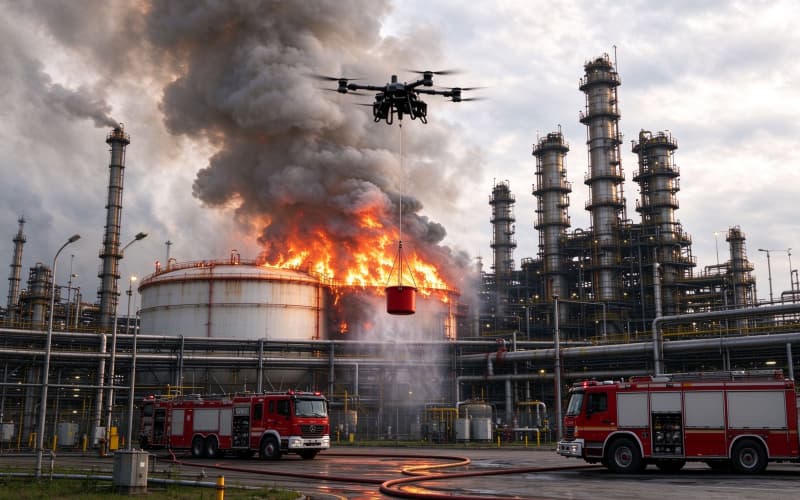
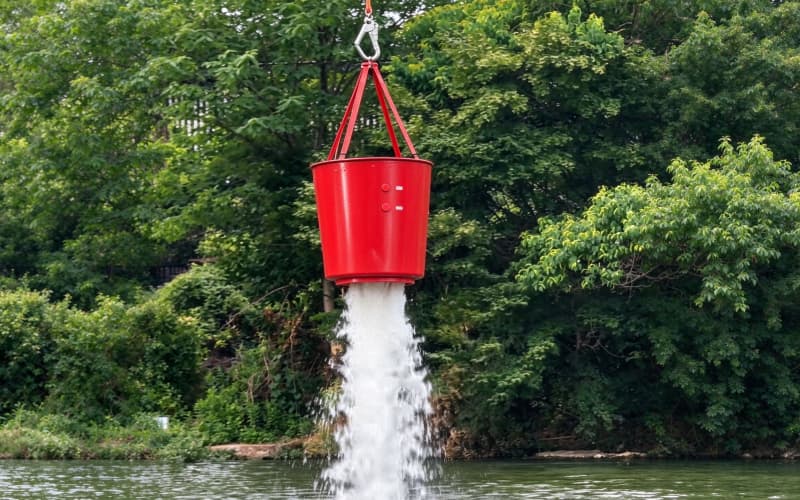
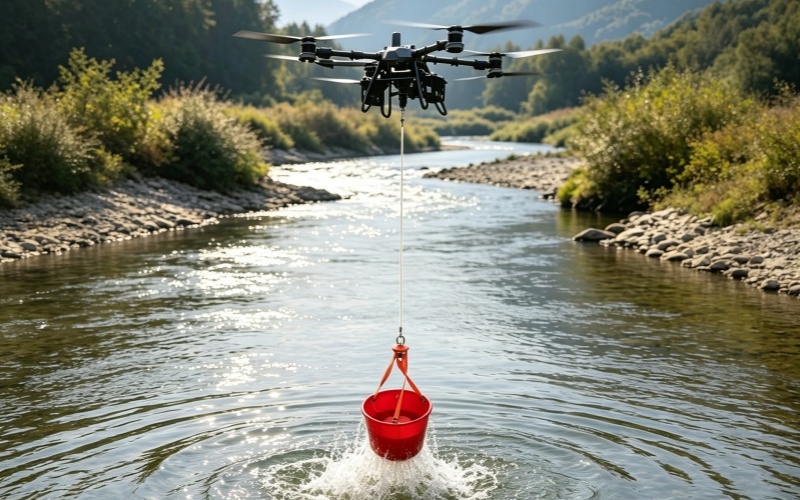
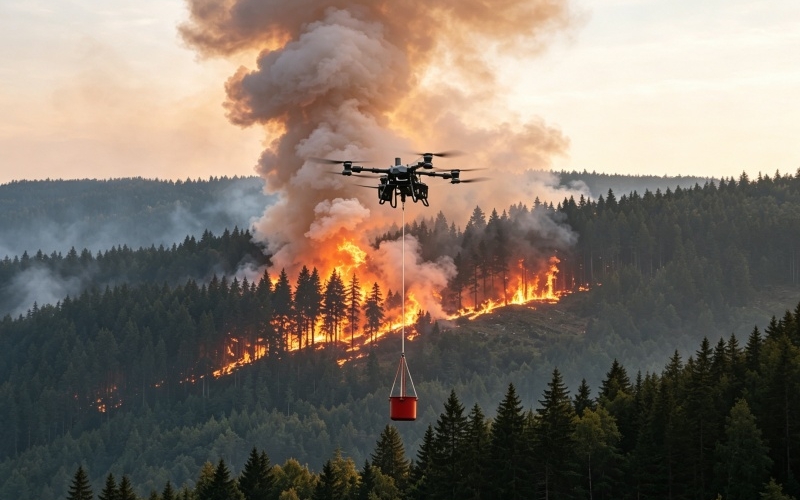
Firefighting. The DJI-compatible firefighting water bucket adds aerial suppression capability with 40L-200L capacity options.
For many operators, this is how the economics actually close: one platform base, several payloads, and each mission type - delivery, cleaning, suppression, seeding - bills against the same airframe investment.
Frequently Asked Questions
How much weight can the DJI FlyCart 100 carry?
80 kg in single-battery mode and 65 kg in dual-battery mode, with a maximum takeoff weight of 149.9 kg. The recommended load for a given mission is calculated by the DJI Delivery App based on aircraft state and conditions.
How far can it fly with a load?
At maximum takeoff weight: 6 km in single-battery mode and 12 km in dual-battery mode, measured at sea level, 25°C, no wind. Empty, the aircraft's maximum range is 26 km.
Can it deliver without landing?
Yes. The aerial hoisting system winches loads down on a 30 m rope with remote hook release, and the anti-sway system keeps the load stable during positioning - designed for sites without a landing pad.
Does WillFly sell the FlyCart 100?
No - the airframe goes through DJI's enterprise channel and authorized dealers. Our side of the program is payloads: if your operation needs cleaning, solar maintenance, firefighting or seeding capability on DJI industrial platforms, that is what we build and support, confirmed per project at quotation.
Building a Multi-Mission Fleet?
If your operation moves heavy loads across terrain that punishes every alternative, the FlyCart 100 deserves a feasibility check through your DJI dealer. And if you want the same airframe investment to also earn from cleaning, solar maintenance or emergency response, that is our specialty. Tell us your mission profile through the contact page and we will spec the payload configuration to match - backed by delivery experience across 30+ countries and more than 1,000 units in the field.