Rice Seeding by Drone: Cost per Hectare
Ask a spraying crew what a seeding drone costs and you will get a machine price quickly. Ask what it costs to seed one hectare, and the answer takes longer — because that number is built from seed, flight time, labor and rework. It is also the number that decides whether a planting service actually earns money.
This article breaks the per-hectare cost into its parts, compares the three ways rice gets into the field, and closes with an honest word about yield data.
Why Cost per Hectare Is the Number That Decides
The machine price is paid once. The per-hectare cost repeats with every season and every contract. A farmer comparing service quotes looks at the price per hectare; a service provider comparing methods looks at what each method costs to deliver that hectare.
That is why arguments about machine specs rarely settle anything. Broadcasting, transplanting and row seeding are three different cost structures, and the right one depends on what you are already paying for seed and labor today.
What Goes Into the Cost of One Hectare
Wherever rice is planted, the same four lines show up in the calculation:
• Seed — how many kilograms go down per hectare, and how many of them actually become plants. Seed scattered on the water surface or blown by wind is money in the drainage ditch.
• Flight time — hectares covered per hour, multiplied by the hourly cost of running the aircraft: battery cycles, charging, transport between plots.
• Labor — people on the ground: loading seed, swapping batteries, moving between fields. In many rice regions this line is growing every year.
• Rework — reseeding the patches that came up empty or too thin. Rework is the cost line nobody budgets and everybody pays.
The planting method you choose moves all four lines at once. That is what the next section compares.
Row Seeding vs Broadcasting vs Transplanting: The Cost Picture
Broadcasting is the cheapest method to execute and the most expensive in seed. Seed is scattered across the surface, so the rate has to be set high enough to survive wind, birds, floating loss and uneven distribution — then some patches come up too thick and others come up empty. The stand is uneven before the season starts.
Transplanting is the opposite trade. Seed use is efficient, but the nursery and the transplanting crew are usually the two biggest line items in the whole rice calendar. Where transplant labor is scarce or aging, the cost — and the scheduling risk — keeps climbing.
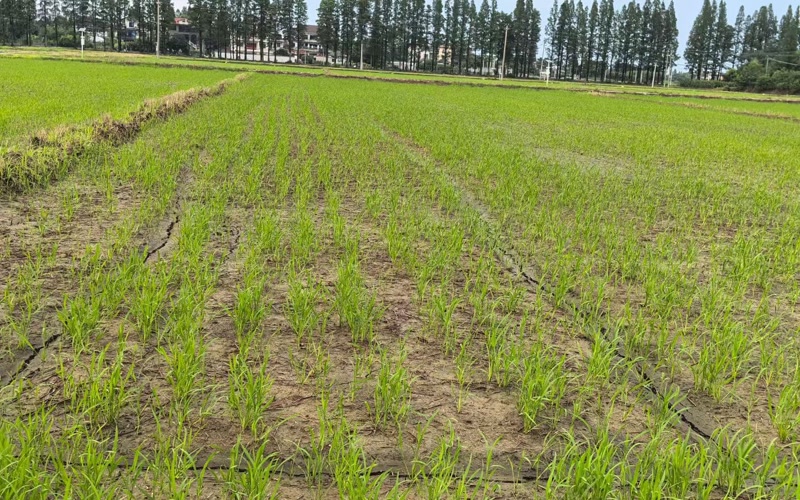
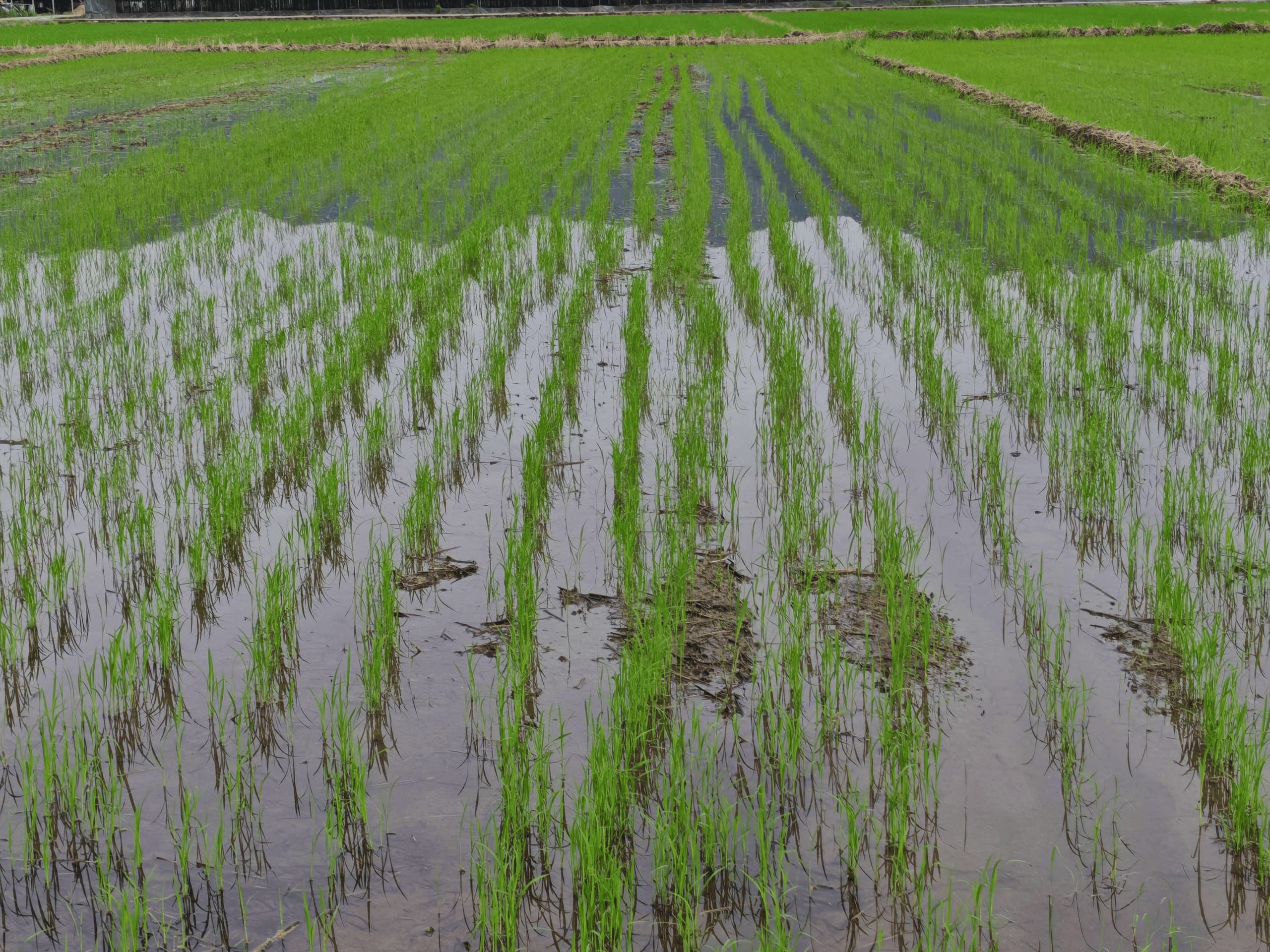
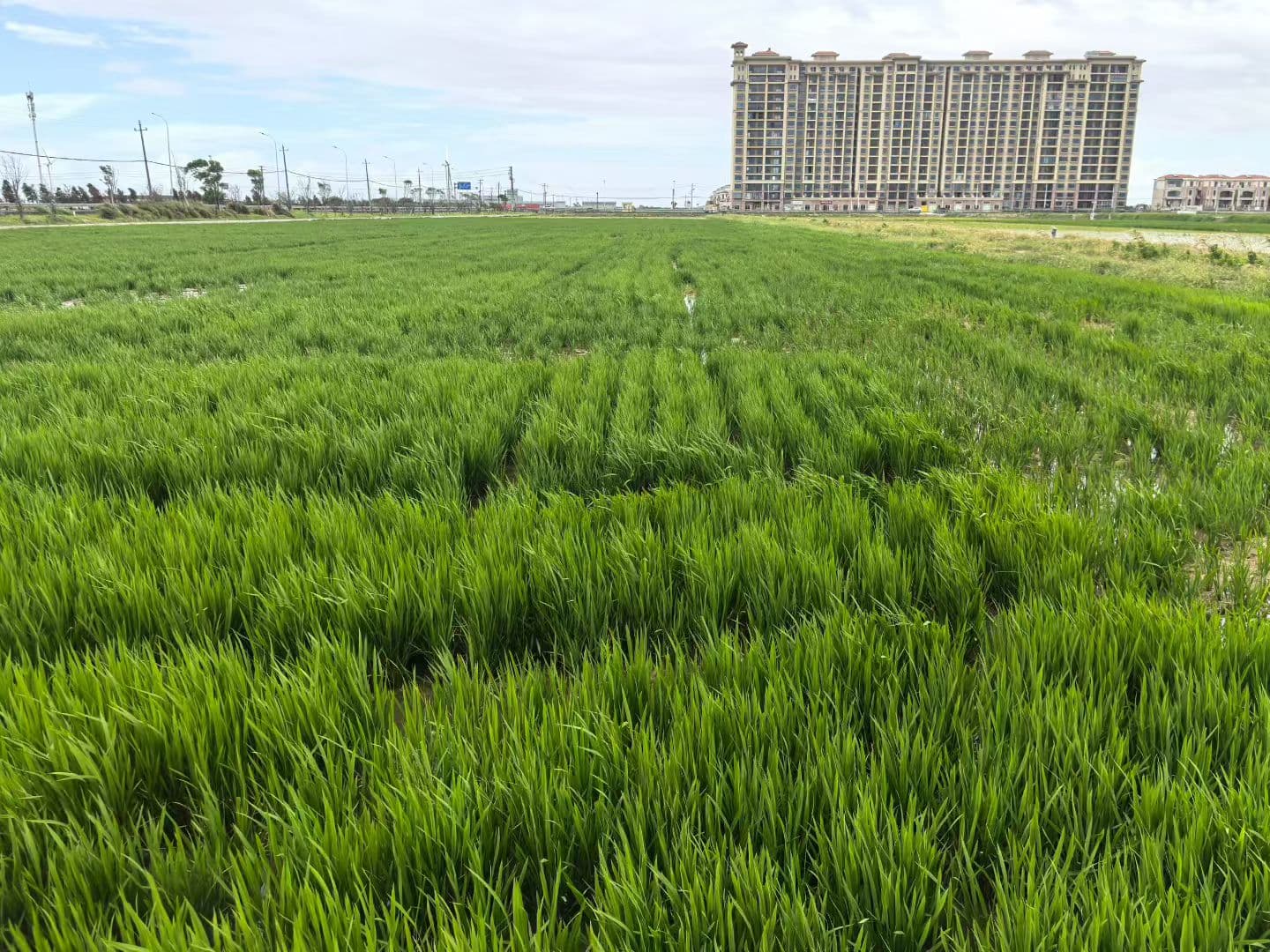
Row seeding attacks both lines at once. Seed is placed at ground level, in straight rows 90–150 cm apart, at a rate you set between 15 and 195 kg/ha. Because the seed goes where it should, the rate can be set to what the crop needs instead of what the wind allows. No nursery, no transplant crew. We compared the three methods in detail in Drone Rice Seeding: Row Seeding vs Broadcasting vs Transplanting — that article covers the field-management side; this one stays on the money.
Field Efficiency: How Much a Day Actually Covers
The precision row seeding module carries up to 50 kg of seed per flight across 4–6 tanks of 10 L. From there the arithmetic is simple:
Hectares per flight = 50 kg ÷ your seeding rate. At 25 kg/ha, one flight covers 2 hectares. At 50 kg/ha, one hectare. Multiply by the flights you complete in a working day — refills and battery swaps set that rhythm — and you have your daily coverage.
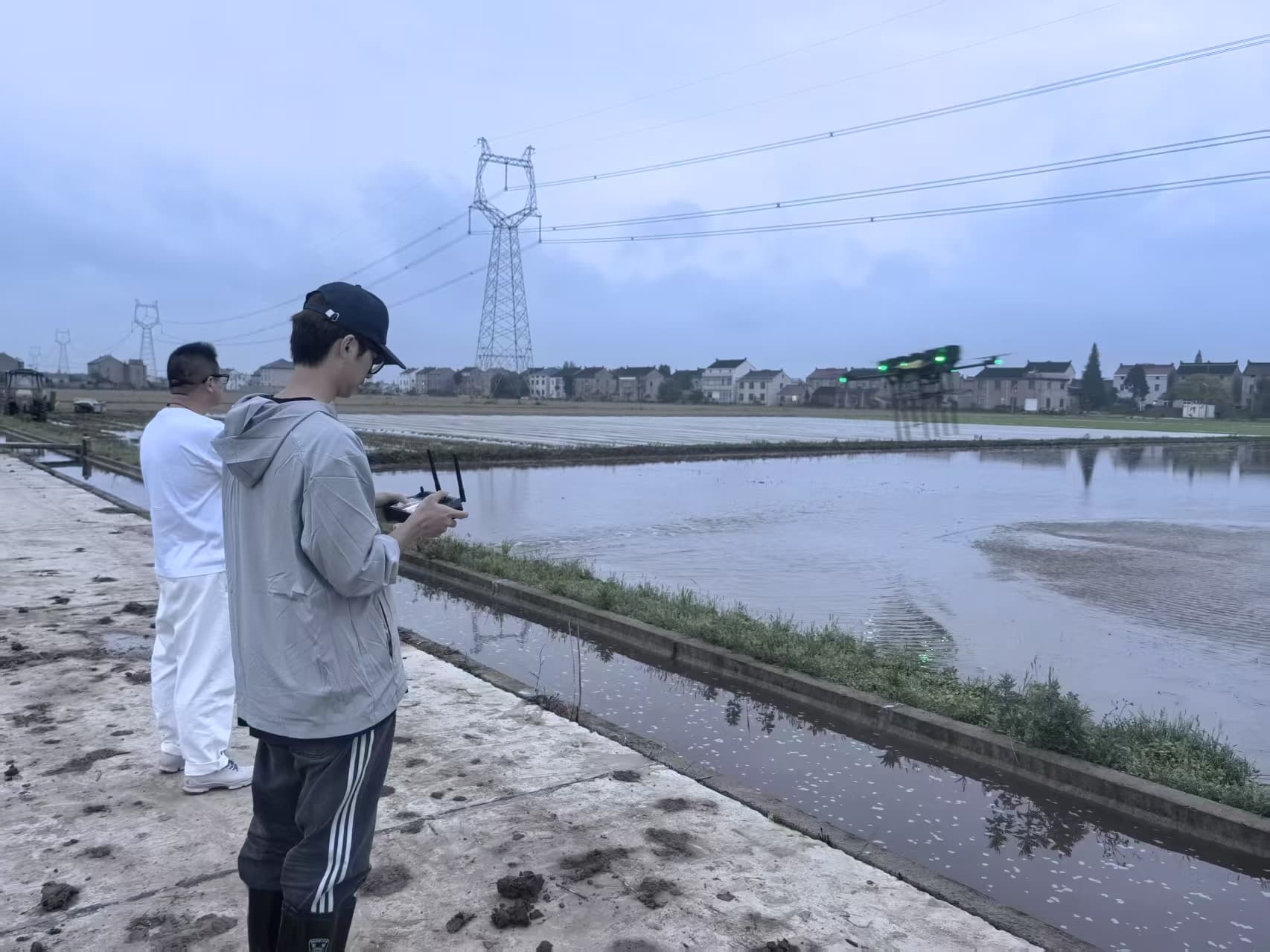
Flight lines are planned the same way as spraying lines, with row spacing set between 90 and 150 cm. Which points at the real efficiency lever: a crew that already flies a DJI Agras or XAG platform for plant protection adds the module to the airframe it owns. No new pilot skills, no second aircraft, no separate logistics chain — the same machine seeds in the morning and sprays in the afternoon.
A Word on Yield Data
You will find plenty of claims promising a fixed percentage yield increase from one machine or another. Here is ours, plainly: no seeding equipment alone decides yield. Yield is set by variety, water, fertilizer, weather and season-long field management.
What row seeding controls is stand establishment: even rows, seed at ground level, and a rate you chose instead of one the wind chose. A uniform stand gives everything that follows — weed control, fertilization, water management — a fair chance to work. That is the claim we make, and it is the only one worth making.
When the Math Works — and for Whom
The per-hectare case is strongest for:
• Plant protection service providers who already fly DJI Agras or XAG platforms and want a second revenue stream from the same aircraft and the same pilots.
• Cooperatives and estate farms seeding mid-size, contiguous plots where a transplant crew is hard to book or too expensive.
• Regions where transplant labor is scarce — the module replaces the nursery-and-transplant line with flying hours you may already be paying for.
It works less well for small, fragmented plots with long gaps between them, for fields that are not leveled, and for seed lots with poor germination — row seeding places seed precisely, but it cannot fix bad seed or a rough field bed. If your operation sits in that corner, a different method may serve you better, and we will tell you so. For the practical field requirements, see our rice seeding solution page.
From Cost Estimate to Quotation
We do not publish a fixed price list, because the configuration follows your platform, your fields and your season. What we need to quote properly is short: your drone platform, your annual rice area, and how you plant today. You get back a line-item quotation — module, compatibility confirmation for your aircraft, spare parts, training — with the final price confirmed at quotation. No surprise line items later.
Get Your Configuration and Quote
Send us your platform model and your estimated hectares per season through the contact page, and we will map out what row seeding would cost per hectare on your operation — and whether it beats what you are doing now.
Since 2016, WillFly Drone has delivered 1,000+ units to customers in 30+ countries, all payloads covered by a 12-month warranty.