Compact Cleaning Drone: Jobs, Specs, Setup
Not every cleaning job justifies a full-size industrial platform. Rooftop solar on a private house, a yacht hull, or equipment inside a small power station all share the same constraint: the job is real, but the site is tight, the area is modest, and mobilizing heavy equipment costs more than the cleaning itself. That is exactly the gap a compact cleaning drone like the C16 is built to fill. This article walks through the jobs it does best, the specifications behind them, and how deployment works on site.
What Counts as a Compact Cleaning Drone
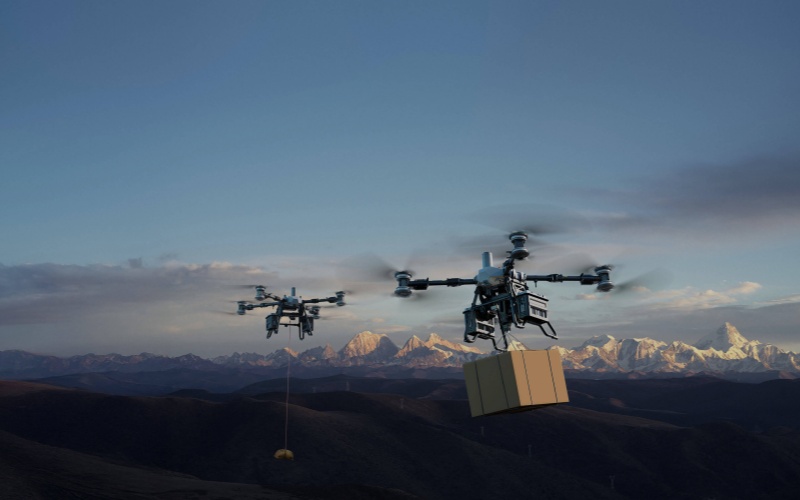
The C16 is a complete high-pressure cleaning drone with a foldable airframe. Folded, it measures 720 × 720 × 739 mm - small enough to fit in a large SUV or a van alongside a water tank. Empty weight is 23.5 kg with a rated payload capacity of 15 kg, and positioning is handled by GNSS + RTK with both manual and autonomous flight modes, controlled through a remote controller plus app. In practice, that means one vehicle, one or two operators, and a full cleaning system that deploys in minutes rather than hours.
Three Jobs Where the C16 Shines
1. Rooftop solar on houses and small buildings
Residential and small commercial rooftops are the classic compact job. Crews with brushes and ladders are slow and expose workers to fall risk; full-size drone platforms are oversized for a few hundred square meters of panels. A compact drone sprays at panel-safe pressure, works around rails and obstructions, and finishes a roof in a fraction of the manual time. We covered the efficiency and safety angles of drone solar panel cleaning in a separate article; for a deeper view of how it scales across farm sites, see our solar panel cleaning solutions page.
2. Boat and yacht exterior washing
Marinas rarely have the clearance or the ground conditions for boom lifts, and hauling scaffolding along a dock is a non-starter. The C16 flies the hull and superstructure directly, keeping operators on shore and away from gangways and water edges. The foldable airframe matters here too - it transports between berths without a dedicated truck.
3. Small power station equipment cleaning
Small power stations and industrial sites contain equipment sheds, insulators, and exterior surfaces that collect dust and grime but sit in confined spaces where large drones or pressure trucks cannot maneuver safely. A compact platform cleans these targets with precise, controllable passes.
Water Supply: Two Ways to Run the Job
Onboard tank mode - self-contained quick jobs
The C16 carries a 16 L onboard water tank that runs at 8 MPa with a flow of 5.5 L/min. This mode suits short, scattered tasks - a rooftop here, a container facade there - where running hoses to a ground source is impractical and the drone needs to stay fully independent.
Ground supply mode - extended cleaning missions
For longer missions, a ground water supply connection sustains continuous delivery and unlocks the full pressure rating: up to 20 MPa at 15 L/min. This is the configuration for larger rooftops, marina blocks, or any job measured in hours rather than minutes. Flight speed is adjustable from 0.3 to 10 m/s, so operators can trade coverage speed against cleaning intensity per square meter.
Transport and Deployment on Site
The whole point of a portable cleaning drone is what happens before the first spray. The C16 folds to 720 × 720 × 739 mm, loads into an ordinary vehicle, and goes from trunk to airborne with propellers on, water connected, and a short pre-flight check. No anchor points, no scaffolding permits, no road closures. For small-contract operators, that setup advantage is often the difference between profit and a wasted morning.
When to Step Up to a Full-Size Platform
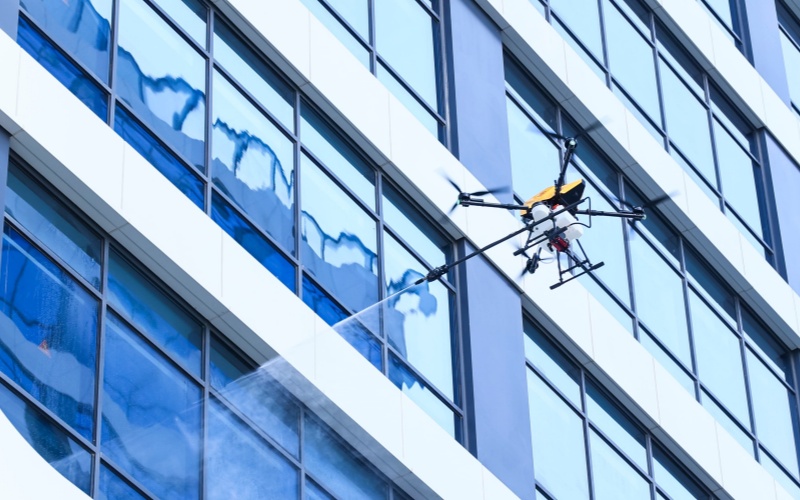
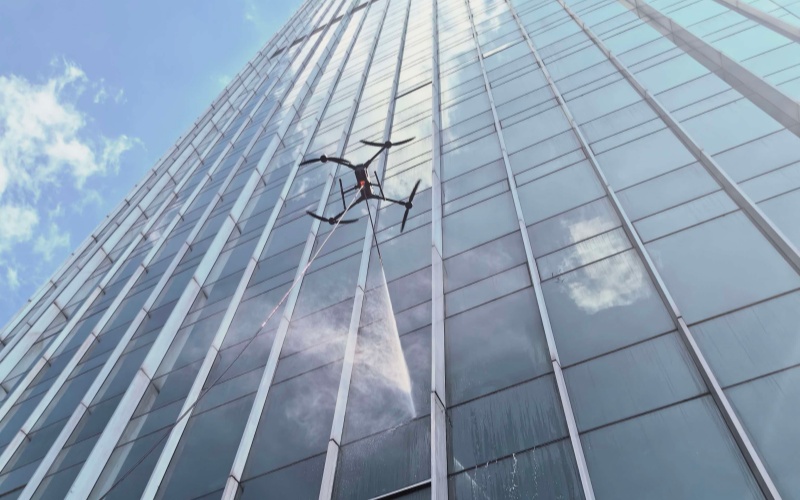
Honest guidance: the C16 is not the tool for every job. Large glass curtain walls, high-rise facades, and utility-scale solar farms need bigger payload capacity, longer endurance, and higher continuous pressure - that is where full-size platforms with modular cleaning payloads earn their keep. If your workload is dominated by those larger sites, start from our facade and solar solution pages instead, and consider the compact drone as the second unit for small jobs between big contracts. Many operators run both.
FAQ
What jobs is a compact cleaning drone best suited for?
Rooftop solar panels on houses and small buildings, boat and yacht exteriors, small power station equipment, and other compact sites where deploying a full-size cleaning drone is impractical.
Does the C16 carry its own water?
Yes. It carries a 16 L onboard tank running at 8 MPa and 5.5 L/min. For extended missions, connect a ground water supply to sustain continuous flow at up to 20 MPa and 15 L/min.
How large is it when folded, and what can it carry?
It folds to 720 × 720 × 739 mm, weighs 23.5 kg empty, and carries a rated payload of 15 kg - sized for transport in an ordinary van or large SUV.
Can it fly autonomously?
The C16 supports both manual and autonomous flight modes with GNSS + RTK positioning, operated through a remote controller plus app, with flight speed adjustable from 0.3 to 10 m/s.
The C16 is available worldwide with MOQ of 1 set, 15-30 days lead time and a 12-month warranty - as part of a payload family with 1,000+ units delivered across 30+ countries. Tell us your typical job sites through the contact page and our engineers will confirm the right water supply configuration for your operations.