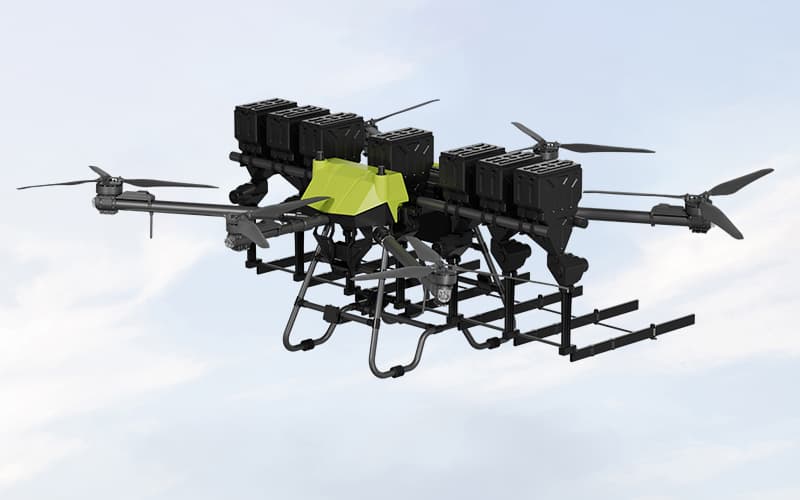
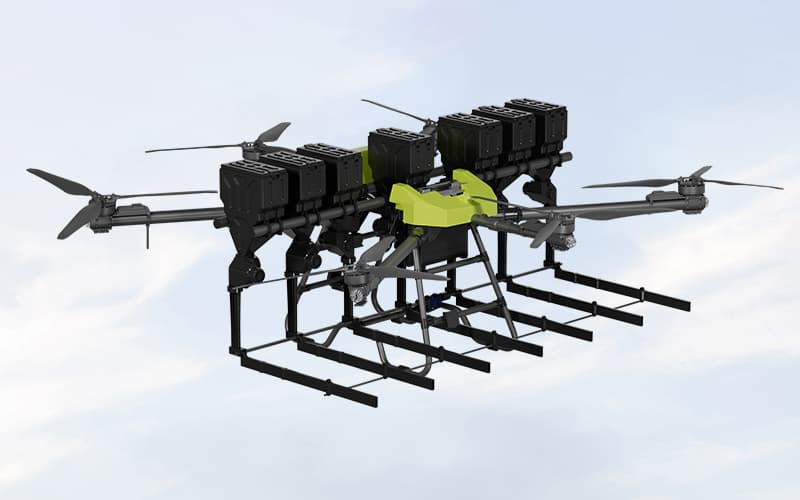
Precision Rice Seeding
1.5-8 kg/mu Seeding Rate
100-300 mu/Day Coverage
Dual-Function Platform
Multi-Seed Compatibility
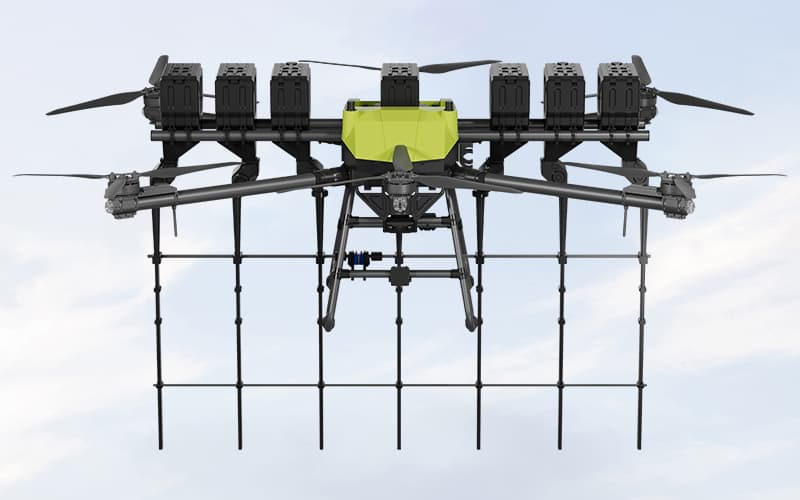
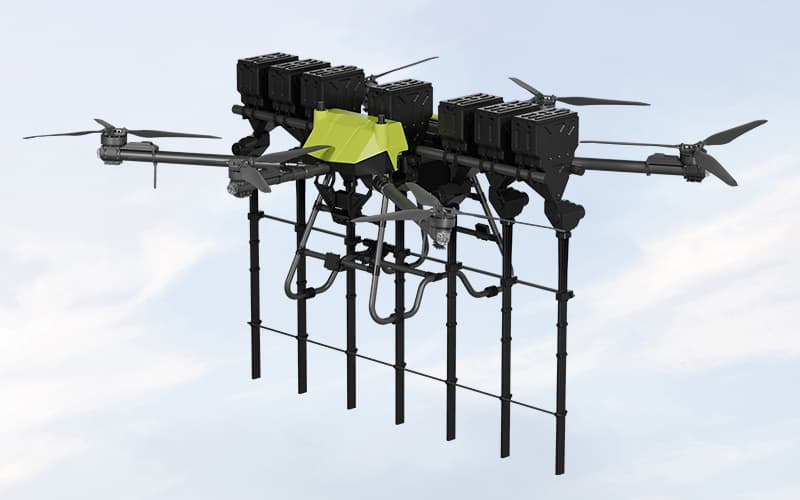
The Precision Rice Seeding Drone is designed for direct rice seeding with agricultural drones. It places seeds in orderly rows instead of broadcasting them, supporting dry, germinated, pelletized and iron-coated seeds.
The system uses a sequential seed ejection design with adjustable seeding rates, terrain-adaptive routing and RTK positioning. The modular platform can also be converted for spraying or spreading tasks.
Sequential seed ejection with 1.5-8 kg/mu adjustable seeding rate and less than 3% seed damage
Supports hybrid, glutinous, pelletized and iron-coated seeds
Up to 100-300 mu (about 20 hectares) per day coverage
Dual-function platform convertible to spraying or fertilizing
Cloud-based prescription maps for variable-rate seeding
| Seed Loading Capacity | 30 kg |
| Seeding Rate | 1 mu/min |
| Number of Rows | 5-7 rows |
| Row Spacing | 25-30 cm (adjustable) |
| Seeding Width | 1.0-2.1 m |
| Seeding Nozzle Height from Ground | 10-20 cm |
Row seeding is used across different rice establishment systems, and the system is configured to match the one you work in:
Dry direct seeding — seed is placed into dry or moist soil and the field is irrigated afterwards. This suits regions where water supply is scheduled rather than continuous.
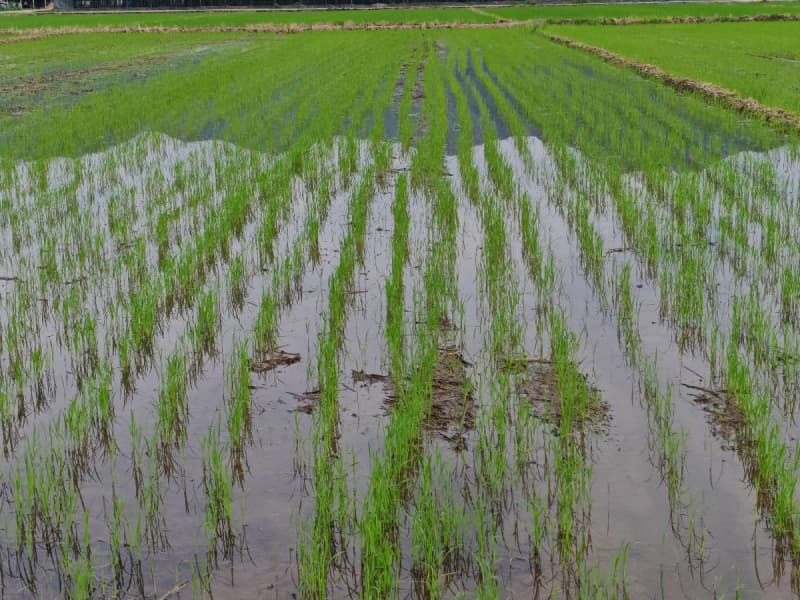
Water direct seeding — seed is applied to puddled fields with a shallow water layer. Uniform row placement reduces drifting and uneven stands caused by wind and water movement.
Row seeding instead of broadcasting — placing seed in rows at a controlled spacing gives plants more even access to light and air, makes weeding and field walking easier, and reduces seed waste compared with spreading by hand.
Because seeding rate and row spacing are adjustable on the controller, the same unit can be set for different varieties and local agronomic practice, including hybrid, glutinous, pelletized and iron-coated seed. For a like-for-like comparison of row and broadcast seeding, see strip vs broadcast seeding drones.
Cost per hectare in rice establishment is driven by labour hours and by how many operations one machine can cover. The system addresses both:
Work rate — a 30 kg seed load, a seeding rate of about 1 mu/min and daily coverage of 100-300 mu means a single operator can cover a large block in one working day.
Fewer establishment steps — direct seeding removes the nursery, seedling lifting and transplanting stages that machine transplanting requires.
Lower seed waste — controlled ejection at less than 3% seed damage and adjustable rate per mu avoids the over-seeding typical of manual broadcasting.
One platform, several jobs — the system can be converted for spraying or fertilising, so the same drone serves the field beyond the seeding window.
Actual operating cost depends on local labour rates, field shape, water management and the number of hectares per season. Send us your field size and current practice and we will outline the configuration that fits your operation.
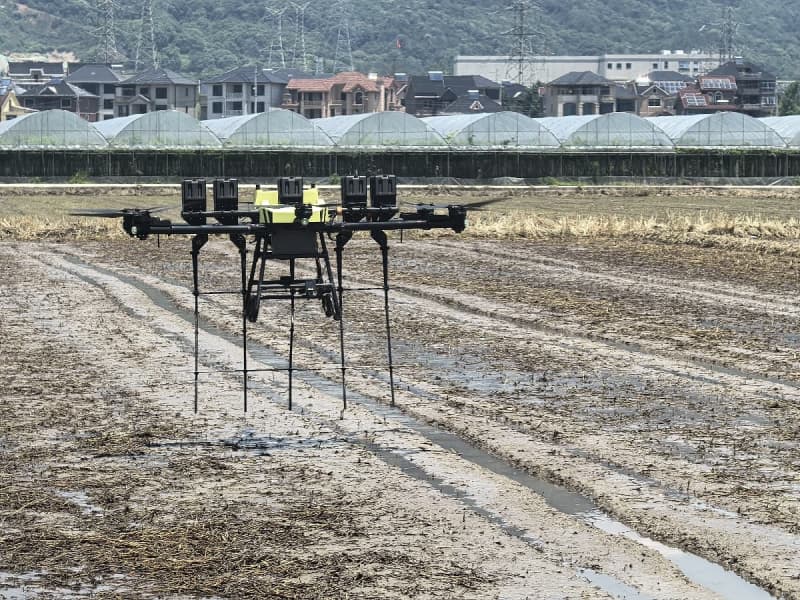
Typical ways the module is used in the field:
Large rice farms — one drone platform handles direct seeding in the establishment window and switches to fertiliser spreading or spraying later in the season.
Agricultural service providers — seeding is offered as a paid service across neighbouring farms, with the same unit covering many small and irregular plots in one area.
Distributor and OEM programmes — the complete rice seeding drone is supplied to distributors with operator training, so dealers can support their own customers.
For more background on drone seeding in rice production, see agricultural drones for rice seeding.
After each session — empty and clean the seed tank, check the ejection nozzles for blockage or residue, and rinse the seed path.
Regular checks — inspect drive components and fasteners, and verify the calibration of the seeding rate against the controller setting.
Training — we supply an installation guide, controller setup instructions and troubleshooting notes. Remote commissioning support is available during first use, and the payload carries a 12-month warranty.
The precision rice seeding drone is available for sale worldwide with MOQ of 1 set. We supply farms, agricultural service providers and drone dealers, and support OEM/ODM branding for distributors.
MOQ: 1 set
Lead time: 15-30 days after order confirmation
Warranty: 12 months
Contact us with your drone model, application and target market to confirm compatibility and get a quote. If you are comparing payload options first, view the precision row seeding module or send your requirements through our contact page.

We have recommended some of our Related products to you. I hope you will be interested.