Row Seeding Drones for Rice Planting
Rice is planted either by broadcasting seed across the field or by putting it down in rows. Broadcasting is quick, but the seed goes wherever the spreader throws it. Rows give you a pattern you can plan around, and holding that pattern is the hard part with a conventional spreader.
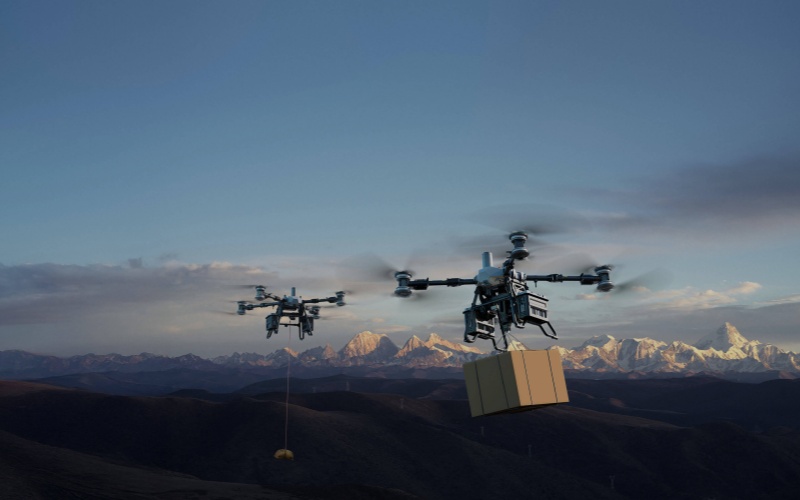
A row seeding drone is an agricultural drone fitted with a dedicated seeding payload. The payload drops seed into rows as the drone flies over the field, and the operator sets the planting parameters to suit the crop and the field.
What row seeding does
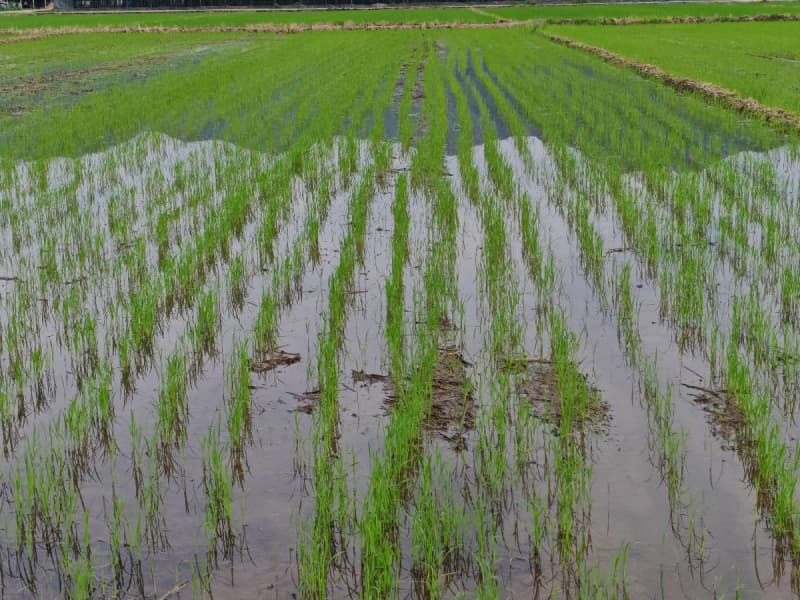
Row seeding puts seed into controlled rows. Centrifugal broadcasting, by contrast, spreads seed over a wider area. The outcome in the field still depends on the seed type, the field conditions, the equipment setup, and how the machine is operated.
Row seeding vs. broadcast seeding
The difference is where the seed ends up.
| Feature | Row seeding | Broadcast seeding |
|---|---|---|
| Seed placement | Organized rows | Distributed across an area |
| Row spacing | Adjustable | Generally not controlled |
| Planting pattern | More organized | More scattered |
| Wind influence | Can be reduced with lower seed delivery | Can have greater influence |
| Application | Precision planting | General broadcasting |
Neither fits every crop or field. Which one you want depends on what the planting requires and how the field is worked.
Where row seeding helps with rice
Where a planned planting pattern is what you are after, controlled seed placement is the point. A row seeding system gives you:
Adjustable row spacing
Controlled seed feeding
A more organized seed distribution
Less influence from wind during seed delivery
Adjustable seeding rates
These are settings, not fixed behaviors, so the same machine can be set up differently for different planting requirements.
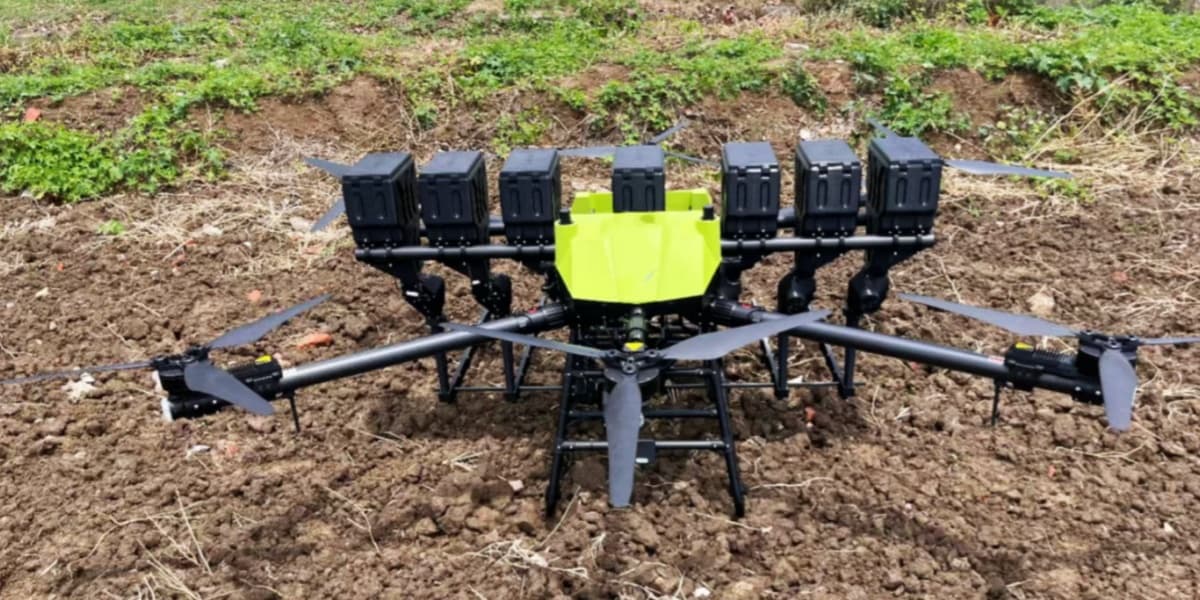
Adjustable row spacing
Crops and planting methods call for different row spacing, and a precision seeding module can be set to match. That flexibility also helps when one agricultural drone has to cover several different planting jobs.
Delivering seed close to the ground
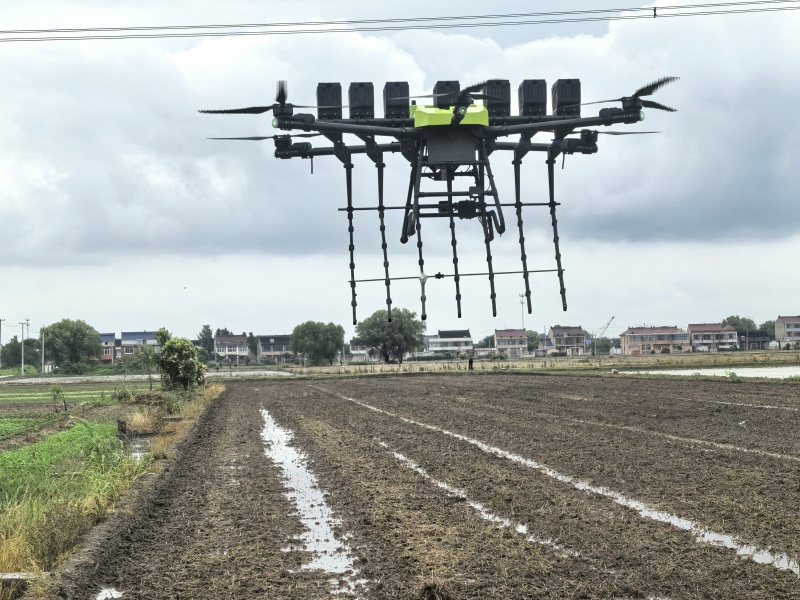
How far the seed outlet sits from the ground affects where the seed lands. Running the outlets closer to the ground cuts down the influence of wind during delivery and gives tighter placement. The height that works best depends on the field, the crop, and how the equipment is configured.
What to check when choosing a row seeding system
Worth confirming before you buy:
Compatibility with the drone
Seed capacity
Number of seeding modules
Adjustable row spacing
Seeding rate
Flight speed
Seed feeding system
Control method
The payload also has to fit the drone's mounting system and power supply.
WillFly Drone's Precision Row Seeding Module
WillFly Drone builds agricultural drone payloads for precision seeding and other field applications.
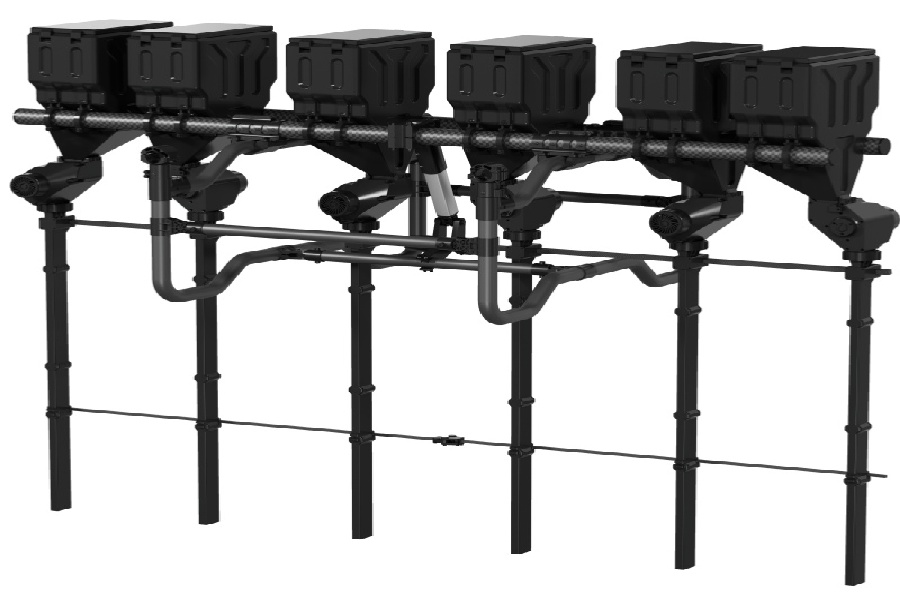
The Precision Row Seeding Module places seed in controlled rows rather than relying on centrifugal broadcasting. It supports adjustable row spacing, a seed-friendly feeding system, and ground-hugging seed delivery. It can be integrated with compatible DJI, XAG, and other agricultural drone platforms. Configurations run from 4 to 6 seeding modules with a maximum seed capacity of about 50 kg, depending on how the module is set up.
Conclusion
Row seeding is an alternative to broadcasting wherever seed placement has to be controlled rather than simply spread. Pair a suitable agricultural drone with a dedicated seeding payload, and row spacing, seeding rate, and the other parameters stay adjustable to the crop and the field. If you are building or deploying a precision seeding system, the payload is where the choice matters most.
For specification details and project questions, contact us.
Related Product
Precision Row Seeding Module for DJI & XAG Drones