Configure a Drone Solar Cleaning System
Drone-based solar panel cleaning is becoming a real option for solar farms and maintenance companies that need more flexible ways to clean large photovoltaic installations. But the drone alone cannot do the cleaning. A complete system usually needs a compatible drone platform, a cleaning payload, a water supply system and supporting control equipment — and the right configuration depends on the size of the installation, the panel layout, the cleaning requirements and local operating conditions. This guide walks through the main components to consider when putting such a system together.
1. Choose a Suitable Drone Platform
The drone platform provides the flight capability and payload capacity for the whole system. When choosing one, weigh:
Payload capacity
Flight stability
Operating time
Control and communication capabilities
For solar panel cleaning, the drone has to carry the cleaning payload safely and hold steady while spraying. Enterprise drone platforms are a suitable foundation for integrating specialized cleaning equipment.
2. Select the Right Cleaning Payload
The cleaning payload is one of the most important parts of the system: it determines how water or cleaning solution reaches the panel surface. The factors that matter most:
Payload weight
Spray pressure
Water flow rate
Drone compatibility
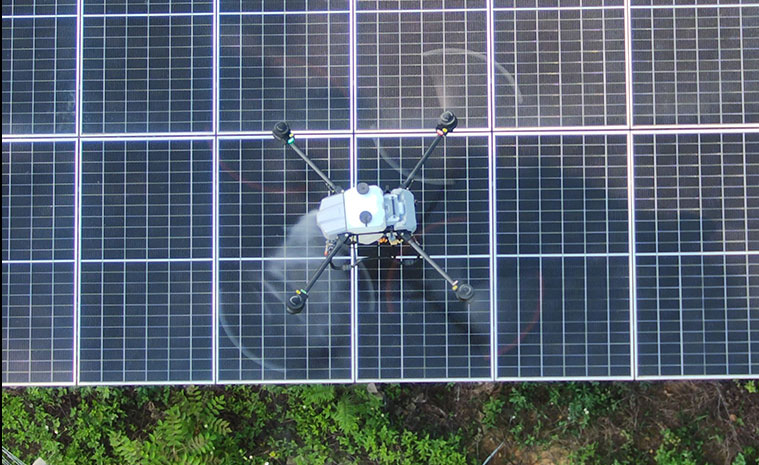
For large-scale solar cleaning, the payload should deliver stable, controllable spray performance while staying compatible with the platform you have chosen. A modular payload design also makes installation and maintenance easier.
3. Configure the Water Supply System
A drone cleaning payload normally draws on a ground-based water supply. Depending on the project, this can include:
A water tank
A high-pressure pump
A hose system
A cleaning solution system
The water supply configuration should match what the cleaning payload needs. Points to check: required water pressure, flow rate, cleaning area, and the distance between the water source and the operating area. A stable supply is what keeps cleaning performance consistent.
4. Choose the Appropriate Spray Configuration
Different solar installations call for different spray setups. The main considerations:
Nozzle type
Spray angle
Water pressure
Water flow
The goal is not simply more pressure. The spray configuration should match the panel surface, the contamination level and the cleaning method. Adjustable spray systems give you more room when working across different installations.
5. Consider Payload Weight and Flight Performance
Total system weight shows up directly in drone performance. The configuration needs to account for:
Cleaning payload weight
Hose connection
Flight stability
Operating duration
A payload that is too heavy cuts into operational flexibility. That is why lightweight, modular design matters when adding cleaning equipment to an industrial drone platform.
6. Plan the Cleaning Workflow
Equipment is only one part of the operation. Before deployment, operators should also work out:
Solar panel layout
Flight route
Cleaning direction
Safety procedures
A properly planned workflow keeps operations consistent and cuts down on unnecessary repositioning mid-clean. Depending on the drone and control system, some operations can also run on parameter-based or semi-automated workflows.
7. Build the System Around the Actual Application
There is no single configuration that fits every solar cleaning project. For example:
Small or Medium Solar Installations
Operators tend to prioritize:
Flexible deployment
Compact equipment
Easy transportation
Large Solar Farms
The focus shifts toward:
Continuous water supply
Large-area coverage
Operational efficiency
System reliability
Cleaning Service Providers
They usually need:
Flexible drone compatibility
Modular payload systems
Easy installation
Adaptability for different projects
The most suitable configuration comes from the actual operating environment — not from simply picking the biggest drone or the highest-pressure system.
WillFly Drone Solar Panel Cleaning Payload Solutions
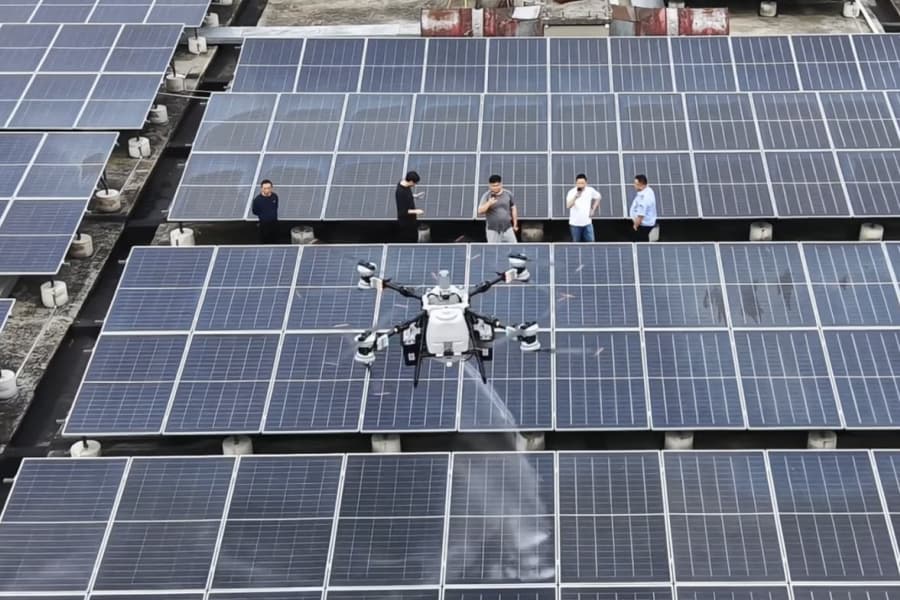
WillFly Drone develops DJI-compatible drone payload solutions for solar panel cleaning and other industrial cleaning applications. Our Solar Panel Cleaning Payload for DJI FC100 & T100 integrates with compatible drone platforms and supports professional solar panel cleaning operations.
The system pairs a lightweight cleaning payload with an external water supply and configurable spray operation. WillFly Drone also provides OEM and customized drone payload solutions for companies developing specialized UAV cleaning systems.
Conclusion
Configuring a drone system for solar panel cleaning takes more than picking a drone. The platform, the cleaning payload, the water supply and the workflow have to work as one system. Choose the equipment based on the actual installation and the cleaning requirements, and the resulting setup will fit the application it was built for.
Related Product
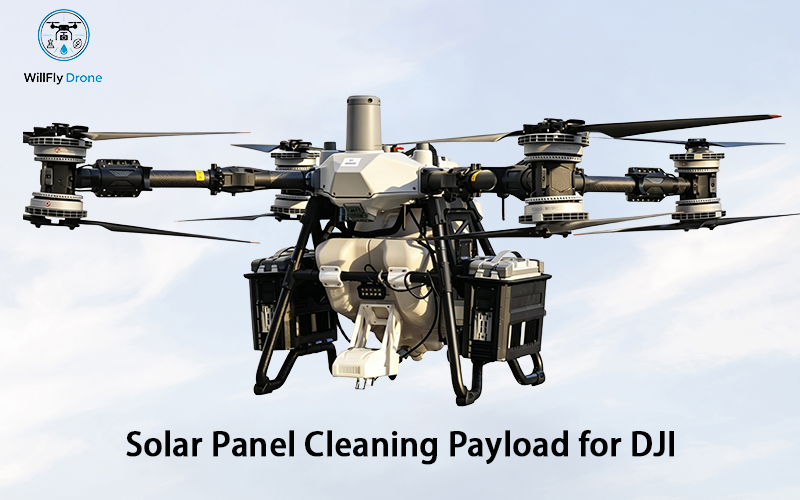
Solar Panel Cleaning Payload for DJI FC100 & T100