DJI M400 Cleaning Payload Case Study
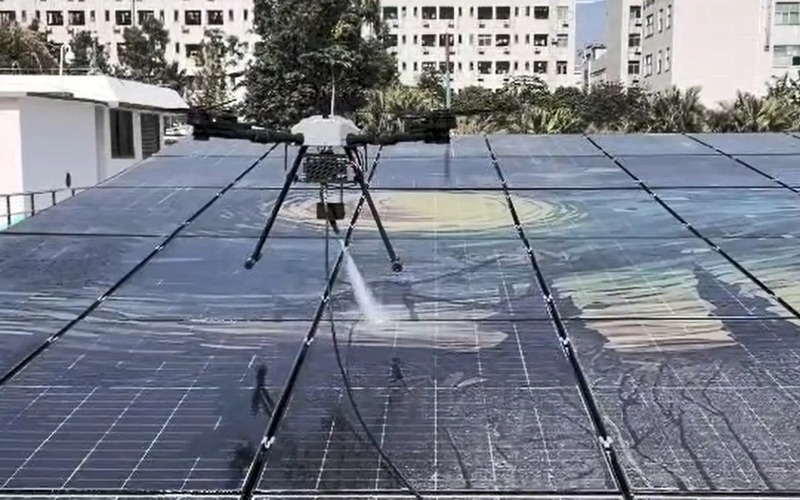
High-rise building maintenance often involves difficult access, safety risks and time-consuming manual work. For exterior surfaces such as glass facades, walls and other elevated structures, drone-based cleaning systems provide a more flexible alternative. This article walks through a real government building application of our high-pressure cleaning payload: how the system is put together, how it was configured on site, and what it achieved. It is the technical companion to the shorter story version in our Case Studies section.
The Building and the Access Problem
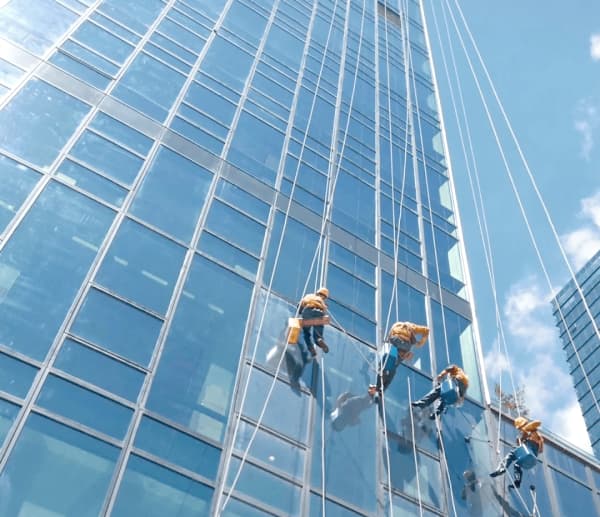
The site is a multi-storey government building with an extensive glass facade. Three constraints shaped the job. First, much of the facade sits beyond the safe reach of boom lifts, so conventional access equipment could not cover the upper sections. Second, scaffolding the entrance area was impractical while the building remained in daily use. Third, suspending technicians on ropes above an active entrance concentrates risk exactly where the public moves - a liability most facility managers are not willing to accept.
What the System Consists Of
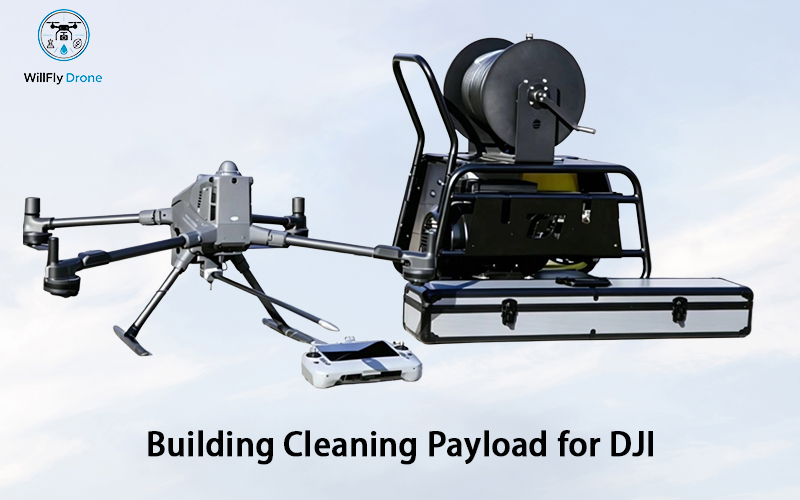
The configuration pairs a compatible DJI drone platform with our high-pressure cleaning payload for DJI M400 and FC100, supported by a ground-based supply unit:
The spray gun. A 900 × 35 × 50 mm aluminum alloy spray gun weighing only 350 g, with a 0° direct spray pattern. Its light weight means the drone carries the gun itself rather than a heavy cleaning head, preserving payload margin for flight performance.
The water line. Water and pressure come from a ground-based system and travel up through the hose - 80 m in the standard configuration. The airframe never carries its own water load, so flight time is spent cleaning, not hauling a tank.
The control layer. The smart cleaning app runs on the drone's own remote controller. One controller handles both flight and cleaning, so no extra ground station hardware is added to the workflow.
Why a Modular Payload Beats a Dedicated Cleaning Drone
Instead of investing in a purpose-built cleaning aircraft, operators integrate the payload with a compatible DJI platform when cleaning work is scheduled. Installation takes less than 5 minutes. The rest of the time, the same airframe returns to survey, inspection or delivery missions. For drone service providers and cleaning companies, that means one platform, several revenue lines - and no idle dedicated machine sitting in a warehouse between facade jobs.
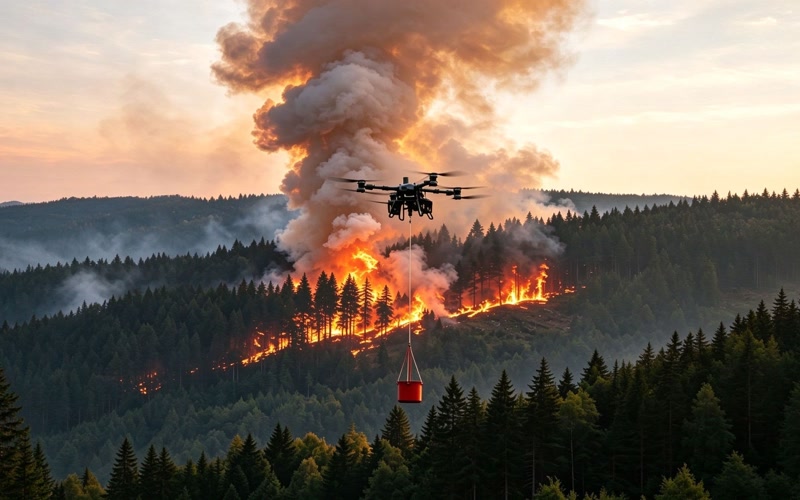
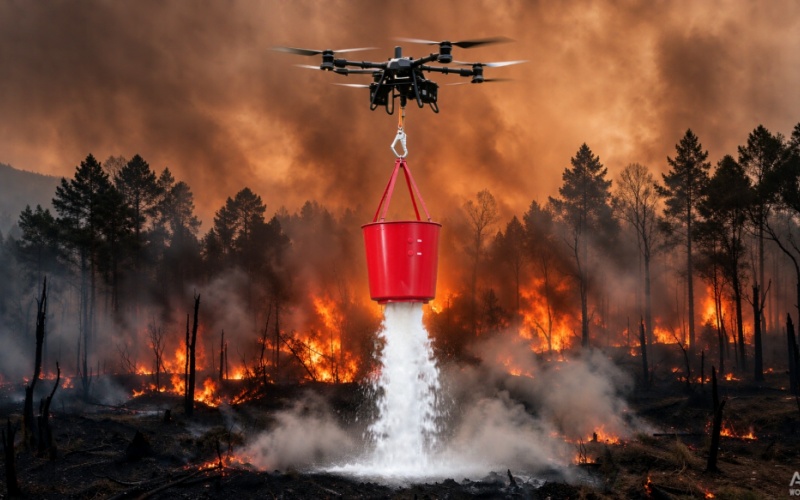
The same integration logic repeats across the payload range: WillFly supplies cleaning payloads, seeding modules and firefighting buckets built around one approach - a compatible platform on top, a mission-specific payload underneath, swapped as the work requires.
Field Deployment, Step by Step
On site, the operation followed a repeatable sequence:
Facade survey: mark section boundaries, panel materials and heavily stained areas
Position the ground unit near the water source
Rig the hose run and keep the vertical line clear
Mount the spray gun and connect it to the line
Configure the parameters and check them with a preview run
The crew surveyed the facade and divided it into cleaning sections before any equipment went up. The ground unit was positioned near the water source and the hose rigged for vertical run. The spray gun was mounted on the drone and connected to the line.
Before flying, the operator configured the working parameters in the app: drone horizontal flight speed, spray gun swing range, swing speed, vertical movement speed and cleaning pressure. These parameters can be matched to the surface - tighter sway for uniform glass, adjusted pressure for stubborn exterior staining.
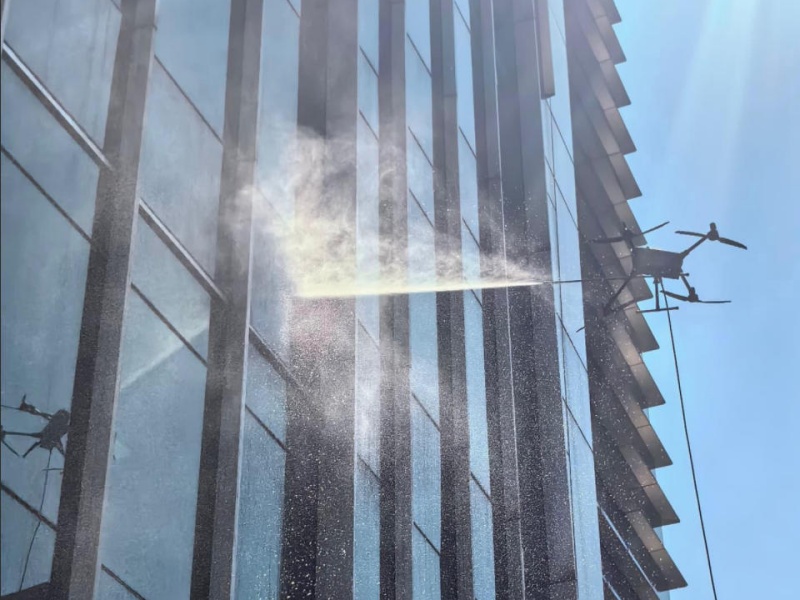
The drone then worked the facade section by section while the ground station fed water and pressure continuously. Every crew member stayed on the ground for the entire operation.
Configure Once, Let It Run
A key part of the workflow is automation. After the parameters are set, the system performs automatic cleaning according to the preset operating profile - translation speed, sway amplitude, sway speed, vertical speed and pressure stay consistent pass after pass. The app also offers a preview mode for checking the run before committing to task mode, which keeps the first pass on a new surface predictable.
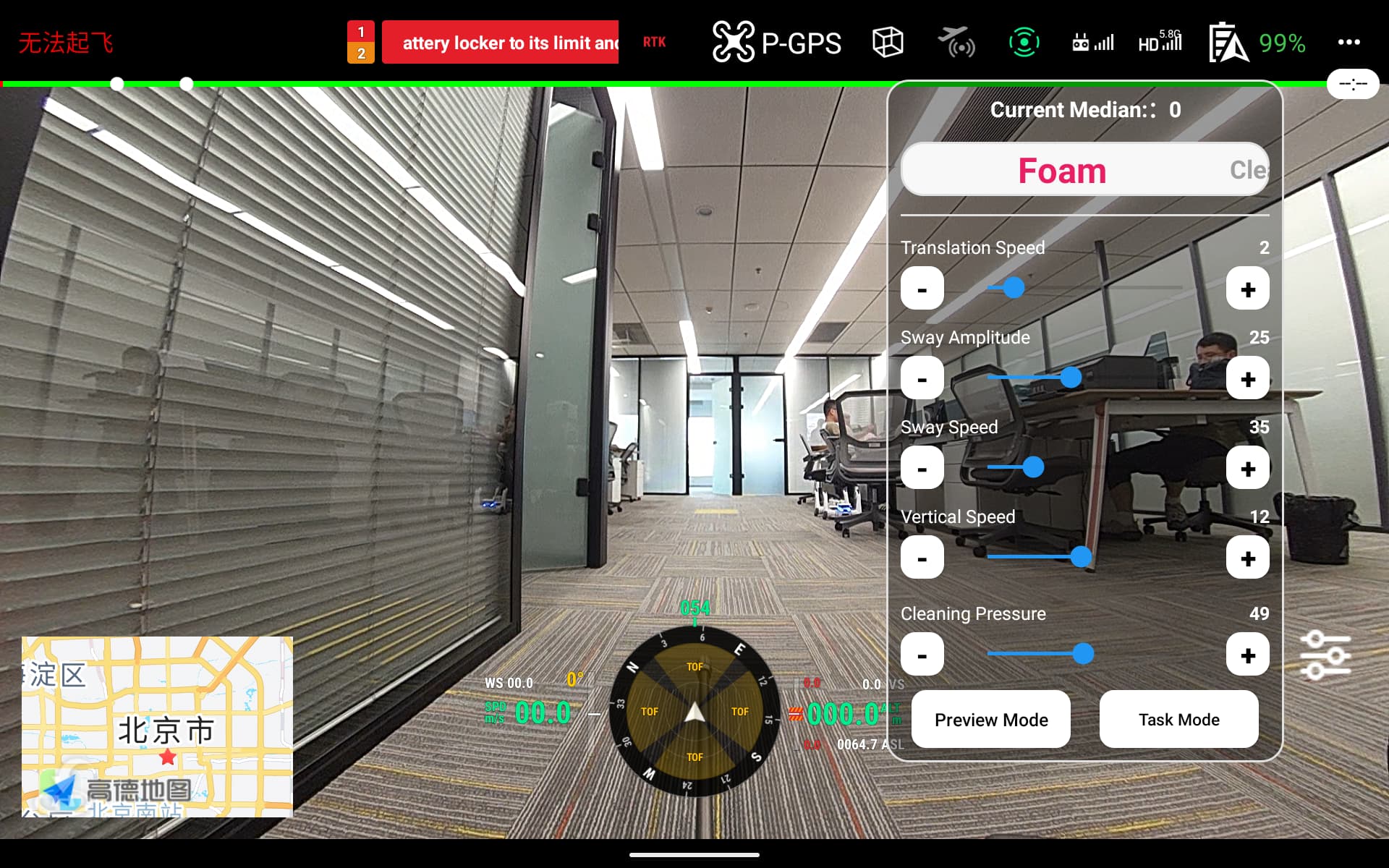
Inside the Parameters: How Each Setting Shapes the Clean
Understanding what each parameter does makes the configuration logic clearer. Horizontal flight speed controls how long the spray dwells on any given panel - slower passes suit heavy soiling, faster passes cover clean glass quickly. Sway amplitude sets how far the jet sweeps across the surface, so a wider range covers more panel width per pass. Swing speed balances coverage against streaking: too slow and water pools, too fast and the film breaks up. Vertical movement speed governs how the drone advances down the facade between passes.
Cleaning pressure ties all of this together. Because water and pressure are supplied from the ground, the operator can hold the setting steady across a full session without worrying about a tank running down mid-pass. The result is a repeatable cleaning profile: once a setting combination proves itself on one section, the same profile can be replayed on the next section, and on the next floor, with the same expectations.
Safety and Site Logistics
The operational footprint of this configuration is one of its quieter advantages. No scaffolding means no permit cycle for external works and no scaffolding crew mobilizing. No rope access means no technicians certified for work at height hanging above a public entrance. The ground unit, water source and operator station occupy a compact area at street level, which leaves the building's entrances, walkways and daily routine untouched.
Hose management is the main site task: the line runs from the ground supply to the drone, so the crew keeps the vertical run clear and checks it during operation. Water demand is modest compared with open-hose manual washing because the spray is targeted rather than flooding panels from a hose held overhead. For occupied buildings - government offices, hotels, hospitals, corporate HQs - this is usually what makes drone cleaning viable where traditional methods were ruled out on disruption alone.
What to Prepare Before Requesting a Quote
Because the configuration is confirmed per project, a few details speed up the quotation considerably: the building's approximate height and facade area, the facade material and glazing type, the availability of a water source near the base, the drone platform you already operate, and any access restrictions around the site. With these in hand, our engineers can confirm which configuration fits - and where something needs adapting - before numbers are discussed.
What the Operation Achieved
The crew performed targeted cleaning on the building's glass facades, walls and other elevated surfaces without closing the building. No scaffolding went up, no rope team was certified, and no personnel left the ground at any point. Actual performance may vary depending on surface condition, operating environment, water supply configuration and the drone platform used - which is why we confirm the configuration against each building before quoting.
Two practices make deployments like this run smoothly. First, spend time on the parameter set rather than on raw pressure - matching sway and speed to the surface does more for the finish than pushing pressure upward. Second, use the preview mode on every new surface type: a preview pass surfaces configuration issues before the task run, not during it.
Where This Configuration Fits Best
The system is primarily designed for building glass facade cleaning and adapts to other complex exterior applications, including high-rise building facades, glass curtain walls, wind turbine blades and bridge exteriors. The method-by-method comparison with manual access is on our building facade cleaning solutions page.
FAQ
Q1: Which drones are compatible with this cleaning payload?
A1: The system is designed for the DJI M400 and DJI FC100 platforms.
Q2: Does it require an additional remote controller?
A2: No. The smart cleaning app runs on the drone's own remote controller, so one controller operates both flight and cleaning.
Q3: Can the system clean automatically?
A3: Yes. After parameters such as horizontal speed, sway range, sway speed, vertical speed and pressure are configured, the system performs automatic cleaning according to the preset profile.
Q4: How long does installation take?
A4: The payload can be installed in less than 5 minutes.
Q5: Where does the water and pressure come from?
A5: From a ground-based supply unit fed up the hose - 80 m in the standard configuration. Cleaning agents are not included; the system works with high-pressure water.
Need a Solution?
Tell us your drone model, application and operating requirements. WillFly Drone is a direct manufacturer with in-house R&D, production and quality control in Suzhou, China. We will help confirm compatibility and recommend the right cleaning configuration - MOQ of 1 set, 15-30 days lead time and a 12-month warranty. Reach us through the contact page.