Choosing an Agricultural Drone Payload
Introduction
Agricultural drones are becoming an important tool for modern farming, helping improve efficiency in crop spraying, seeding and field management.
However, the drone platform itself is only one part of an agricultural UAV system. The payload installed on the drone directly determines what agricultural operations can be performed and how accurately they can be completed.
Choosing the right agricultural drone payload requires careful consideration of crop requirements, operation goals, drone compatibility and field conditions.
This guide explains the key factors to consider when selecting an agricultural drone payload for spraying, seeding and other precision farming applications.
1. Identify Your Agricultural Application Requirements
The first step is to determine what farming operation you want the drone system to perform.
Different agricultural tasks require different payload designs.
Crop Spraying Applications
Spraying payloads are designed for applying:
Fertilizers
Herbicides
Pesticides
Crop protection solutions
Important factors include:
Spray flow rate
Nozzle design
Coverage efficiency
Droplet control
Compatibility with the drone platform
A suitable spraying payload helps operators achieve more consistent application results across different field conditions.
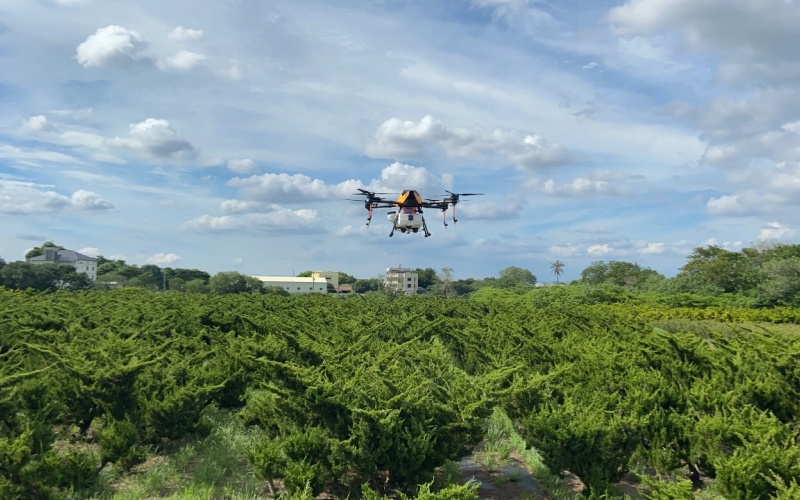
Precision Seeding Applications
Seeding requires more accurate seed placement compared with traditional broadcasting methods.
A precision seeding payload can help control:
Seed distribution
Row spacing
Seeding rate
Planting patterns
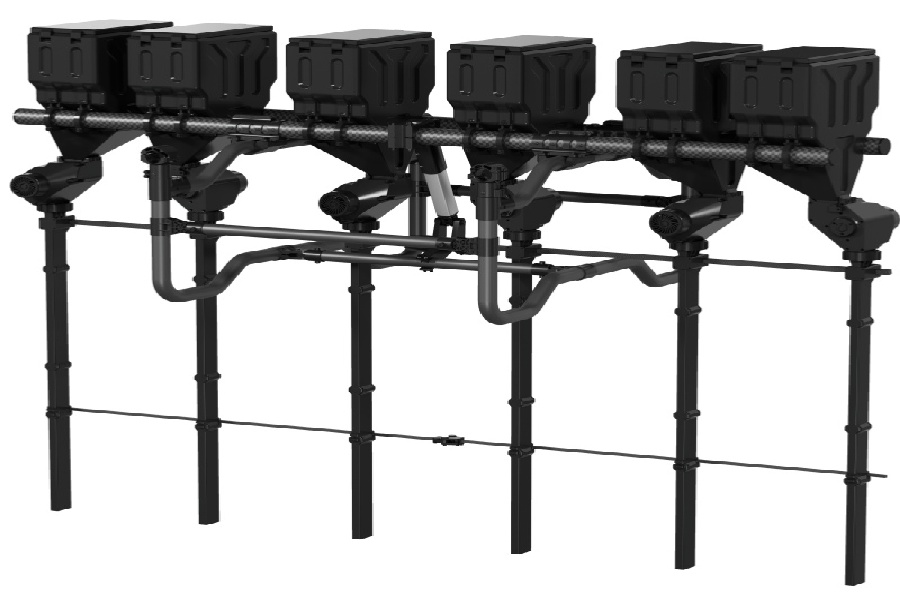
For crops that require organized planting rows, a row seeding system can provide more controlled seed placement compared with conventional centrifugal spreading.
Fertilizer and Granular Material Applications
Spreading payloads are commonly used for granular materials such as:
Fertilizers
Seeds
Other agricultural materials
When selecting a spreading system, consider:
Capacity
Distribution uniformity
Material compatibility
Operation efficiency
2. Check Drone Compatibility
Not every agricultural drone can support every type of payload.
Before selecting a payload system, check the compatibility between the payload and your drone platform.
Important considerations include:
Mechanical Compatibility
The payload mounting system should match the drone platform to ensure secure installation.
Power Requirements
Different payloads may require different power supply specifications.
Communication System
Some advanced payloads support communication with the drone controller for easier operation and parameter adjustment.
For professional agricultural applications, choosing a payload designed for your drone platform can improve reliability and operating efficiency.
3. Consider Precision Requirements
Different farming applications require different levels of accuracy.
For example:
Traditional broadcasting systems distribute seeds through centrifugal force, which may result in uneven distribution depending on seed type, wind conditions and field environment.
Precision row seeding systems are designed to place seeds in organized rows with adjustable spacing.
This can provide advantages such as:
More controlled seed placement
Adjustable row spacing
Reduced influence from wind
Better field management
For farmers who require more accurate planting operations, precision seeding payloads can be a valuable solution.
4. Evaluate Payload Capacity and Working Efficiency
Payload capacity is an important factor when choosing an agricultural drone system.
Consider:
Material Capacity
A larger capacity may reduce the frequency of refilling and improve operational efficiency.
Working Width
The working width affects how much area can be covered during each operation.
Seeding or Spraying Rate
The output rate should match the crop requirements and field conditions.
For example, a precision seeding module should provide adjustable seeding rates to support different crops and planting methods.
5. Consider Installation and Operation Methods
A practical agricultural payload should be easy to integrate and operate.
Important features may include:
Modular installation design
Quick installation and removal
Adjustable operating parameters
Remote control operation
Autonomous operation support
A well-designed payload system allows operators to adapt the equipment to different agricultural tasks more efficiently.
6. Look for Advanced Control Features
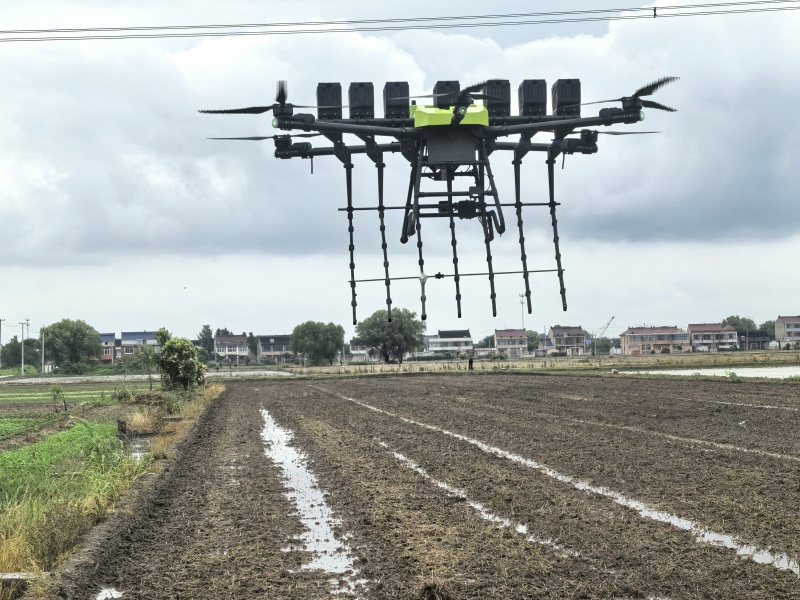
Modern agricultural drone payloads are becoming more intelligent.
Depending on the application, useful features may include:
Adjustable operation parameters
Autonomous flight integration
Real-time status monitoring
Material shortage detection
Remote operation
These functions can help improve operational consistency and reduce manual intervention.
7. Choose a Reliable Agricultural Drone Payload Supplier
The payload supplier is an important factor when building an agricultural drone solution.
A professional supplier should provide:
Drone compatibility support
Technical documentation
OEM customization capability
Application guidance
After-sales technical support
For companies developing agricultural UAV solutions, working with a manufacturer that understands both drone platforms and payload technology can simplify system integration.
WillFly Drone Agricultural Drone Payload Solutions
WillFly Drone develops DJI-compatible and multi-platform agricultural drone payload solutions for professional farming applications.
Our solutions include:
Precision row seeding modules
Agricultural spreading solutions
Customized OEM payload development
The Precision Row Seeding Module is designed for controlled row planting with agricultural drones. Unlike conventional broadcasting systems, it places seeds in organized rows with adjustable spacing and supports integration with DJI, XAG and other compatible agricultural drone platforms.
For agricultural companies and drone operators looking for customized solutions, WillFly Drone also provides OEM and ODM payload development services.
Conclusion
Choosing the right agricultural drone payload depends on more than the drone platform itself.
The most suitable solution should match your:
Farming application
Crop requirements
Precision needs
Drone compatibility
Operating conditions
Whether for spraying, spreading or precision seeding, selecting the correct payload system is essential for building an efficient agricultural UAV operation.
Related Product
Precision Row Seeding Module for DJI & XAG Drones