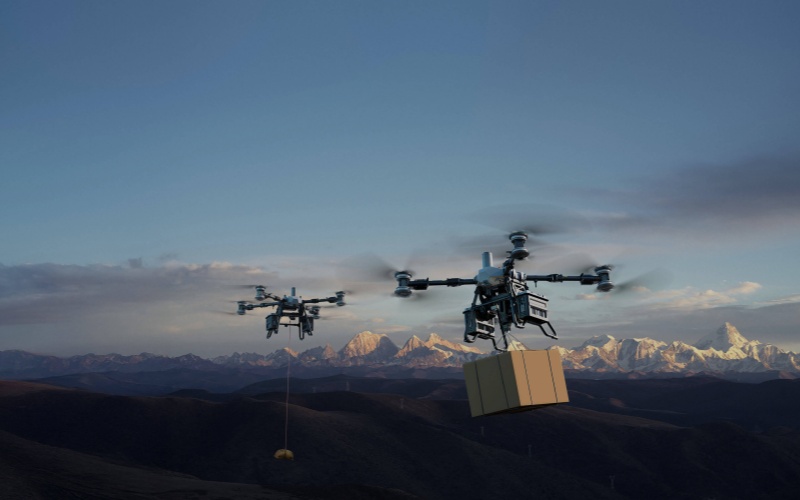
Rice seeding is an important agricultural application for drone technology.
Agricultural drones can distribute seeds over large field areas without requiring conventional ground-based planting equipment. Depending on the crop, field conditions and planting requirements, different seeding methods can be used.
The two common approaches are broadcast seeding and row seeding.
Understanding the differences between these methods can help farmers and agricultural service providers choose a suitable drone seeding system.
How Does Drone Rice Seeding Work?
A drone rice seeding system combines an agricultural drone with a dedicated seeding payload.
The drone carries the seeding system over the field while the payload controls how seeds are stored, fed and distributed.
The actual operating parameters can include:
Seeding rate
Flight speed
Operating height
Seed capacity
Distribution width
Row spacing, when using a row seeding system
The appropriate settings depend on the seed type, field conditions and planting requirements.
Broadcast Seeding with Agricultural Drones
Broadcast seeding distributes seeds across a relatively wide area rather than placing them into specific rows.
This method can be useful when the main objective is to cover a large area efficiently.
However, seed distribution can be affected by factors such as:
Wind
Seed size and shape
Flight speed
Operating height
Spreading system design
For applications where precise row placement is not required, broadcast seeding can remain a practical option.
Row Seeding with Agricultural Drones
Row seeding takes a different approach.
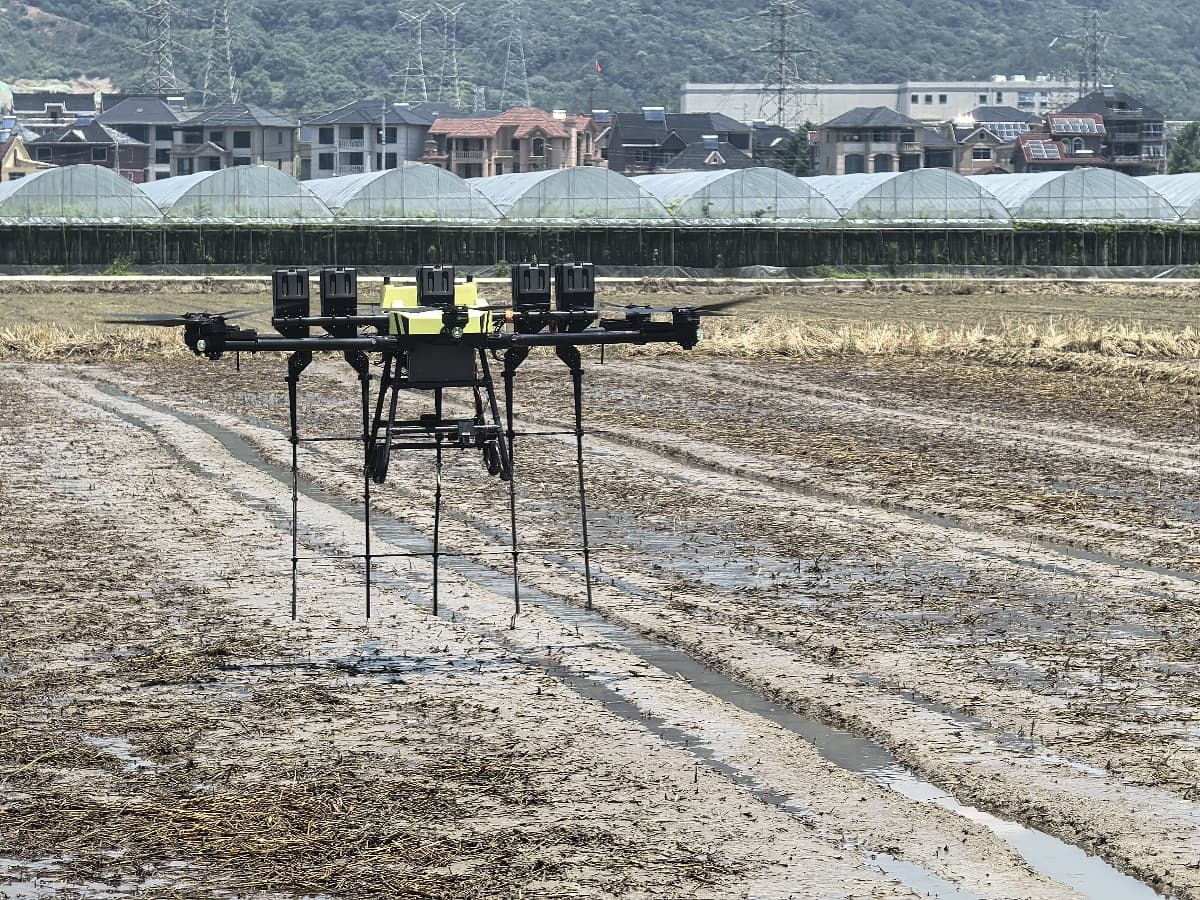
Instead of distributing seeds across a wider area, a specialized row seeding payload places seeds in organized rows.
This provides greater control over:
Row spacing
Seed placement
Seeding rate
Planting pattern
Row seeding can therefore be considered for applications where more organized seed placement is required.
For more information, see our guide:
How Row Seeding Drones Support Precision Rice Planting
Broadcast Seeding vs. Row Seeding
The two methods have different characteristics.
| Feature | Broadcast Seeding | Row Seeding |
|---|---|---|
| Seed distribution | Across an area | Organized rows |
| Row spacing | Generally not controlled | Adjustable |
| Planting pattern | Broad distribution | More organized |
| Precision | General distribution | More controlled placement |
| Main application | Wide-area seeding | Precision planting |
The best method depends on the crop, seed characteristics, field conditions and desired planting pattern.
What Are the Benefits of Drone Rice Seeding?
Depending on the application, agricultural drone seeding can provide several operational advantages.
Reduced Manual Planting Requirements
Drone-based seeding can reduce the amount of manual work required for certain planting operations.
Flexible Field Access
Drones can operate over areas where conventional ground equipment may be difficult to use.
Adjustable Operating Parameters
A suitable seeding payload can allow operators to configure parameters such as flight speed and seeding rate.
Different Seeding Methods
A modular drone platform can potentially support different payload configurations for different agricultural applications.
What Should You Consider When Choosing a Rice Seeding System?
Selecting a drone seeding system requires more than looking at the drone's payload capacity.
Important factors include:
Drone Compatibility
The seeding payload needs to be compatible with the drone's mounting interface, power supply and payload capacity.
Seed Capacity
A larger capacity can reduce the frequency of refilling during operation, depending on the project requirements.
Seeding Rate
The system should provide a suitable range of seeding rates for the target crop and planting method.
Row Spacing
For precision row seeding, adjustable row spacing can be an important consideration.
Flight Speed and Operating Height
These parameters can affect seed distribution and should be configured according to the payload and field conditions.
WillFly Drone Precision Row Seeding Module
WillFly Drone develops agricultural drone payload solutions for professional seeding applications.
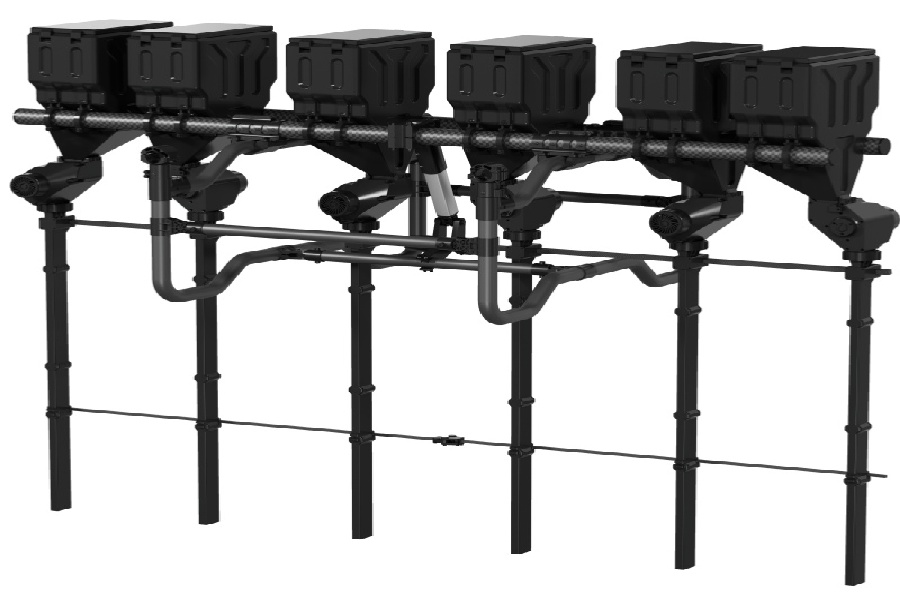
Our Precision Row Seeding Module is designed for controlled row seeding with agricultural drones.
Unlike conventional centrifugal broadcasting, the module places seeds in organized rows with adjustable spacing.
The system features:
Adjustable row spacing
Seed-friendly feeding
Ground-hugging seed delivery
Adjustable seeding rates
Modular 4–6 module configuration
The system is compatible with selected DJI, XAG and other agricultural drone platforms.
For specific drone models, contact WillFly Drone to confirm compatibility.
OEM Agricultural Drone Payload Solutions
Different agricultural applications may require different seeding configurations.
WillFly Drone supports OEM and customized drone payload development for companies with specific agricultural application requirements.
Customization can be considered for factors such as:
Payload configuration
Seeding capacity
Feeding system
Drone integration
Control requirements
The final configuration depends on the target drone and application.
Conclusion
Agricultural drones can support different rice seeding methods, from conventional broadcast seeding to more controlled row seeding.
Broadcast systems are designed for wider seed distribution, while row seeding systems provide greater control over planting patterns and row spacing.
Choosing the right approach depends on the crop, seed characteristics, field conditions and planting objectives.
For applications requiring controlled seed placement, a dedicated precision row seeding payload can provide a more configurable solution for compatible agricultural drone platforms.
Related Product
Precision Row Seeding Module for DJI & XAG Drones